Skip Navigation

Log In
  • Scientific Research
  • Training
  • Professional Development
  • Community
  • Advocacy and Outreach
  • Career Paths
  • Image of three blue squares stacked vertically to look like pages. Collections
  • Careers in Neuroscience
  • Community Discussion
  • image of an open book Read
  • image of a play button: a triangle inside a circle Watch
  • an image of a calendar with a check mark signifying events to attend Attend
  • image of a blue microphone Listen
  • Image of two overlapping dialogue bubbles. Discuss
  • About Neuronline
  • SfN Events Calendar
  • Community Leaders Program
  • Community Guidelines
  • FAQ
  • Contact Us
Neuronline logo
SfN's home for learning and discussion
  • image of an open bookRead
  • image of a play button: a triangle inside a circleWatch
  • an image of a calendar with a check mark signifying events to attendAttend
  • image of a blue microphone Listen
  • Image of two overlapping dialogue bubbles.Discuss
Log In
  • Scientific Research
  • Training
  • Professional Development
  • Community
  • Advocacy and Outreach
  • Career Paths
  • COLLECTIONS

Scientific Research

Stay apprised of findings from across the field with summaries of research published in SfN journals, and learn about rigor, responsible conduct of research, and other topics important to the scientific community.
Webinar thumbnail with headshot of the speaker
Scientific Research
Rare Diseases, Real Battles: A Physician’s Story of Persistence and Purpose
May 06, 2026 1:00 PM - 2:00 PM EDT
Development of Cortical Somatostatin Innervation thumbnail with speaker headshots
Scientific Research
Development of Cortical Somatostatin Innervation
May 26, 2026 12:00 PM - 1:00 PM EDT
Filter

Refine by

204 - 216 of 622
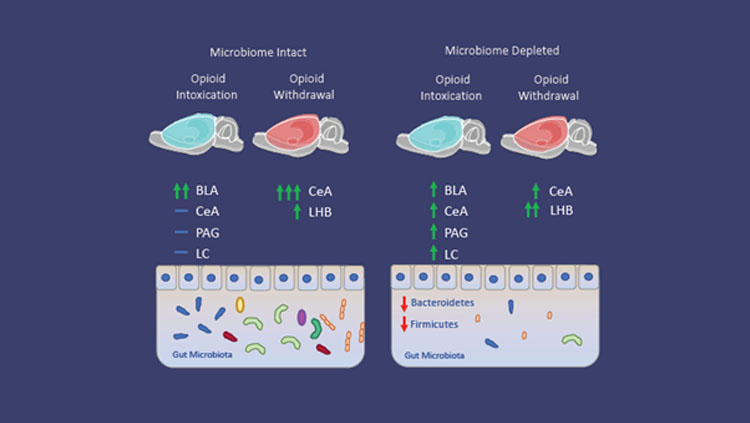
  • Figure 1: Microbiome depletion alters how the brain responds to opioids. Microbiome intact animals in the intoxication state (left) exhibited increases in neuronal recruitment (green arrows) in the basolateral amygdala (BLA), while the central amygdala (CeA), periaqueductal gray (PAG), and locus coeruleus (LC) do not exhibit increases (blue dash) compared to control animals. During withdrawal, microbiome intact animals exhibit increased recruitment of the CeA and lateral habenula (LHB) compared to control animals.  Microbiome depleted animals (right) exhibit a reduction of recruitment in the BLA, and increases in the CeA, PAG, and LC in the intoxication state compared to intact animals. Additionally, microbiome depleted animals in the withdrawal state exhibit a decrease in the CeA and an increase in recruitment in the Lateral Habenula (LHB) compared to intact animals.
    Depletion of the Microbiome Changes How the Brain Responds to Opioids
    Aug 13, 2020
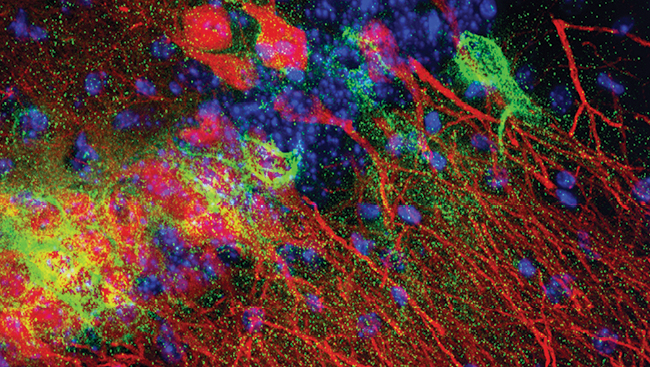
  • Scientific Image
    Meet-the-Expert: Feeling the Pressure – My Path to Sensory Neuroscience with Ellen A. Lumpkin, PhD
    August 26, 2020 11:00 AM - 12:00 PM EDT
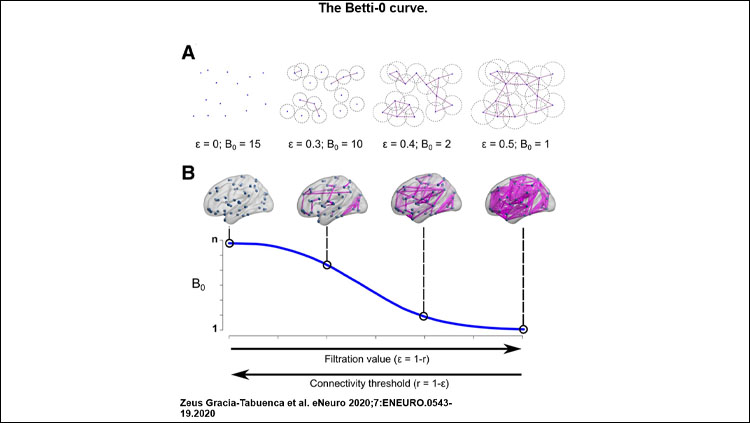
  •  The Betti-0 curve. A, Two-dimensional toy example: a set of 15 nodes, four filtration values ε, represented as the circle diameter and their corresponding Betti-0 (B0). B, Betti-0 curve for a hypothetical brain network; each point in the curve represents the B0 for each filtration value. In both cases, at ε = 0 the number of components is equal to the number of nodes, n. As the filtration value increases, the number of components reduces, and eventually will reach a single one containing all nodes. Brain views generated with brain-net (Xia et al., 2013), r stands for Pearson’s correlation.
    Exploring Individual Brain Connectomes With Topological Data Analysis in ADHD
    Aug 06, 2020
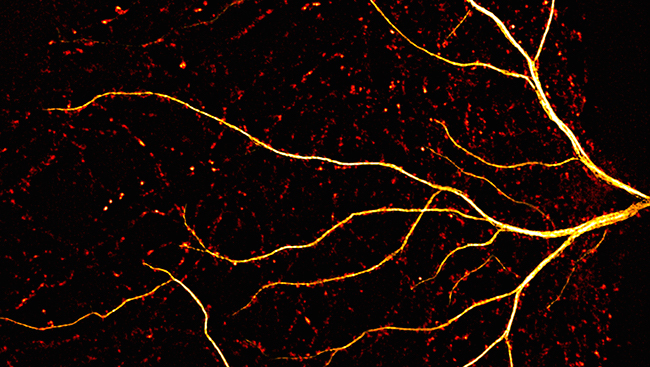
  • Scientific Image
    Cortical and Hippocampal Contributions Throughout Skill Learning in Mice
    Nov 14, 2019
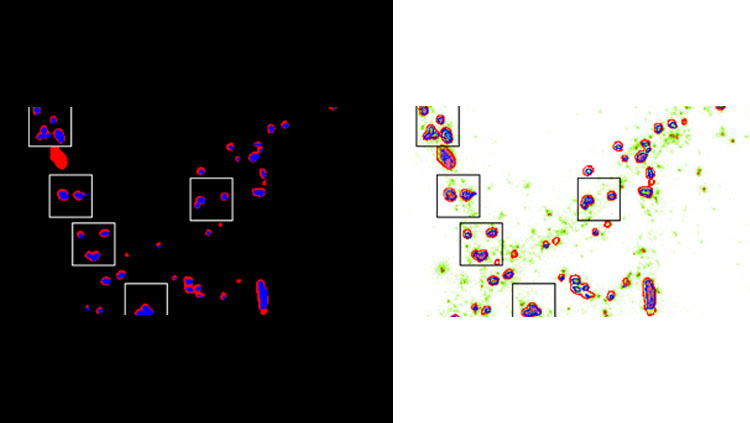
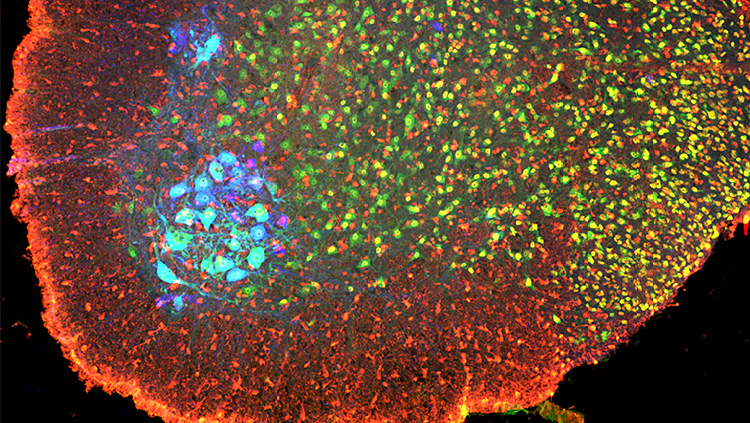
  • Extracting spatial heterogeneity of AMPA receptor content within functional zones of the synapses to quantify homeostatic scaling. Related to Figure 5 in the manuscript.
    New Immunostaining Analysis Reveals Spatial and Molecular Variability in Synaptic Scaling
    Jul 23, 2020
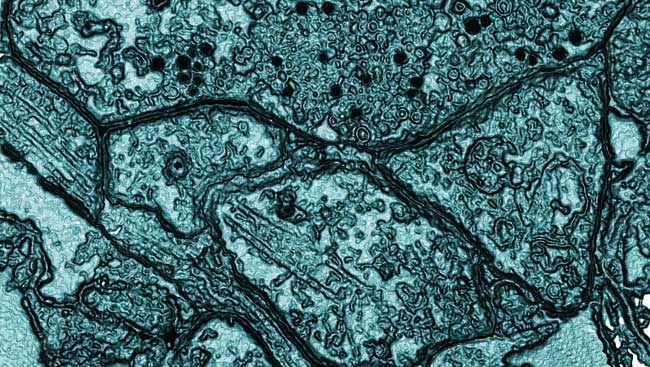
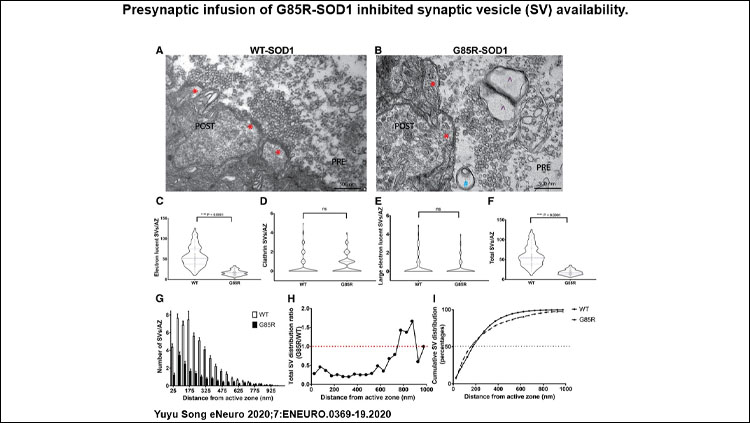
  • Presynaptic infusion of G85R-SOD1 inhibited synaptic vesicle (SV) availability. Representative EM images illustrate morphology of AZs (labeled with red *) and numbers of SVs in fixed synapses infused with WT-SOD1 and G85R-SOD1.
    Synaptic Actions of an ALS-Associated Protein in the Giant Squid Synapse
    Jul 16, 2020
  • The journey of cortical interneurons: (A) Cortical interneurons are born in the ganglionic eminence of the basal forebrain, and (B) migrate to reach the dorsal cortex. (C) Their number is determined upon programmed cell death and strongly depends on neuronal activity. (D) Wiring [dendritic and axonal morphogenesis and synapse establishment (1)], myelination (2) and circuit refinement of Martinotti, Basket, Chandelier and all other interneuron types is established within the first month after birth.  This cartoon has been designed and drawn by Yannis Maragkos, Denaxa Lab, BSRC Al. Fleming.
    How Cortical Interneurons Develop: Current and Future Research
    Jul 09, 2020
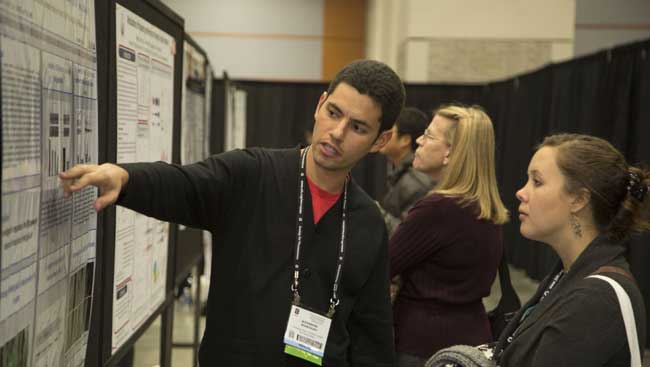
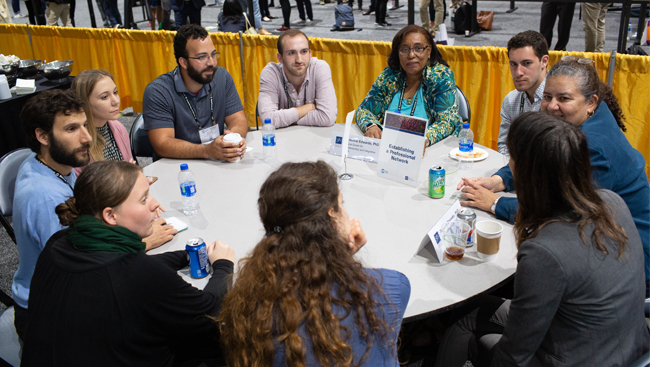
  • Female and male neuroscientists share ideas at a networking event.
    A Look at the Intersection of Scientific Rigor, Big Data, and Interdisciplinary Training
    Jun 21, 2017
  • Scientific Image
    COVID-19, the Brain, and Mental Health: Weighing the Direct and Indirect Effects
    July 29, 2020 11:00 AM - 12:00 PM EDT
  • Images of graphs showing sex differences in cortical and dopaminergic neurodegeneration in 6-month-old 3K mice.
    Estrogen Benefits α-Synuclein Tetramerization and Motor Deficit in PD-Like Mice
    Jul 02, 2020
  • Lesion histology.
    Superior Dorsolateral Prefrontal Cortex Supports Introspection in Monkeys
    Jun 25, 2020
  • Scientific Image
    A Neurobiological Perspective on Emerging Mental Illness Research
    Jun 23, 2020
  • Previous
  • 16
  • 17
  • 18
  • 19
  • 20
  • Next
Neuronline Collections
Neuronline's vast collection of professional development and training resources offers guidance for people at all career stages with diverse interests and responsibilities.

View Collections
Neuronline footer 10 year anniversary logo
  • About Neuronline
  • SfN Events Calendar
  • FAQ
  • Contact Us
  • Accessibility Policy
  • Disclaimer
  • Privacy Notice
SfN logo with "SfN" in a blue box next to Society for Neuroscience in red text and the SfN tag line that reads "Advancing the understanding of the brain and nervous system"
Follow SfN
  • BlueSky logo
  • Threads logo
  • X Logo
  • image of linkedin logo
  • Image of the Facebook logo
  • Image of the instagram logo
  • image of youtube logo
  • RSS symbol
1121 14th Street NW, Suite 1010, Washington, DC 20005 (202) 962-4000 | 1-888-985-9246

Copyright © Society for Neuroscience