Neuronline Community Leaders Program
The Community Leaders program is a group of active SfN members who are interested in cultivating the sharing and discussion of resources among SfN members. Topics of discussion range from recaps of virtual events, scientific research, and professional development. These discussions are meant to expand the number of member perspectives shared around Neuronline resources and to encourage outside members to connect by joining in the discussion. Check out and take part in the discussion in the Community Leaders Discussion collection here on Neuronline. Scroll down to meet the 2026 Community Leaders Cohort!
Apply today!
Apply to be a part of the 2027 Community Leader cohort! Applications are open from September 28 through November 30.
Current Community Leaders
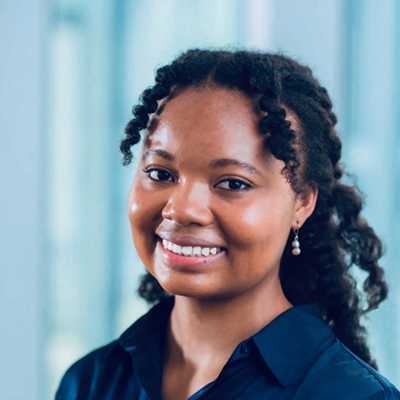


Amirah K. Anderson
Amirah K. Anderson is a research assistant in the Dennis Selkoe lab at Brigham and Women’s Hospital and Harvard Medical School, studying biochemical, molecular, and cellular aspects of neurodegeneration. Her current work investigates how biochemical changes to proteins affect neuronal fate and disease progression in diseases such as Alzheimer’s and Parkinson’s to find therapeutic targets and design diagnostic immunoassays. She values scientific communication as a tool for accelerating discovery, strengthening connections between science and society, and supporting the next generation of neuroscientists. Anderson is particularly interested in highlighting novel interdisciplinary efforts and perspectives in aging research, as well as sharing the personal and professional stories of researchers to inspire and empower early-career scientists and trainees.
Website: amirahkanderson.com
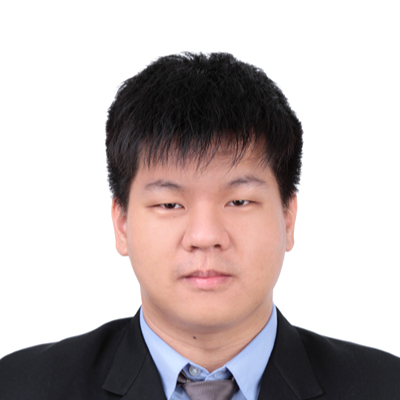


Zehuan Liao, PhD
Zehuan Liao, PhD, earned his doctorate in medical science from the Karolinska Institutet and his PhD in biological sciences from the Nanyang Technological University through a dual-degree scholarship program. He is currently a researcher at the Johns Hopkins University School of Medicine, where he investigates how genetic mutations and dysregulations drive neurodegeneration, with the goal of uncovering molecular mechanisms and advancing therapeutic strategies. As a community leader, Liao is committed to fostering an open, collaborative knowledge-sharing space by initiating thoughtful conversations that connect neuroscientists, trainees, and students across the SfN community. Leveraging his work in human brain organoids and spatial multi-omics, he also aims to share practical perspectives on how these emerging technologies are reshaping the study of brain diseases.
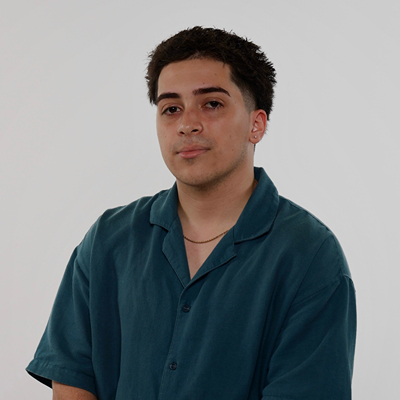
Héctor A. López-Rivera
Héctor A. López-Rivera is a biomedical sciences undergraduate at Universidad del Sagrado Corazón in San Juan, Puerto Rico, minoring in psychology and neuroscience. Under the mentorship of Carmen Maldonado-Vlaar at UPR–Río Piedras, his research uses rodent models to study neuroinflammation and endocannabinoid system activation. As an aspiring physician–scientist, López-Rivera is committed to equity, science communication, and creating accessible pathways into neuroscience for students from underrepresented backgrounds.
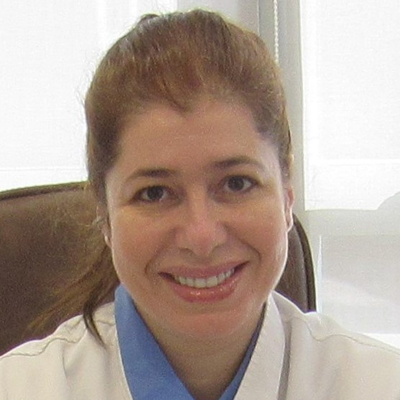
Valéria Marques Figueira Muoio, MD, PhD
Valéria Marques Figueira Muoio, MD, PhD, is a neurosurgeon and neuroscientist based in São Paulo, Brazil, at the University of São Paulo, where she integrates clinical practice, research, and the training of neurosurgical residents. She transformed a childhood dream into her profession by becoming both a neurosurgeon and a neuroscientist. Inspired by the complexity and adaptability of the human brain, her mission is to push the boundaries of science in pursuit of the best possible outcomes for her patients. Her interests include movement disorders, brain–machine interfaces, deep brain stimulation, and neurogenesis.
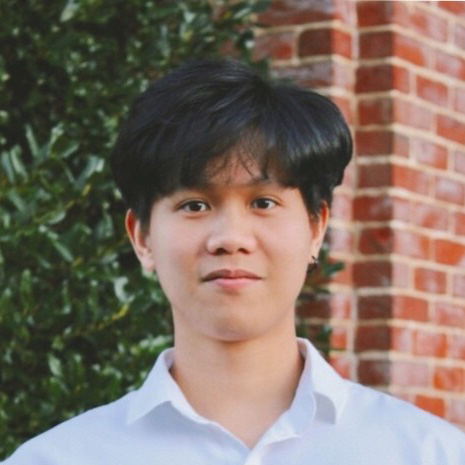
Nguyen Nguyen
Nguyen Nguyen is a graduate researcher at Texas A&M University working in drug delivery for neurodegenerative disease using nanotechnology. Trained as an engineer with a deep appreciation for biology, he enjoys operating at disciplinary boundaries and asking questions that do not fit neatly into one field. He is passionate about mentorship, community-building, and creating spaces where early-career scientists feel supported and confident taking risks. As a community leader, he looks forward to connecting people across backgrounds and sparking honest conversations.
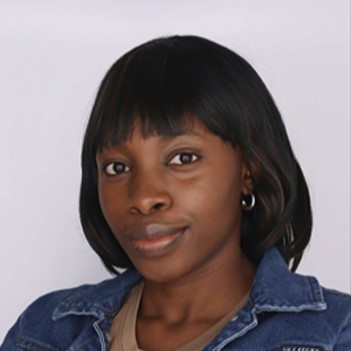
Grace Valentine Olagunju
Grace Valentine Olagunju is a first-year PhD student at the New Mexico State University. She earned her undergraduate degree in biology with distinction from the University of Abuja, Nigeria, and completed her master’s degree with distinction in molecular biology and interdisciplinary life sciences. Olagunju’s research focuses on brain lipidomics, with a particular interest in understanding how lipid composition and alterations contribute to brain cancer, specifically glioblastoma. As a community leader, she looks forward to contributing her scientific perspective, supporting collaboration, and engaging with diverse academic communities. She also hopes to contribute to neuroscience education by increasing awareness of the importance of lipids in health and disease.
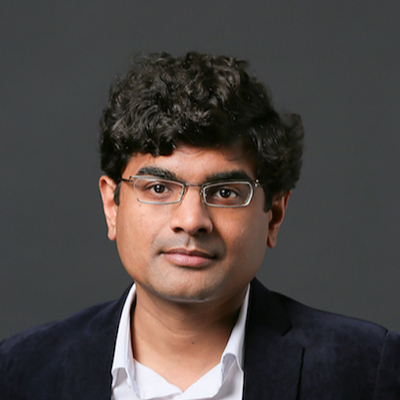
Srikanth Ramaswamy, PhD
Srikanth Ramaswamy, PhD, is a Marie Curie Fellow, Lister Prize Fellow, and assistant professor in computational neuroscience at Newcastle University. He is also a Fulbright Scholar at MIT and a Theoretical Sciences Scholar at OIST. He directs the Neural Circuits Laboratory at Newcastle University. His research focuses on neuromodulation, cognition, and biologically-informed neural network models. A founding scientist of the Blue Brain Project, he is deeply committed to advancing diversity, equity, and inclusion through his leadership in the ALBA network and the ALBA diversity podcast.
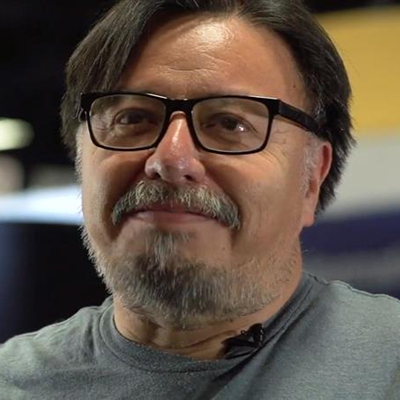
Hugo Sánchez-Castillo, PhD
Hugo Sánchez-Castillo, PhD, is a professor and researcher at the National Autonomous University of Mexico (UNAM). He has a bachelor's in psychology and a doctorate in behavioral neurosciences from the UNAM and has completed postdoctoral studies at Columbia University in New York City. He is affiliated with the psycobiology and neurosciences department at the Psychology School at UNAM and is the head of the Neuropsychopharmacology and Timing Laboratory. His research focuses are the neurobiology of stress and trauma, the dissociative disorders, and the neurobiology of timing behavior.
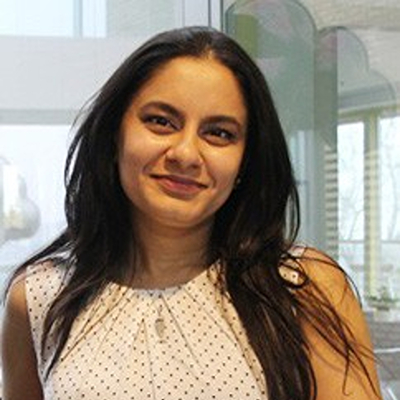
Soaleha Shams, PhD
Soaleha Shams, PhD, is a Canadian neuroscientist interested in neuroscience of social behavior, both typical and atypical expressions. Shams studies social behavior of zebrafish as a tool to understand other social vertebrates and to make disease models for neuropsychiatric disorders. Shams completed her PhD in behavioral neuroscience in Toronto, postdocs in pharmacology (in Gothenburg, Sweden) and in genetics and molecular biology at the Mayo Clinic. She recently moved back to continue her work in Canada using more omics approaches towards bigger questions about effects of environment, social experience, and isolation on zebrafish social behavior. Outside the lab, Shams love teaching, outreach, and science advocacy, and she looks forward to playing an active role in the coming future of neuroscience policymaking in Canada and globally.
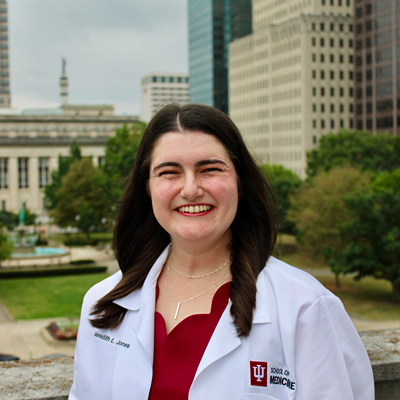
Meredith (Jones) Shand
Meredith (Jones) Shand is a third-year PhD candidate at the Indiana University School of Medicine studying how the brain connects with other body systems, focusing on kidney-brain interactions in the context of inflammation. She cares deeply about science communication and advocacy, ensuring research reaches people, not just produces data. Outside the lab, she strives to travel to a new country each year, explore national parks, and remain grounded by her Pembroke Welsh corgi, Beatrice, and partner, Adam. As a community leader, she aims to support scientists from rural communities, helping make neuroscience tangible and approachable for all.
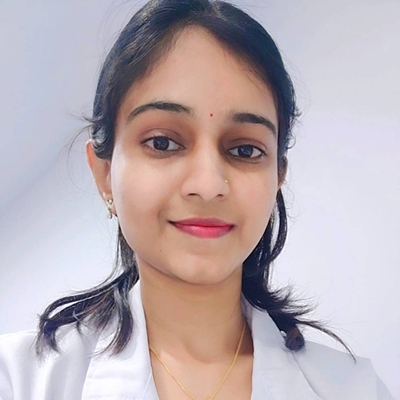
Abinaya Srinivasan
Abinaya Srinivasan is a PhD researcher in biomedical sciences at Taipei Medical University, with a background in biomedical engineering and neuroscience. Srinivasan’s research focuses on olfactory system plasticity, neurogenesis, and the use of human platelet-derived biomaterials to promote neural repair and functional recovery. She works across in vivo models, behavioral neuroscience, imaging, and molecular approaches. Her work aims to investigate how platelet-derived factors can modulate neural repair and functional recovery. As a community leader, she looks forward to fostering inclusive scientific discussions, supporting early-career researchers, and creating spaces where students and researchers from diverse backgrounds can connect, share experiences, and grow together, and is especially motivated to bridge basic neuroscience research with real-world impact through community engagement.
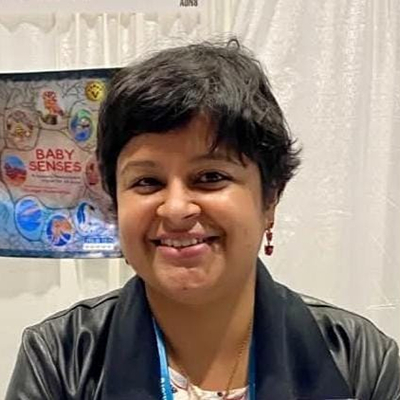

Jayalakshmi (Jaya) Viswanathan, PhD
Jayalakshmi (Jaya) Viswanathan, PhD, is a neuroscientist, author, and artist born and raised in India. She earned an engineering degree, a master’s in neuroscience, and a doctorate in cognitive neuroscience. After her postdoctoral fellowship, she deepened her neuroscientific expertise as a contractor at the National Institutes of Health. She is currently a research assistant professor at the Indiana University School of Medicine working in translational neuroscience to prevent and treat Alzheimer’s and Related Dementias. She illustrated and wrote the first of its kind children’s neuroscience book, Baby Senses: A Sensory Neuroscience Primer for All Ages to convey complex scientific concepts through art and whimsy in terms of sensory “superpowers.” She has been interviewed on written, audio/podcasts, and video platforms where she makes neuroscience accessible to lay audiences, and also hosts a podcast called “Know Brainer.”
Please email neuronline@sfn.org with any questions.