Skip Navigation

Log In
  • Scientific Research
  • Training
  • Professional Development
  • Community
  • Advocacy and Outreach
  • Career Paths
  • Image of three blue squares stacked vertically to look like pages. Collections
  • Careers in Neuroscience
  • Community Discussion
  • image of an open book Read
  • image of a play button: a triangle inside a circle Watch
  • an image of a calendar with a check mark signifying events to attend Attend
  • image of a blue microphone Listen
  • Image of two overlapping dialogue bubbles. Discuss
  • About Neuronline
  • SfN Events Calendar
  • Community Leaders Program
  • Community Guidelines
  • FAQ
  • Contact Us
Neuronline logo
SfN's home for learning and discussion
  • image of an open bookRead
  • image of a play button: a triangle inside a circleWatch
  • an image of a calendar with a check mark signifying events to attendAttend
  • image of a blue microphone Listen
  • Image of two overlapping dialogue bubbles.Discuss
Log In
  • Scientific Research
  • Training
  • Professional Development
  • Community
  • Advocacy and Outreach
  • Career Paths
  • COLLECTIONS

Read

Learn from other neuroscientists’ perspectives and personal stories in interviews with experts, advice articles, how-to guides, and more featuring scientists from all levels working across the field.
Careers in Neuroscience. Crystal L. Lantz, PhD. Science Program Strategist. Headshot of Lantz. SfN Neuronline logo.
Career Paths
Careers in Neuroscience: Science Program Strategist
Srikanth Ramaswamy talking to attendees at SfN's annual meeting.
Training
NeuroAI: Bridging Brain Science and Artificial Intelligence
ArticleFilter
Filter

Refine by

156 - 168 of 680

  • A woman intently reads a book in a crowd.
    Career Paths
    Conveying the Excitement of Scientific Discovery Through Fiction
    Sep 15, 2020
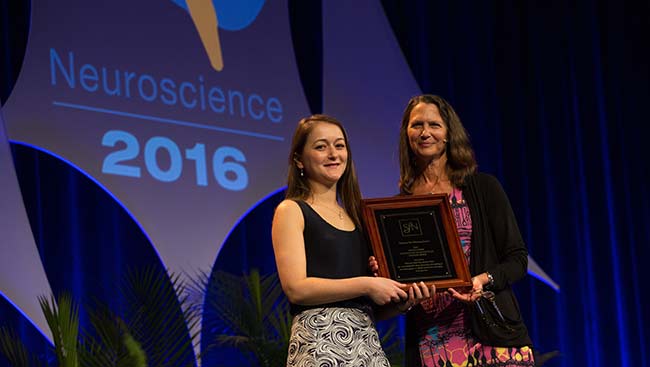
  • Sebnum Tuncdemir accepts the Nemko Prize in Cellular or Molecular Neuroscience.
    Professional Development
    A Postdoc Reflects Back on the Ups and Downs of Her Thesis Research
    Sep 10, 2020
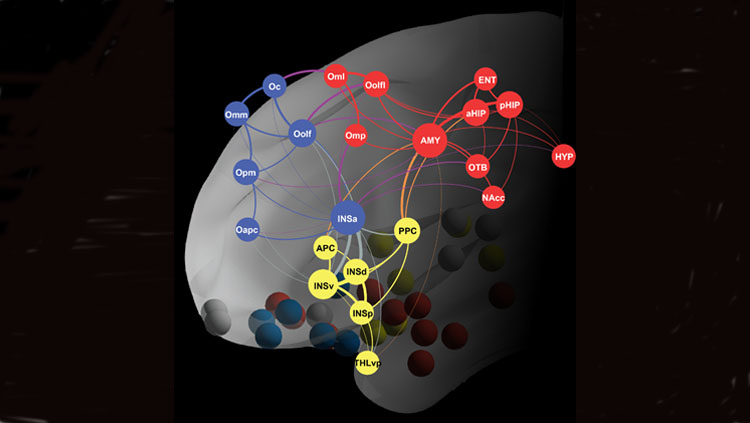
  • Map of "the smell network."
    Scientific Research
    The Smell Network: The Brain’s Architecture for Human Olfaction
    Sep 03, 2020
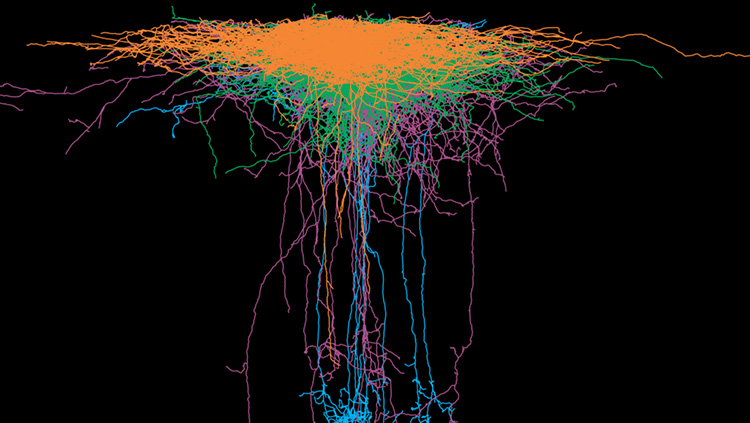
  • This image shows superposed axonal reconstructions of the four interneuron populations found in mouse neocortical layer 1: canopy cells (orange), neurogliaform cells (green), a7 cells (purple), and VIP cells (blue).
    Professional Development
    Recognizing Team Science Contributions in Academic Hiring, Promotion, and Tenure
    Sep 01, 2020
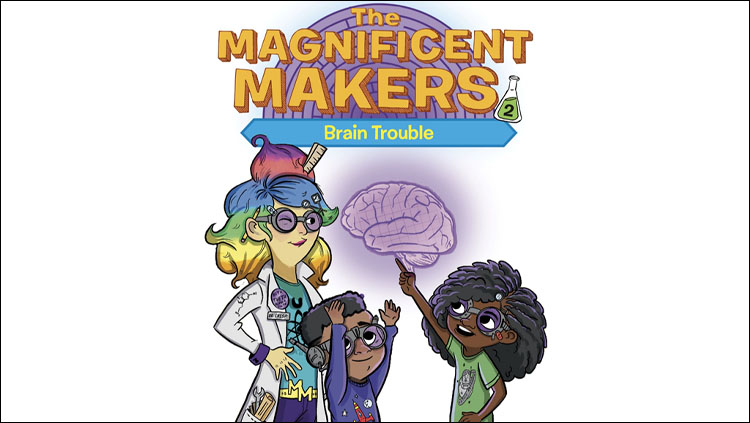
  • Cover of the book "Magnificent Makers Two: Brain Trouble" with an image of two kids and an instructor observing a brain.
    Career Paths
    Four Ways Science Training Prepares Us as Writers
    Sep 01, 2020
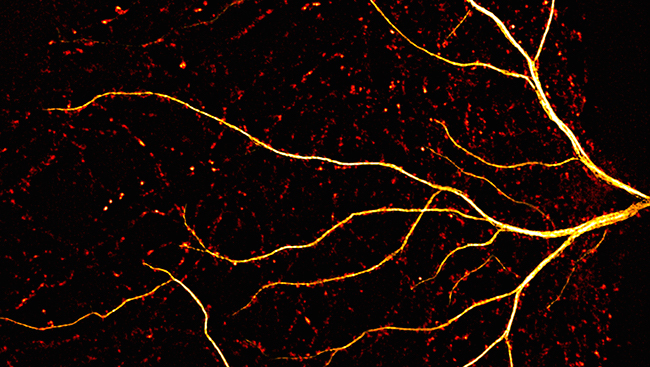
  • Scientific Image
    Professional Development
    Neuroethics Meets Artificial Intelligence
    Aug 27, 2020
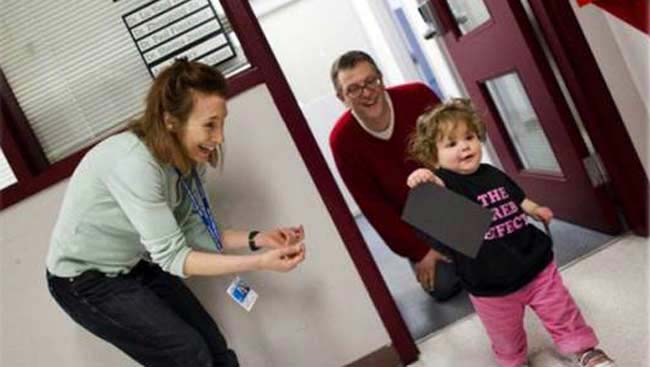
  • A woman, man, and toddler walking into a lab.
    Community
    My Story: Having a Family and Embracing the Joy of Being a Neuroscientist
    Aug 26, 2020
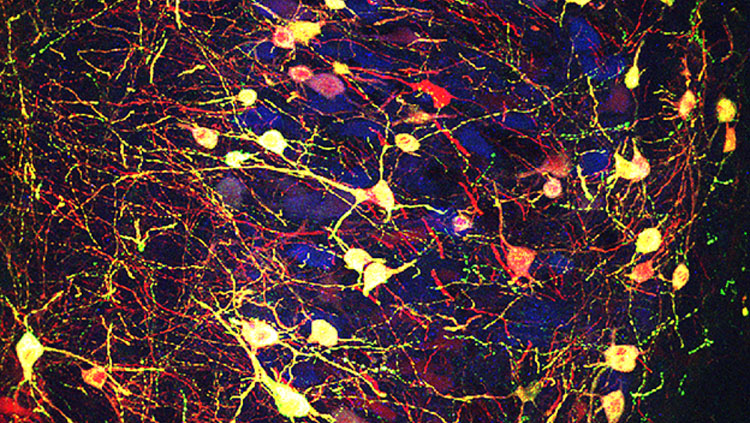
  • A group of midbrain neurons expressing acetylcholine (blue) are made to express another type of neurotransmitter, glutamate (green), using adeno-associated virus as a gene delivery platform. The neurons targeted by the virus also express a red fluorescent protein for identification and thus appear a light-yellow color (green plus red and blue).
    Outreach
    The Art of Experimental Design and Science Outreach
    Aug 19, 2020
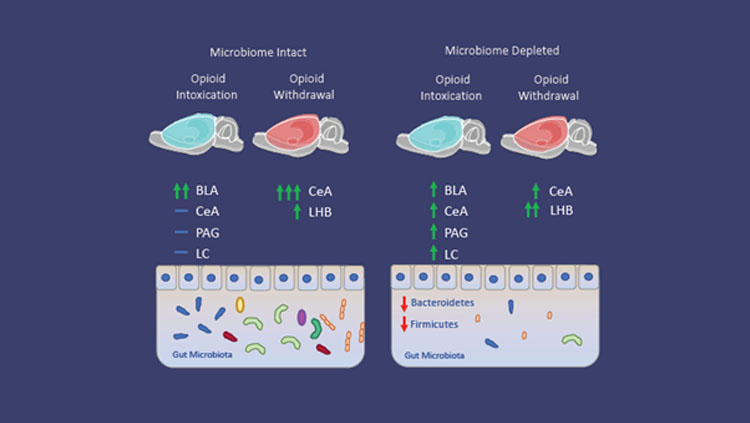
  • Figure 1: Microbiome depletion alters how the brain responds to opioids. Microbiome intact animals in the intoxication state (left) exhibited increases in neuronal recruitment (green arrows) in the basolateral amygdala (BLA), while the central amygdala (CeA), periaqueductal gray (PAG), and locus coeruleus (LC) do not exhibit increases (blue dash) compared to control animals. During withdrawal, microbiome intact animals exhibit increased recruitment of the CeA and lateral habenula (LHB) compared to control animals.  Microbiome depleted animals (right) exhibit a reduction of recruitment in the BLA, and increases in the CeA, PAG, and LC in the intoxication state compared to intact animals. Additionally, microbiome depleted animals in the withdrawal state exhibit a decrease in the CeA and an increase in recruitment in the Lateral Habenula (LHB) compared to intact animals.
    Scientific Research
    Depletion of the Microbiome Changes How the Brain Responds to Opioids
    Aug 13, 2020
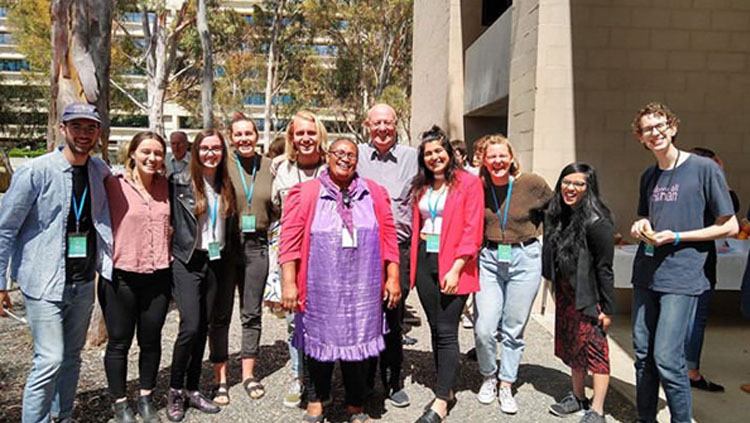
  • Several people stand for a group photo.
    Community
    How Living with Cerebral Palsy Motivates My Research
    Aug 11, 2020
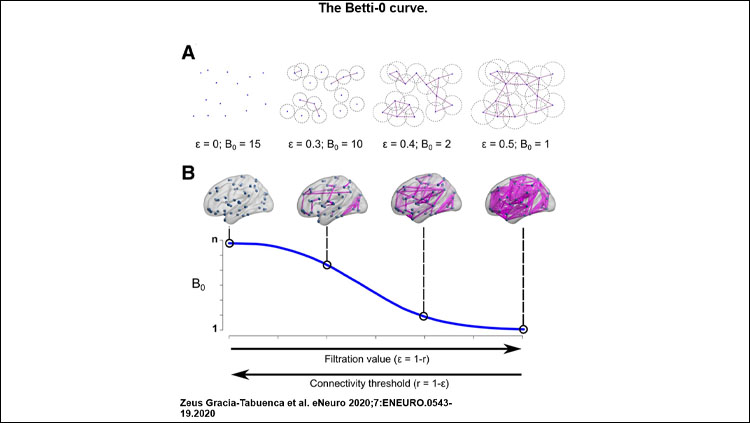
  •  The Betti-0 curve. A, Two-dimensional toy example: a set of 15 nodes, four filtration values ε, represented as the circle diameter and their corresponding Betti-0 (B0). B, Betti-0 curve for a hypothetical brain network; each point in the curve represents the B0 for each filtration value. In both cases, at ε = 0 the number of components is equal to the number of nodes, n. As the filtration value increases, the number of components reduces, and eventually will reach a single one containing all nodes. Brain views generated with brain-net (Xia et al., 2013), r stands for Pearson’s correlation.
    Scientific Research
    Exploring Individual Brain Connectomes With Topological Data Analysis in ADHD
    Aug 06, 2020
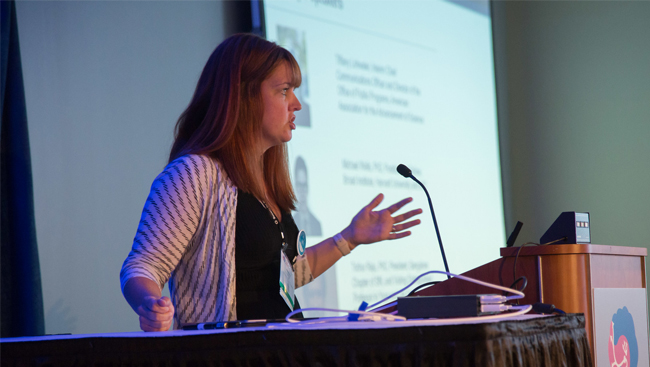
  • A woman speaks at a podium.
    Advocacy
    Four Ways to Help Students Become Science Advocates
    Aug 05, 2020
  • Previous
  • 11
  • 12
  • 13
  • 14
  • 15
  • Next
Neuronline Collections
Neuronline's vast collection of professional development and training resources offers guidance for people at all career stages with diverse interests and responsibilities.

View Collections
Neuronline footer 10 year anniversary logo
  • About Neuronline
  • SfN Events Calendar
  • FAQ
  • Contact Us
  • Accessibility Policy
  • Disclaimer
  • Privacy Notice
SfN logo with "SfN" in a blue box next to Society for Neuroscience in red text and the SfN tag line that reads "Advancing the understanding of the brain and nervous system"
Follow SfN
  • BlueSky logo
  • Threads logo
  • X Logo
  • image of linkedin logo
  • Image of the Facebook logo
  • Image of the instagram logo
  • image of youtube logo
  • RSS symbol
1121 14th Street NW, Suite 1010, Washington, DC 20005 (202) 962-4000 | 1-888-985-9246

Copyright © Society for Neuroscience