
Science Writing Strategies to Advance Your Career
- Featured in:
- SfN Annual Meeting Recordings
Mar 05, 2020
This resource was featured in the NeuroJobs Career Center. Visit today to search the world’s largest source of neuroscience opportunities.
Every scientist can write about their science in a way that brings attention to and educates nonscientists about their work.
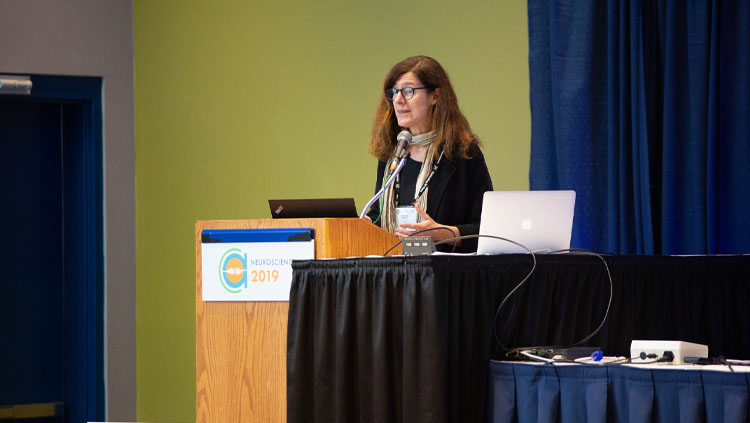
Watch this video for examples of successful science writing, questions to help you think about the story you want to tell, and components of the science writing process. You’ll also hear advice for writing clear and effective research summaries.
Access to the full article is available to SfN members.
Neuronline is a benefit of SfN membership. Renew your membership now to make sure you don’t lose access.
Speakers

Paula Clifford, MA
Paula Clifford, MLA, CVT, RLATG, Paula Clifford is the Executive Director of Americans for Medical Progress (AMP), where she leads national efforts to promote public understanding of the essential role of animal research in advancing medicine. Clifford holds a Master of Liberal Arts from the University of Pennsylvania and is actively involved in science education and initiatives to increase openness and transparency in animal research.

Jim Newman
Jim Newman is currently the Group Account Director at K Harvey Brand Partners. Newman has more than two decades of experience working in science communications and directing external communications for a variety of research institutions including The University of Texas, MD Anderson Cancer Center, Oregon Health & Science University and the Oregon National Primate Research Center. Jim also previously served as the Director of Strategic Communications for Americans for Medical Progress. Jim started his career working as a TV news producer in various media markets across the country including Lansing Michigan, South Bend, Indiana, Nashville, Tennessee and Portland, Oregon.

Wendy Jarrett
Wendy Jarrett is a trustee of the Blood Pressure Research Trust, a Vice President of the Institute of Animal Technology and was a member of the Home Office Animals in Science Committee from 2016 to 2026. She studied classics at Oxford University but has focused on science and health communication for over 30 years, leading the development of Understanding Animal Research and the Concordat on Openness on Animal Research. She additionally introduced a more open approach to media relations at the National Institute for Heath and Clinical Excellence, in the United Kingdom, and helped create the European Animal Research Association and Understanding Animal Research Oceania.

Eduardo Rosa-Molinar, PhD
Eduardo Rosa-Molinar, PhD, is a professor of cell biology and physiology, neuroscience, and imaging science and the scientific director of the Washington University Center for Cellular Imaging. Rosa-Molinar received his BS in natural sciences from the University of Alabama, his PhD in medical sciences at the University of Nebraska Medical Center and was a postdoctoral research fellow at Creighton University School of Medicine. His research centers on the molecular, cellular, and functional mechanisms of electrical synapses in the vertebrate central nervous system, with a particular focus on gap junctions formed by Gjd2/Cx36 and Gjd1/Cx34.7. Rosa-Molinar is also a pioneer in the development of imaging technologies tailored to unravel the molecular architecture and functional dynamics of electrical synapses and founded the company TransynaptiX LLC in 2019 to expedite the translation of these imaging tools for neuroscience research.


More in Professional Development


0 of 5 articles left
Login
or
Become a Member
to unlock content