
Who Does What in the Heterogeneous VTA? Spotlight on the Newly Identified NeuroD6 VTA Subtype
Sep 05, 2019
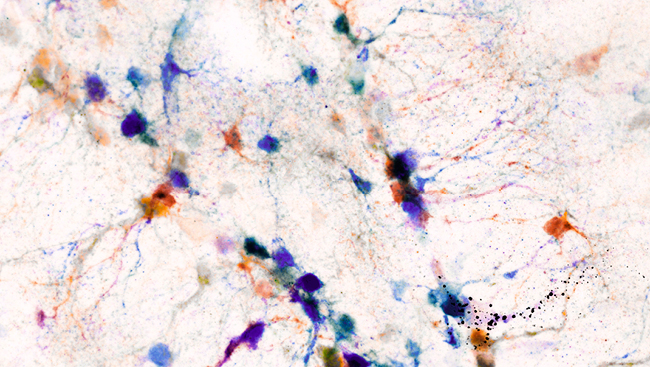
Material below summarizes the article The NeuroD6 Subtype of VTA Neurons Contributes to Psychostimulant Sensitization and Behavioral Reinforcement, published on May 16, 2019, in eNeuro and authored by Zisis Bimpisidis, Niclas König, Stefanos Stagkourakis, Vivien Zell, Bianca Vlcek, Sylvie Dumas, Bruno Giros, Christian Broberger, Thomas S. Hnasko, and Åsa Wallén-Mackenzie.
Highlights
- NeuroD6 VTA neurons constitute a modest ventral tegmental area (VTA) subpopulation, express Tyrosine hydroxylase (Th), and release dopamine in the nucleus accumbens upon optogenetic activation in the VTA.
- Some of the NeuroD6 neurons co-express Th with the gene encoding Vesicular glutamate transporter 2 (VGLUT2), and optogenetic VTA activation causes glutamatergic post-synaptic currents in the nucleus accumbens.
- Conditional knockout of the Vesicular monoamine transporter 2 (VMAT2) selectively in NeuroD6-Cre-neurons in mice resulted in behavioral hyperlocomotion above control levels in response to psychostimulants, while NeuroD6-Cre mice showed significant approach behavior in a real-time place preference setup upon optogenetic activation in the VTA.
Access to the full article is available to SfN members.
Neuronline is a benefit of SfN membership. Renew your membership now to make sure you don’t lose access.


0 of 5 articles left
Login
or
Become a Member
to unlock content