
Measurement of Retinal Blood Flow Using Fluorescently Labeled Red Blood Cells
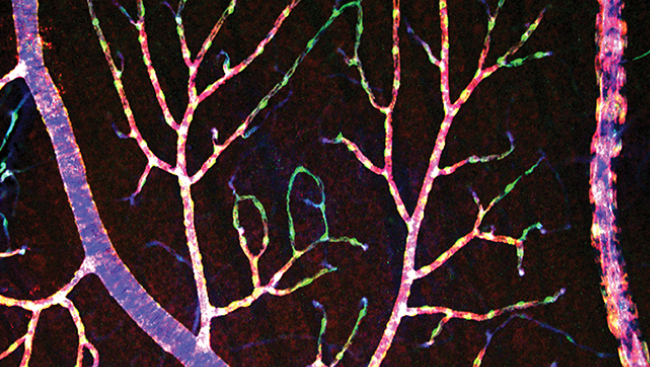
Material below summarizes the article Measurement of Retinal Blood Flow Using Fluorescently Labeled Red Blood Cells, published on April 29, 2015, in eNeuro and authored by Tess E. Kornfield and Eric A. Newman.
Our brain is a hungry organ. Although it accounts for only two percent of our body weight, the brain consumes 20 percent of the oxygen and 25 percent of the total nutrients that our body utilizes. The brain has an extensive blood supply to feed itself. Interruption of this supply, even for just a few minutes, can damage the brain permanently. The brain’s vasculature has many mechanisms to ensure that the blood supply is always sufficient. If the body’s blood pressure drops, the brain’s blood vessels dilate to make up the difference. If neurons in a brain region are particularly active, the vessels in that region dilate to bring extra blood to feed those neurons.
Access to the full article is available to SfN members.
Neuronline is a benefit of SfN membership. Renew your membership now to make sure you don’t lose access.
About the Contributors