
Axon-Myelin Pathology Opens Therapeutic Window for Traumatic Brain Injury
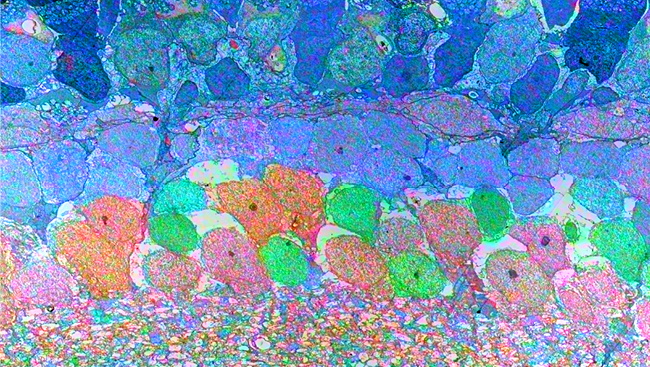
Material below summarizes the article Experimental Traumatic Brain Injury Identifies Distinct Early and Late Phase Axonal Conduction Deficits of White Matter Pathophysiology, and Reveals Intervening Recovery, published on October 10, 2018, in JNeurosci and authored by Christina M. Marion, Kryslaine L. Radomski, Nathan P. Cramer, Zygmunt Galdzicki, and Regina C. Armstrong.
Traumatic brain injury (TBI) is a major global health concern. Patients most commonly experience mild TBI and recover, but some patients face a lifetime of persistent symptoms.
TBI can slow transmission of signals within neuronal circuits. This can contribute to diverse functional deficits from early through late stages after TBI. Experimental TBI models provide a means to assess changes in neuronal circuits that may underlie these functional deficits.
Access to the full article is available to SfN members.
Neuronline is a benefit of SfN membership. Renew your membership now to make sure you don’t lose access.
About the Contributor