Access to the full article is available to SfN members.
Neuronline is a benefit of SfN membership. Renew your membership now to make sure you don’t lose access.
Log In Join SfN
Speakers
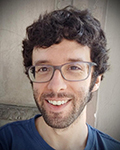
Seth Levine, PhD
Seth Levine, PhD, studied cognitive science at Johns Hopkins University, focusing on neuroscience and theoretical linguistics. He then obtained a masters in cognitive science from the University of Trento in Italy, which segued into a PhD in cognitive and brain sciences, where he combined psychophysics, machine learning, and functional neuroimaging to study auditory, tactile, and visual perceptual decision making. His postdoctoral research primarily investigated mental representations of fear and affect using methods from cognitive neuroscience. He joined NeuroImage in 2023 as a senior editor and is based in the Munich office.
Bryony McGarry, PhD
Bryony McGarry, PhD, earned her BSc in experimental psychology at the University of Bristol, followed by an MSc and PhD in preclinical and clinical neuroimaging, where she studied the potential utility of quantitative MRI for the treatment stratification of ischemic stroke patients. Her postdoctoral work at the Technological University Dublin in Ireland focused on combining neuroimaging with machine learning to support clinical decision making. McGarry joined NeuroImage in 2023 as a senior editor and is based in the Oxford office.
Sarah J. Spencer, PhD
Sarah J. Spencer, PhD, studied physiology at the University of Otago in New Zealand, followed by a physiology PhD at the University of Queensland, Australia, examining the role of the prefrontal cortex in control of the stress response. She performed postdoctoral work in Canada at Calgary University into early life programming of the neuroimmune response and followed this up with research at Monash and then RMIT Universities in Melbourne, Australia, into early life stress, obesity, immune challenge, and how they alter the brain. Her current work centers around microglia and how they respond to challenges. She joined the International Brain Research Organization (IBRO) journal, Neuroscience, in January 2024 as one of three chief editors and is based out of RMIT University in Australia.
Gail Rodney
Gail M. Rodney is a senior publisher for neuroscience within the Life Sciences & Social Sciences group at Elsevier. She has more than 25 years of publishing industry experience with emphasis on scholarly communication and innovation. Her current focus is open science, where she works with researchers, society partners, and peers to find better ways to ensure scientific research is not only more inclusive, collaborative, and transparent, but also accessible to all. Throughout her career she has held many roles and has been responsible for the launch and/or repositioning of a dozen peer-review titles. Rodney holds a BA in English and is an enthusiastic alumna of the State University of New York College at Old Westbury.
Who can attend these webinars? This webinar is open access and registration is complimentary.
Will the webinars be available on-demand? Yes, this webinar will be available on demand 1 week from the live broadcast .
Will a certificate of attendance be offered for this event? No, SfN does not provide certificates of attendance for webinars.
How do I access the conference on the live day? After registering, you will receive a confirmation email with the event link and the option to download calendar reminders.
What are the technology requirements for attending? These webinars are hosted on Zoom Webinar. Instructions for joining and participating in a webinar can be found here.
Can I ask the presenters questions? Yes! You can submit any questions before the webinar through the registration form. During the webinar, you can submit questions through the Q&A box.
Will a certificate of attendance be offered for this event? No, SfN does not provide certificates of attendance for webinars.
I have other questions not answered here. Email digitallearning@sfn.org with any other questions.
Review SfN’s Code of Conduct, rules for virtual events in the Digital Learning Community Guidelines, and communications policies regarding dissemination of unpublished scientific data, listed below. SfN asks that conference attendees respect the sensitivity of information and data being presented that are not yet available to the public by following these guidelines:
- Do not capture or publicly share details of any unpublished data presented.
- If you are unsure whether data is unpublished, check with the presenter.
- Respect presenters' wishes if they indicate that the information presented is not to be shared.