Fall 2026 NQ: Leaders in Neuroscience: Laura Colgin
- Featured in:
- Fall 2026 NQ

“Leaders in Neuroscience” is an interview series featuring current SfN leaders in the field and their path to prominence. It complements both SfN’s “History of Neuroscience” autobiographies and the forward-looking “Future of Neuroscience” series.
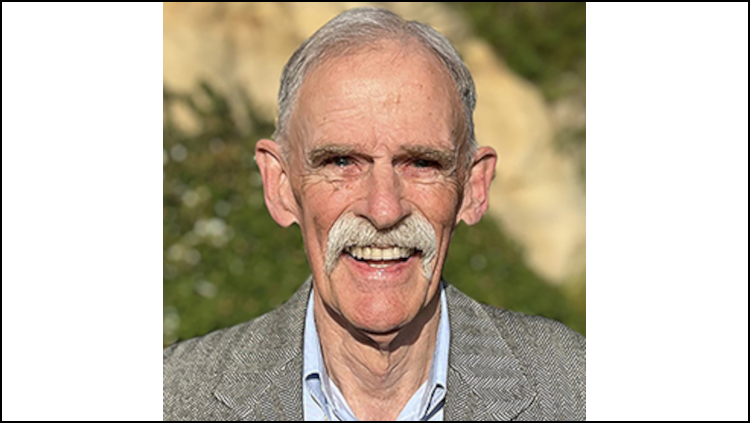
Laura Colgin is a professor in the Department of Neuroscience and director of the Center for Learning and Memory at The University of Texas at Austin. She received her Bachelor of Science from the University of New Orleans and PhD from The University of California, Irvine. After a postdoc at the Norwegian University of Science and Technology, she joined the faculty of The Center for Learning and Memory at The University of Texas at Austin in 2010. Colgin's research focuses on neuronal and neural network dynamics underlying learning and memory. Her laboratory investigates how coordinated neuronal populations in the entorhinal-hippocampal network encode, retrieve, and consolidate memories, and how these mechanisms are impaired in learning disabilities and memory disorders. Beyond her own research, she is actively engaged in service to the neuroscience community, including international organizations and scientific journals. She is a former chair of the SfN Program Committee and currently serves as an SfN Councilor.
Neuroscience Quarterly (NQ): How did you find your way to neuroscience?
Laura Colgin (LC): I was interested from an early age in how we can have a genetic predisposition toward certain behaviors, but also have the ability to change those tendencies through our own free will.
I grew up in a family in which college and graduate school weren’t part of our experience. So, getting a full scholarship to the University of New Orleans was life-changing. I was a Taylor Scholar, a member of a scholarship program for National Merit Scholars, which meant I came in with a cohort of other scholarship students who became an automatic group of friends. There wasn’t a neuroscience major offered at the time, so I studied psychology and biology. I finished the psychology degree, but completing the biology degree would have required another semester that my scholarship wouldn’t have covered.
My favorite class was Physiological Psychology, taught by Kevin Greve, a clinical neuropsychologist. I volunteered in his lab in the psychology department toward the end of my undergraduate studies. He helped connect me with my first positions after graduation, including a job working as a lab technician in a neurosurgery lab at Louisiana State University (LSU) Medical Center. I spent three years there studying factors that influence recovery from traumatic brain injury in rats. During this time as a tech, working with people who had been to graduate school helped me achieve that path for myself.
NQ: Can you briefly describe the research you’ve pursued over your career?
LC: Learning and memory have been the thread throughout my career. I became interested in electrophysiology as an undergraduate, and during my PhD in the Lynch Lab at the University of California, Irvine, I studied hippocampal rhythms, including sharp wave-ripples and dentate spikes, in vitro. For my postdoc, I wanted to study rhythms in freely behaving animals, so I joined the lab of Edvard and May-Britt Moser. I liked the Mosers’ approach because it was grounded in understanding the anatomy of the circuits they were studying. I also wanted the opportunity to live and work in another country, which probably was influenced by the fact that my mom is from England.
My lab studies similar questions today. We want to understand how coordinated populations of neurons in the hippocampal network support memory in healthy animals, and how those mechanisms are impaired in conditions such as fragile X syndrome and Alzheimer’s disease.
NQ: Your work investigates the coordination of neuronal activity. Are there any ties to your love of dancing?
LC: Rhythms are everywhere: in the cycle of day and night, in the ocean tides, and in dancing. Following a regular rhythm makes it easier to learn complicated motor movements. I’ve always been captivated by rhythms and had an intuition that they were important. There is something very special about their role in learning.

In the early days of my lab, all our parties were dance parties. We played Dance Central, where you follow an avatar’s movements. There has been some pushback since then, as not everyone wants to do that! I’ve also tried to get my students interested in Dance Your PhD, but nobody has taken me up on it. I’m always out on the dance floor at the SfN President’s Reception during the annual meeting.
I’m always out on the dance floor at the SfN President’s Reception during the annual meeting.
NQ: How did you find your way to SfN?
LC: During my first job as a lab tech at LSU Medical Center, my colleagues would present at SfN annual meetings. I got to present a poster on my work on a rat model of traumatic brain injury at Neuroscience 1996 in Washington, D.C.
Now I try to send everyone in my lab at least once to the SfN annual meeting. Some people are reluctant to present at such a large meeting because the crowds can feel overwhelming. I understand that, but there is so much to gain from the breadth of science there.
NQ: You’ve put in a lot of time volunteering with SfN, including now as an SfN Councilor. What makes volunteering with the Society meaningful to you?
LC: Public service is an important value for me. I’ve been fortunate to have a life with a lot of joy and happiness, and service is part of how I respond to that. As you reach a stage in your career where you can take on leadership roles, volunteering for organizations like SfN is a continuation of that commitment.
I really believe in scientific societies. We are stronger together, and SfN brings us together in ways that increase our impact. It organizes advocacy and public outreach, helps us share knowledge at the annual meeting, and supports journals with outstanding editorial boards. The needs of the community can change over time, and the value SfN brings can change with them. But the importance of coming together remains.
The needs of the community can change over time, and the value SfN brings can change with them. But the importance of coming together remains.
NQ: Having served as Program Committee chair, what would you tell first-time annual meeting attendees?
LC: Step out of your comfort zone and go to talks outside your field. You may be surprised by how exciting and inspiring it is to learn about something different. The breadth of the SfN annual meeting gives you that opportunity.
It can be a struggle to pull yourself away from the poster floor, but some of my most memorable experiences have been at Special and Presidential Lectures outside my field. I’ve learned about discoveries I wasn’t aware of and found the talks very accessible. They also act as great icebreakers by giving you something to talk about with other attendees afterward.