Inside the History of the Brain: 5 Places for Neuroscience Enthusiasts
The history of neuroscience lives beyond textbooks. Around the world, historical sites and medical collections preserve physical objects connected to important discoveries about the brain.
For anyone fascinated by the human brain, these places offer a rare opportunity to encounter firsthand the objects that helped shape modern neuroscience.
I have always been a passionate museum lover. Whenever I travel, museums and historical collections are inevitably part of my itinerary. Through my travel and research, I’ve compiled a list of five extraordinary destinations where where visitors can explore the history of the brain.
If you know of a place that I have missed, share it in the comments. I would love to hear about your discoveries and add a few more destinations to my bucket list!
1. The Cushing Center — Yale University, U.S.
The Cushing Center at Yale University in New Haven, Connecticut preserves the legacy of Harvey Cushing (1869–1939), one of the founders of modern neurosurgery.
The centerpiece is the extraordinary Harvey Cushing Brain Tumor Registry, which contains material from more than 2,200 cases. The collection includes preserved brain and tumor specimens, slides, clinical records, and photographs.
At a time when intracranial surgery carried enormous risks, Cushing meticulously correlated neurological symptoms with operative findings, pathology, and outcomes. Together with figures such as neuropathologist Percival Bailey, his work contributed to the foundations of modern brain tumor classification.
2. The Santiago Ramón y Cajal Legacy — Madrid, Spain
While Cushing represents a defining chapter in the birth of modern neurosurgery, the work of Santiago Ramón y Cajal (1852–1934) represents one of the great turning points in the scientific understanding of the neuron itself.
Using histological preparations and microscopy, Cajal investigated the microscopic architecture of the nervous system. His astonishing hand-drawn illustrations translated his microscopic observations into images of lasting scientific importance.
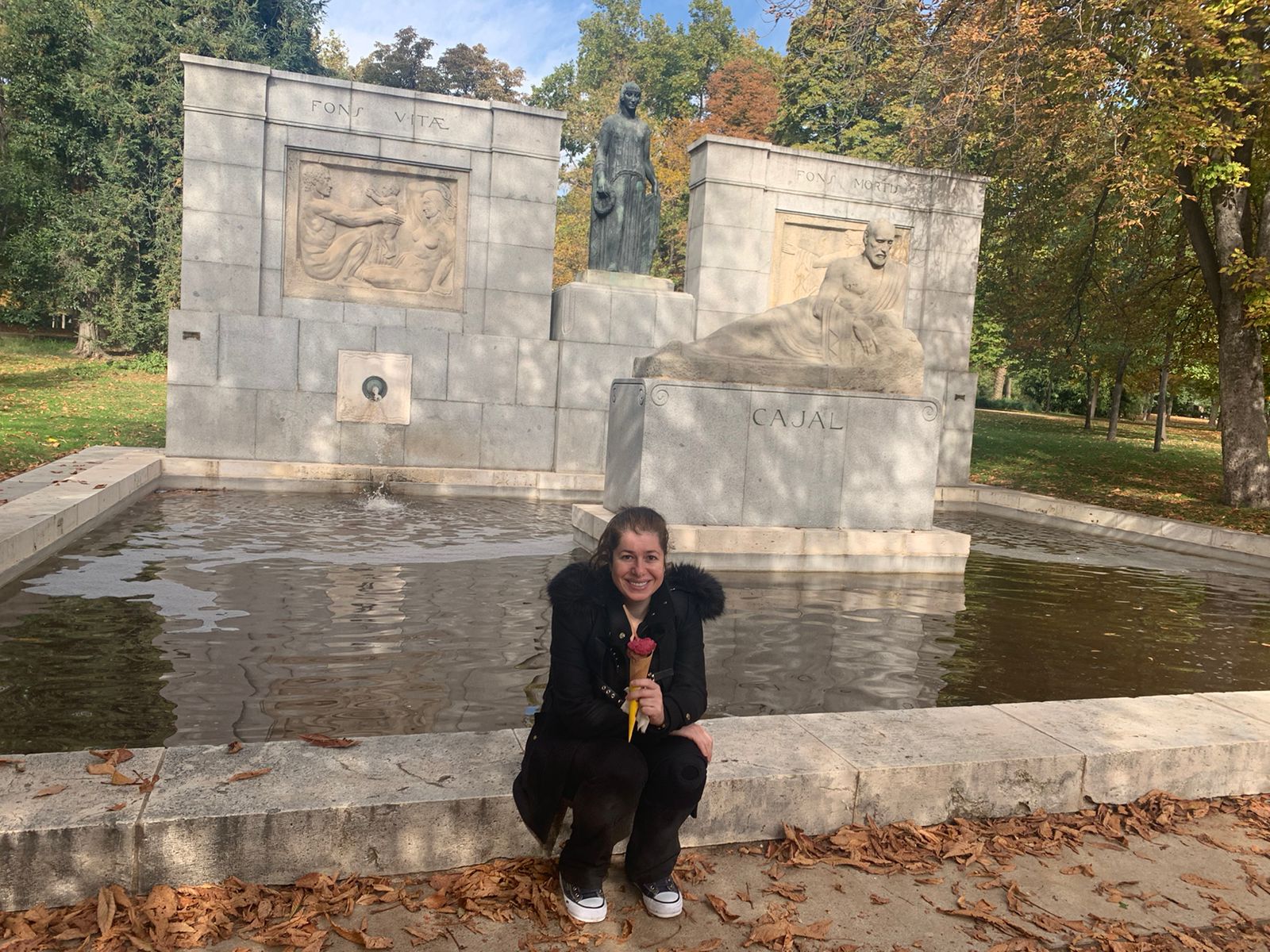
Madrid’s Legado Cajal, associated with the Museo Nacional de Ciencias Naturales and the Spanish National Research Council, preserves his legacy.
The collection includes original scientific drawings, histological preparations, photographs, instruments, and manuscripts.
Working decades before electron microscopy and long before modern confocal imaging and digital three-dimensional reconstruction, Cajal depicted dendrites, axons, Purkinje cells, interneurons, and neural circuits with extraordinary precision. His observations helped establish the neuron doctrine: the concept that the nervous system consists of individual cells rather than one continuous network.
3. The Camillo Golgi Museum — Pavia, Italy
A perfect counterpart to Madrid is the university city of Pavia, in northern Italy.
Here, visitors can enter the scientific world of Camillo Golgi (1843–1926), whose revolutionary silver-impregnation technique — the reazione nera, or “black reaction” — made it possible to visualize individual neurons in greater detail.
The Museo Camillo Golgi includes rooms connected to Golgi's historical laboratory and preserves instruments, documents, and personal objects.
Cajal used Golgi’s staining technique to help reveal the organization of the nervous system. Yet the two scientists interpreted their observations differently. Golgi defended a reticular conception of nervous organization, while Cajal argued that neurons were discrete cellular units.
In 1906, these scientific rivals shared the Nobel Prize in Physiology or Medicine.
4. The Wilder Penfield Archive — Montreal, Canada
The Wilder Penfield Archive in Montreal honors the legacy of neurosurgeon Wilder Penfield (1891–1976), whose work advanced epilepsy surgery and functional mapping of the cerebral cortex.
During operations on awake patients, Penfield and his colleagues used electrical stimulation of different cortical regions to investigate how areas of the brain relate to movement, sensation, memory, and other neurological phenomena.
This work helped produce one of neuroscience's most recognizable images: the cortical “Penfield homunculus.”
The Osler Library of the History of Medicine at McGill University preserves an extensive Penfield archive containing photographs, illustrations, correspondence, and glass slides.
5. Charcot and the Salpêtrière — Paris, France
Jean-Martin Charcot (1825–1893) and the Salpêtrière played central roles in modern neurological examination and clinicopathological correlation.
Charcot systematically studied and described neurological disorders, an approach that influenced generations of physicians. His students included influential neurologists such as Joseph Babinski.
Historical materials connected with Charcot and the French neurological tradition survive in Paris, particularly in collections associated with the Bibliothèque Charcot and the history of the Salpêtrière.
About the Contributor