Meeting the Moment: SfN Chapters Advocate in Uncertain Landscape
- Featured in:
- SfN Chapter Resources
Advocacy is not a one-time effort—it is an ongoing commitment that sustains the future of neuroscience. As SfN chapters continue to support education, training, and community engagement, advocacy plays a critical role in ensuring that neuroscience research remains a priority for policymakers, funding agencies, and the public. Read on to learn why sustained advocacy matters, how individual scientists and chapters can make a meaningful impact, and how SfN can support your efforts.
Why Ongoing Advocacy Matters
Advocacy ensures that neuroscience remains visible and valued year-round. As Katherine Bloom, SfN’s advocacy manager, explains:
“Advocacy ensures that neuroscience research remains a priority for policymakers, funding agencies such as NIH and NSF, and the public throughout the year.”
Federal funding from agencies and programs such as the NIH, NSF, the BRAIN Initiative, and the VA is foundational to neuroscience research. Without sustained engagement, the field risks losing momentum, visibility, and the resources needed to support discovery and innovation.
Bloom also notes: “Beyond securing funding, advocacy helps shape policy decisions, educate policymakers and the public about the need for continued support, and build long-lasting relationships with decision makers.”
Importantly, advocacy is not limited to professional advocates—individual scientists play a vital role by sharing their expertise and personal stories to show how neuroscience research directly benefits communities.
Advocacy in Action: A Chapter Leader’s Experience
Ethan Anderson, PhD, an addiction neuroscientist at LSU Health Sciences Center, is secretary of SfN’s Baton Rouge chapter, one of SfN’s 74 active chapters around the United States and globe that engage in a range of activities from networking opportunities, public outreach and educational events, and local advocacy—all with the shared goal of furthering SfN’s mission at the community level.
At LSU, the uncertainty of whether funding would be available led to lost or delayed grants, reduced graduate student recruitment, hiring freezes, and tightened budgets—disruptions that ultimately pull focus away from doing high-impact, health-relevant science. Anderson experienced this personally as he endured an eight-month delay to his own R01 grant.
As noted by Anderson, “the unpredictability of the situation caused us to halt many important aspects of research.”
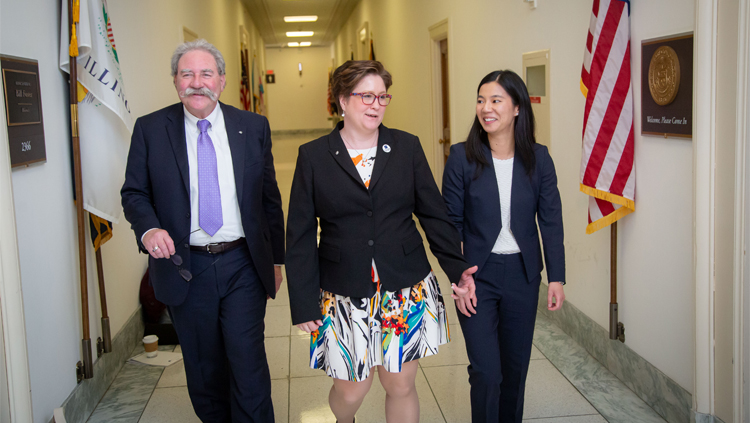
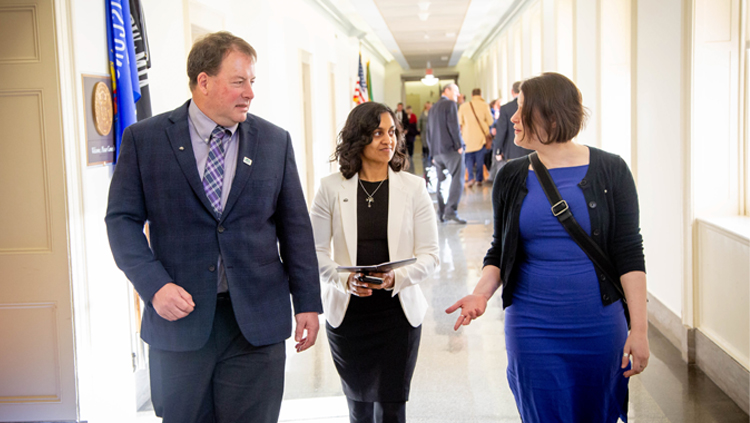
Anderson was motivated by a sense of responsibility to protect scientific funding, so Anderson participated in the SfN’s annual Capitol Hill Day in 2025, where neuroscientists from across the country meet with members of Congress to emphasize the importance of NIH-funded research. Representing Louisiana’s fifth congressional district, Anderson met with the office of Rep. Julia Letlow.
Reflecting on his approach, Anderson shared:
“I think that we all must do our part to maintain science funding…contacting our local representatives is a great place to start.”
Hill Day participants were encouraged by SfN to host lab tours and following that initial meeting, Anderson invited Letlow to visit his lab at LSU. While the representative was unable to attend personally, a member of her staff visited, and the researchers were able to highlight ongoing work and demonstrate the local economic impact of NIH funding.
Though advocacy outcomes are not always immediate or direct, Letlow voted in favor of a budget that rejected major proposed cuts to NIH funding in FY 2026, reinforcing the importance of continued engagement.
How Chapters Can Engage in Advocacy
SfN encourages chapters to start small and scale their advocacy efforts over time. Chapters can:
- Encourage members to join SfN’s Advocacy Network and subscribe to advocacy updates
- Participate in SfN Action Alerts to contact members of Congress
- Host advocacy trainings to build skills and confidence
- Visit this page to explore more ways to advocate with your chapter
As Bloom emphasizes, advocacy is most effective when it is sustained and collective:
“Every individual scientist plays a vital role in this effort—by sharing their expertise and stories, they help personalize the impact of neuroscience.”
SfN’s Role in Supporting Chapters
SfN provides year-round support through advocacy resources, training seminars, action alerts, and guidance on engaging policymakers. SfN can also assist chapters with setting up meetings and organizing lab tours.
Chapters with questions or interest in expanding advocacy activities are encouraged to contact advocacy@sfn.org.
Looking Ahead
Advocacy works best when it is consistent, local, and personal. As Anderson shared about his ongoing efforts:
“I hope that I will be a constant reminder to my local representatives of the impact that science has in local communities.”
With the leadership of SfN chapters and the support of the broader neuroscience community, we can ensure that neuroscience research continues to thrive—for our institutions, our trainees, and the millions of people who benefit from scientific discovery.