



Filter
-
(133)
-
(734)
-
(4)
-
(1)
-
(47853)
-
(92)
-
(25)
-
(14)
-
(435)
-
(7)
-
(185)
-
(8)
-
(33)
-
(17)
-
(7)
-
(10)
-
(9)
-
(5)
-
(21)
-
(8)
-
(12)
-
(9)
-
(3)
-
(10)
-
(10)
-
(56)
-
(45)
-
(12)
-
(3)
-
(7)
-
(6)
-
(5)
-
(8)
-
(7)
-
(11)
-
(58)
-
(13)
-
(31)
-
(8)
-
(5)
-
(10)
-
(5)
-
(16)
-
(4)
6261 - 6270
of 52788 results
-
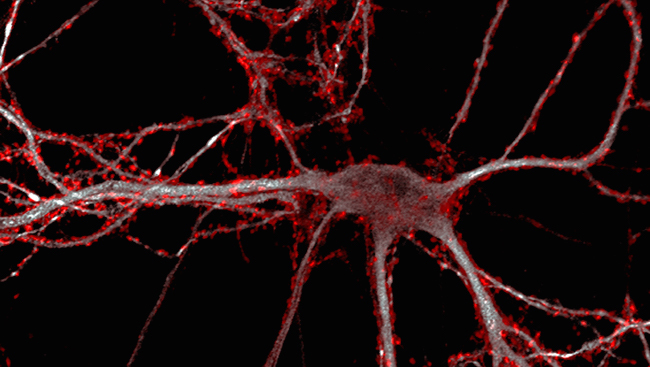 Webinar Scientific ResearchLATP webinars cover a wide range of professional development and neuroscience-related topics to help you stay abreast of the latest information and best practices in the field year round.
 -
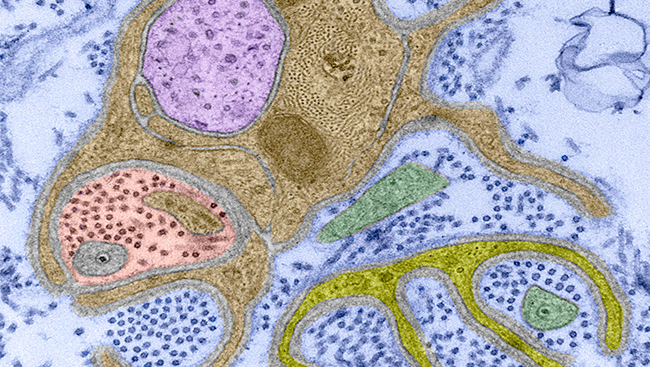 Professional DevelopmentThe following videos are from the 2019 LATP course held by UNAM.
 -
 Heather Rhodes is an associate professor of biology and a program director for neuroscience at Denison University.
 -
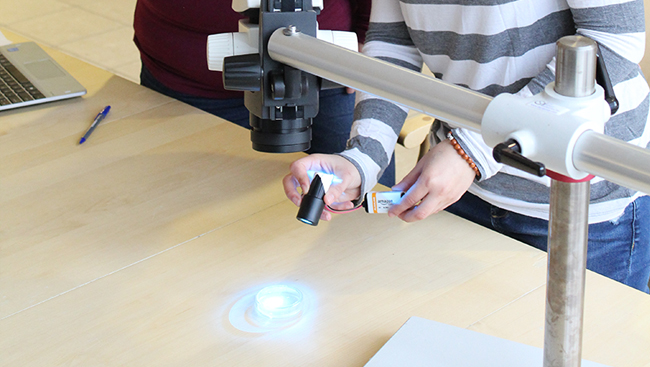 Article TrainingAn Accessible Approach to Optogenetics in the Classroom Using C. elegans By Heather J. Rhodes After the success I had using optogenetics with Drosophila in my undergraduate neurophysiology class last year (read, Implementing Optogenetics in the Classroom Part One: Drosophila), I decided to try working with another species — C. elegans — to conduct an optogenetics activity in my neuroscience senior seminar class this year. Getting Familiar With a New Species Like Drosophila larvae, C. elegans are transparent, which makes in vivo optogenetics very easy. By shining light of the wavelength that stimulates channel rhodopsin onto their bodies, you can observe behavioral changes. Also, like Drosophila, you can order lines of C. elegans worms that express channel rhodopsin or other effectors in specific populations of neurons. For my course, I used strain ZX460, which expresses channel rhodopsin in cholinergic neurons. Activation of channel rhodopsin in this line induces shortening of body length and a distinct coiling behavior.




