



Filter
-
(133)
-
(733)
-
(4)
-
(1)
-
(47833)
-
(91)
-
(25)
-
(14)
-
(433)
-
(7)
-
(182)
-
(8)
-
(33)
-
(17)
-
(7)
-
(9)
-
(9)
-
(5)
-
(21)
-
(8)
-
(12)
-
(9)
-
(3)
-
(10)
-
(10)
-
(56)
-
(45)
-
(12)
-
(3)
-
(7)
-
(6)
-
(5)
-
(8)
-
(7)
-
(11)
-
(58)
-
(13)
-
(30)
-
(8)
-
(5)
-
(10)
-
(5)
-
(15)
-
(4)
1571 - 1580
of 52756 results
-
 Journal ArticleIn the article, “The Paraventricular Thalamic Nucleus and Its Projections in Regulating Reward and Context Associations,” by Dillon S. McDevitt, Quinn W. Wade, Greer E. McKendrick, Jacob Nelsen, Mariya …Jan 1, 2025
 -
Journal ArticleIn the article “Transcranial Direct Current Stimulation Over the Posterior Parietal Cortex Increases Nontarget Retrieval During Visual Working Memory,” by Shengfeng Ye, Menglin Wu, Congyun Yao, Gui Xue, and Ying Cai, which published …Jan 1, 2025
-
 Journal ArticleSelectively stopping individual parts of planned or ongoing movements is an everyday motor skill. For example, while walking in public, you may stop yourself from waving at a stranger who you mistook for a friend while continuing to walk. Despite its ubiquity, our ability to selectively stop actions is limited. Canceling one action can delay the execution of other simultaneous actions. This stopping-interference effect on continuing actions during selective stopping may be attributed to a global inhibitory mechanism with widespread effects on the motor system. Previous studies have characterized a transient global reduction in corticomotor excitability by combining brain stimulation with electromyography (EMG). Here, we examined whether global motor inhibition during selective stopping can be measured peripherally and with high temporal resolution using EMG alone. Eighteen participants performed a bimanual anticipatory response inhibition task with their index fingers while maintaining a tonic contraction ...Jan 1, 2025
 -
Journal ArticleIn the article “Transient Response of Basal Ganglia Network in Healthy and Low-Dopamine State,” by Kingshuk Chakravarty, Sangheeta Roy, Aniruddha Sinha, Atsushi Nambu, Satomi Chiken, Jeanette Hellgren Kotaleski, and Arvind Kumar, which was published online on February 9, 2022 …Jan 1, 2025
-
 Journal ArticleThe brain attends to environmental rhythms by aligning the phase of internal oscillations. However, the factors underlying fluctuations in the strength of this phase entrainment remain largely unknown. In the present study, we examined whether the strength of low-frequency electroencephalography (EEG) phase entrainment to rhythmic stimulus sequences varied with the pupil size and posterior alpha-band power, thought to reflect the arousal level and excitability of posterior cortical brain areas, respectively. We recorded the pupil size and scalp EEG while participants carried out an intermodal selective attention task, in which they were instructed to attend to a rhythmic sequence of visual or auditory stimuli and ignore the other perceptual modality. As expected, intertrial phase coherence (ITC), a measure of entrainment strength, was larger for the task-relevant than for the task-irrelevant modality. Across the experiment, the pupil size and posterior alpha power were strongly linked with each other. Inte...Jan 1, 2025
 -
 Journal ArticleThe relationships between facial expression and color affect human cognition functions such as perception and memory. However, whether these relationships influence selective attention and brain activity contributed to selective attention remains unclear. For example, reddish angry faces increase emotion intensity, but it is unclear whether brain activity and selective attention are similarly enhanced. To investigate these questions, we examined whether event-related potentials for faces vary depending on facial expression and color by recording electroencephalography (EEG) data. We conducted an oddball task using stimuli that combined facial expressions (angry, neutral) and facial colors (original, red, green). The participants counted the number of times a rarely appearing target face stimulus appeared among the standard face stimuli. The results indicated that the difference in P3 amplitudes for the target and standard faces depended on the combinations of facial expressions and facial colors; the P3 fo...Jan 1, 2025
 -
 Journal ArticleAlterations in white matter (WM) microstructure are commonly found in migraine patients. Here, we employ a longitudinal study of episodic migraine without aura using diffusion magnetic resonance imaging (dMRI) to investigate whether such WM microstructure alterations vary through the different phases of the pain cycle. Fourteen patients with episodic migraine without aura related with menstruation were scanned through four phases of their (spontaneous) migraine cycle (interictal, preictal, ictal, and postictal). Fifteen healthy controls were studied in the corresponding phases of the menstrual cycle. Multishell dMRI data were acquired and preprocessed to obtain maps of diffusion parameters reflecting WM microstructure. After a whole-brain analysis comparing patients with controls, a region-of-interest analysis was performed to determine whether the patients’ microstructural changes varied across the migraine cycle in specific WM tracts. Compared with controls, patients showed reduced axial diffusivity (AD)...Jan 1, 2025
 -
 Article Scientific ResearchThroughout the primate visual cortex, individual neurons and clusters of neurons respond quite strongly to specific features within a viewed image.May 19, 2017
 -
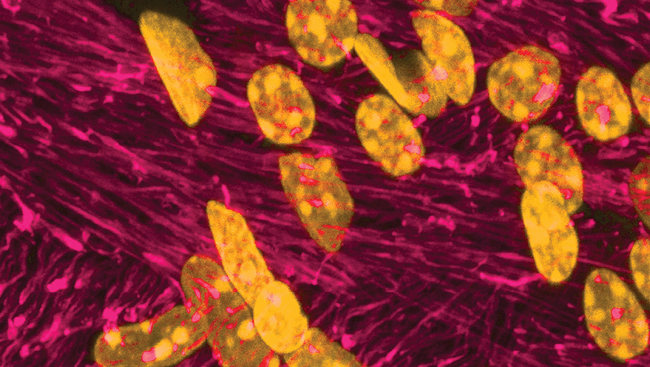 Article Scientific ResearchThe symptoms characterizing Alzheimer’s disease — memory loss and general cognitive decline — appear to derive from physical changes within the brain including amyloid plaque accumulation in the extracellular spaces, tangled fibrils of tau proteins within neural cells, and gross atrophy.May 18, 2017
 -
 Annual Meeting Video Professional DevelopmentYou may have heard terms such reproducibility, rigor, reliability, and robustness being increasingly used by SfN, the scientific community at large, journalists, and policymakers.May 17, 2017




