



Filter
-
(133)
-
(733)
-
(4)
-
(1)
-
(47832)
-
(91)
-
(25)
-
(14)
-
(433)
-
(7)
-
(181)
-
(8)
-
(33)
-
(17)
-
(7)
-
(9)
-
(9)
-
(5)
-
(21)
-
(8)
-
(12)
-
(9)
-
(3)
-
(10)
-
(10)
-
(56)
-
(45)
-
(12)
-
(3)
-
(7)
-
(6)
-
(5)
-
(8)
-
(7)
-
(11)
-
(58)
-
(13)
-
(30)
-
(8)
-
(5)
-
(10)
-
(5)
-
(14)
-
(4)
1421 - 1430
of 52753 results
-
 Journal ArticleThe adrenal medulla is packed with chromaffin cells, modified postganglionic sympathetic neurons that secrete the catecholamines, epinephrine and norepinephrine, during the fight-or-flight response. Sometimes overlooked, is a population of immune cells that also resides within the gland but whose distribution and function is not clear. Here I examine the location of CD45+ hematopoietic cells in the mouse adrenal medulla and show the majority are F4/80+/Lyz2+ macrophages. These cells are present from early post-natal development and widely distributed. Anatomically they are associated with chromaffin cells, found aligned alongside synapsin-ir neuronal varicosities and juxtaposed to CD31-ir blood vessels. Using Lyz2cre-GCaMP6f mice to quantify calcium signaling in macrophages revealed these cells respond directly and indirectly to a wide variety of neuromodulators, including pre- and post-ganglionic transmitters and systemic hormones. Purinergic agonists, histamine, acetylcholine and bradykinin rapidly and r...Feb 3, 2025
 -
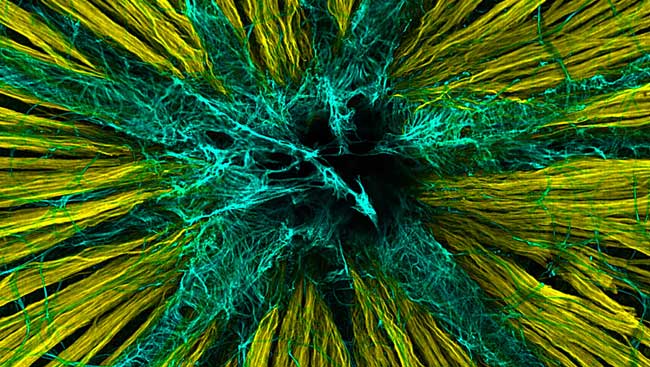 Article Professional Development“There are always new discoveries. It never ends,” says Angela Kim from Harvard Medical School on the most exciting aspect of studying neuroscience. As you prepare for another year of scientific discovery, professional development, and training, revisit Neuronline’s most popular resources from 2017. You’ll find fascinating scientific research, surprising facts about publishing a paper, a behind-the-scenes look at what goes into award-winning research, and more.Dec 12, 2017
 -
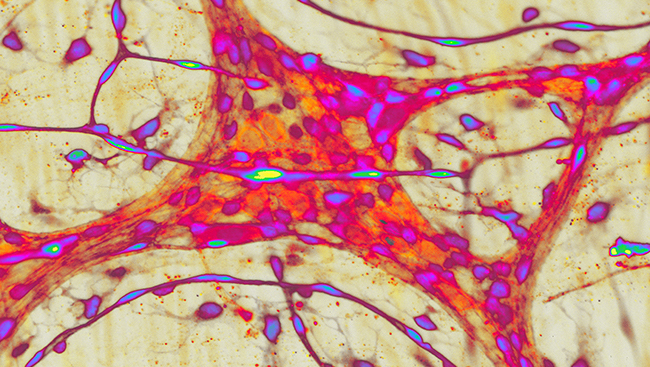 Article Annual Meeting Scientific ResearchMaterial below is adapted from the SfN Short Course, Adult Mouse Cortical Cell Taxonomy Revealed by Single-Cell Transcriptomics, by Bosiljka Tasic, PhD. Short Courses are day-long scientific trainings on emerging neuroscience topics and research techniques held just prior to SfN’s annual meeting. Single-cell RNA sequencing (RNA-seq) is a powerful tool that can help researchers look more deeply at individual cells, in order to better understand differences within tissues or groups of cells. One research team used RNA-seq to classify more than 1,600 cells from the cortex of adult male mice.Dec 12, 2017
 -
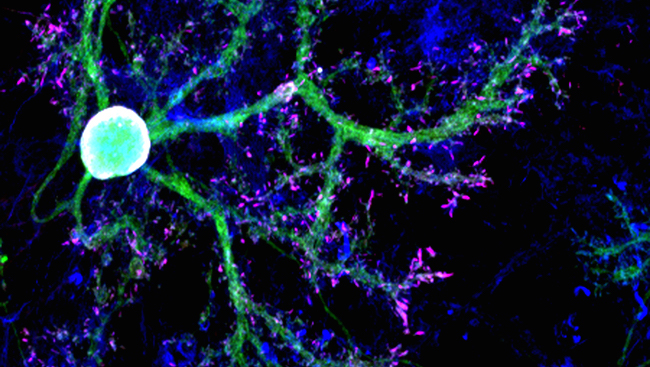 Article Career PathsPhillip West is an assistant professor of microbial pathogenesis and immunology at the Texas A&M University Health Science Center. He led a breakout group at the 2016 Neurobiology of Disease Workshop, From Pediatric Encephalopathy to Alzheimer's: Linking Mitochondria to Neurological Diseases, and presented in 2017 follow-up webinar, Linking Mitochondria to Neurological Disease. Here, he shares what led him to this research path and why it excites him. As told to, and edited by, SfN staff.Dec 6, 2017
 -
 Journal ArticleBreathing is a complex neuromuscular process vital to sustain life. In preclinical animal models, the study of respiratory motor control is primarily accomplished through neurophysiologic recordings and functional measurements of respiratory output. Neurophysiologic recordings that target neural or muscular output via direct nerve recordings or respiratory muscle electromyography (EMG) are commonly collected during anesthetized conditions. While offering tight control of experimental preparations, the use of anesthesia results in respiratory depression, may impact cardiovascular control, eliminates the potential to record volitional nonventilatory behaviors, and can limit translation. Since the diaphragm is a unique muscle which is rhythmically active and difficult to access, placing diaphragm EMGs to collect chronic recordings in awake animals is technically challenging. Here, we describe methods for fabricating and implanting indwelling diaphragm EMG electrodes to enable recordings from awake rodents for...Feb 1, 2025
 -
Journal ArticleThe amygdala is believed to make invaluable contributions to visual emotion processing. Yet how this subcortical body contributes to emotion perception across time is contended. Here, we measured differences in the perceptual processing of emotional stimuli after unilateral temporal lobe and amygdala resection (TLR) in humans, using EEG. Through mass univariate analysis of brain activity, we compared responses to fearful and neutral faces (left TLR N = 8, right TLR N = 8, control N = 8), and fearful and neutral bodies (left TLR N = 9, right TLR N = 9, control N = 9). We found that TLR impaired the early-stage perceptual processing of emotional stimuli seen in the control group. Indeed, in controls a heightened responses to fearful faces was found in the 140–170 ms time window, over temporoparietal electrodes. This effect was also present in the left TLR group but disappeared in the right TLR group. For emotional bodies, brain activity was differentially sensitive to fearful stimuli at 90–120 ms in th...Feb 1, 2025
-
 Journal ArticleFor comprehensive anatomical analysis of a mouse brain, accurate and efficient registration of the experimental brain samples to a reference atlas is necessary. Here, we introduce Bell Jar, a semiautomated solution that can align and annotate tissue sections with anatomical structures from a reference atlas as well as detect fluorescent signals with cellular resolution (e.g., cell bodies or nuclei). Bell Jar utilizes Mattes mutual information-directed B-spline transformations to achieve precise alignments, even with damaged sample tissues. While user input remains a requirement for fine-tuning section matches, the platform streamlines the process, aiding rapid analyses in high-throughput neuroanatomy studies. As a standalone desktop application with a user-friendly interface, Bell Jar’s performance, which surpasses traditional manual and existing automated methods, can improve the reproducibility and throughput of histological analyses.Feb 1, 2025
 -
 Journal ArticleFunctional imaging studies indicate that both the assessment of a person as untrustworthy and the assumption that a person has a sexually transmitted infection are associated with activation in regions of the salience network. However, studies are missing that combine these aspects and investigate the perceived trustworthiness of individuals previously assessed with high or low probability of a sexually transmitted infection. During fMRI measurements, 25 participants viewed photographs of people preclassified as having high or low HIV probability and judged their trustworthiness. In a postrating, stimuli were rated for trustworthiness, attractiveness, and HIV probability. Persons preclassified as HIV− in contrast to those preclassified as HIV+ were rated more trustworthy and with lower HIV probability. Activation in medial orbitofrontal cortex was higher for those rated and preclassified as HIV− than HIV+. Based on the individual ratings, but not the preclassification, there was significantly higher activa...Feb 1, 2025
 -
 Journal ArticleThe perception of scenes is associated with processing in a network of scene-selective regions in the human brain. Prior research has identified a posterior–anterior bias within this network. Posterior scene regions exhibit preferential connectivity with early visual and posterior parietal regions, indicating a role in representing egocentric visual features. In contrast, anterior scene regions demonstrate stronger connectivity with frontoparietal control and default mode networks, suggesting a role in mnemonic processing of locations. Despite these findings, evidence linking connectivity in these regions to cognitive scene processing remains limited. In this preregistered study, we obtained cognitive behavioral measures alongside resting-state fMRI data from a large-scale public dataset to investigate interindividual variation in scene processing abilities relative to the functional connectivity of the scene network. Our results revealed substantial individual differences in scene recognition, spatial mem...Feb 1, 2025
 -
 Journal ArticleObserving lip movements of a speaker facilitates speech understanding, especially in challenging listening situations. Converging evidence from neuroscientific studies shows stronger neural responses to audiovisual stimuli compared with audio-only stimuli. However, the interindividual variability of this contribution of lip movement information and its consequences on behavior are unknown. We analyzed source-localized magnetoencephalographic responses from 29 normal-hearing participants (12 females) listening to audiovisual speech, both with and without the speaker wearing a surgical face mask, and in the presence or absence of a distractor speaker. Using temporal response functions to quantify neural speech tracking, we show that neural responses to lip movements are, in general, enhanced when speech is challenging. After controlling for speech acoustics, we show that lip movements contribute to enhanced neural speech tracking, particularly when a distractor speaker is present. However, the extent of this...Feb 1, 2025




