



Filter
-
(133)
-
(733)
-
(4)
-
(1)
-
(47832)
-
(91)
-
(25)
-
(14)
-
(433)
-
(7)
-
(181)
-
(8)
-
(33)
-
(17)
-
(7)
-
(9)
-
(9)
-
(5)
-
(21)
-
(8)
-
(12)
-
(9)
-
(3)
-
(10)
-
(10)
-
(56)
-
(45)
-
(12)
-
(3)
-
(7)
-
(6)
-
(5)
-
(8)
-
(7)
-
(11)
-
(58)
-
(13)
-
(30)
-
(8)
-
(5)
-
(10)
-
(5)
-
(14)
-
(4)
1221 - 1230
of 52753 results
-
 Journal ArticleSynchronous activity of neuronal networks is found in many brain areas and correlates with cognition and behavior. Gamma synchrony is particularly strong in the dentate gyrus, which is thought to process contextual information in the hippocampus. Several network mechanisms for synchrony generation have been proposed and studied computationally. One such mechanism relies solely on recurrent inhibitory interneuron connectivity, but it requires a large enough number of synapses. Here, we incorporate previously published connectivity data of the dentate gyrus from mice of either sex into a biophysical computational model to test its ability to generate synchronous activity. We find that recurrent interneuron connectivity is insufficient to induce synchronous activity. This applies to an interneuron ring network and the broader dentate gyrus circuitry. Despite asynchronous input, recurrent interneuron connectivity can have small synchronizing effects but can also desynchronize the network for some types of syna...Apr 1, 2025
 -
 Journal ArticleHumans can adapt their movements in response to expected and unexpected perturbations. The speed and accuracy of these movement corrections may depend on the type of sensory information driving the perception of these perturbations. While previous research has indicated that corrections based on somatosensory information, comprised of proprioceptive and tactile inputs, are faster than corrections based on visual information, other studies have found comparable correction speeds in response to visual and tactile inputs. The purpose of this study was to systematically investigate the latencies (how fast) and magnitudes (how large) of movement corrections in response to perturbations of external visual targets, as well as somatosensory (proprioceptive and tactile) and tactile targets on the non-reaching limb. Participants performed reaching movements to a light-emitting diode (i.e., visual target), the felt position of a brush touching the index finger of the non-reaching hand (i.e., a tactile target), and th...Apr 1, 2025
 -
 Journal ArticleAttention-deficit/hyperactivity disorder (ADHD) adversely affects the learning, social interaction, and daily living of affected children. Atomoxetine (ATX) hydrochloride (HCI) has been widely used in clinical practice. Electroencephalogram (EEG) biofeedback, as a nonpharmacological treatment approach, has also demonstrated potential in improving symptoms in children with ADHD. We aimed to investigate the clinical efficacy of combining ATX HCI with EEG biofeedback in the treatment of ADHD in children. We hypothesized that this combined therapy would be more effective in alleviating symptoms in children with ADHD. Ninety children with ADHD were randomly separated into the control group (receiving ATX HCI treatment for 12 weeks) and study group (receiving ATX HCI treatment for 12 weeks combined with 60 sessions of EEG biofeedback treatment; n = 45). Swanson, Nolan, and Pelham-IV (SNAP-IV) rating scale scores, integrated visual and auditory continuous performance test results, Conners parent symptom question...Apr 1, 2025
 -
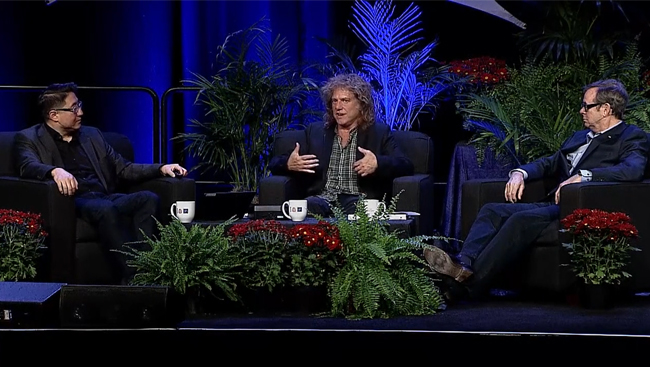 Video Annual Meeting Scientific ResearchMusic is a universal language and a powerful force in the world. It can have incredible impact on our brain and easily make us cry or make us joyful. Just a few notes of a song can cause us to remember memories long past. In this 2018 Dialogues Between Neuroscience and Society lecture, Pat Metheny discusses, with a panel of SfN members, the impact of music on the brain and on our emotions and memory; the process of creativity in music, art, and science; and the role of music in healing.Nov 7, 2018
 -
Journal ArticleParkinson’s disease (PD) is a progressive neurodegenerative disorder characterized by motor and non-motor symptoms. Its pathological hallmarks include the accumulation of misfolded alpha-Synuclein (α-Syn) in Lewy bodies (LBs) and Lewy neurites. Phosphorylation of α-Syn is a prominent feature of these inclusions, but its role in disease pathogenesis remains unclear. To identify the role of α-Syn phosphorylation in Synucleinopathy, we generated two Snca knock-in (KI) mouse models carrying phosphomimetic mutations at SncaY39 or SncaS129 ( SncaY39E or SncaS129D ) which manipulated epitopes phosphorylated in PD brain. Both SncaY39E and SncaS129D KI mice displayed increased α-Syn phosphorylation, enhanced oligomer formation, and a shift of α-Syn localization from membrane-bound to cytoplasm. However, neurodegeneration in substantia nigra was not observed up to 24 months of age. These findings demonstrate that mimicking the phosphorylation of Y39 or S129 can induce endogenous α-Syn phosphorylation. Still, a singl...Mar 31, 2025
-
 Video Professional DevelopmentOrganized by the FENS-Kavli Network of Excellence (FKNE) under the umbrella of the FENS Committee of Higher Education and Training (CHET), this session focuses on topics relevant for senior postdocs and newly appointed PIs who want to start their own lab, including: - How to get your first PI position. - Selection of team members. - Application and management of funds. - Early career mobility. - Balancing family with career.Oct 29, 2018
 -
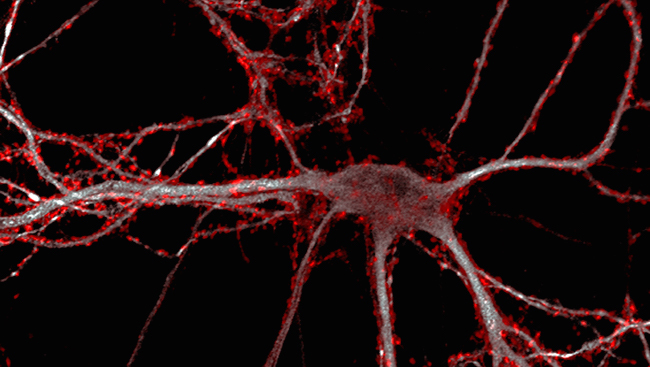 Video Professional DevelopmentThe crisis of reproducibility in biology, from which neuroscience is not immune, has many causes. This workshop covers the wide-ranging issues that contribute to irreproducibility. It focuses on the bias in dissemination of experimental data from the point of view of journals, funding agencies, and the general media.Oct 29, 2018
 -
 Annual Meeting Article Professional DevelopmentThe SfN annual meeting has excellent opportunities to make meaningful connections and seek real-time information. Here are a few ways you can personalize your experience.Oct 29, 2018
 -
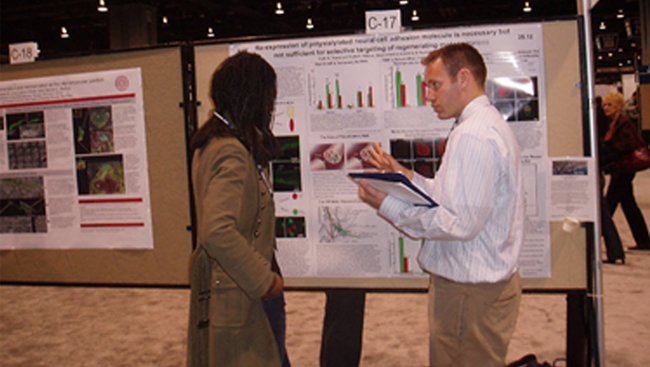 Article Annual Meeting Professional DevelopmentColin Franz, assistant professor at Northwestern University, shares his tips to end each day of SfN’s annual meeting with a feeling of accomplishment and make important career connections. What’s your key to a successful meeting? My advice for a first-time attendee would be, decide the one thing you want to accomplish for each half-day before you walk into the convention center.Oct 24, 2018
 -
 Video Outreach“The best thing to do when you’re communicating your animal research is to be completely straightforward about it,” explains Chris Barncard, science writer at the University of Wisconsin. “People recognize genuine sentiment when they see it. So we tell our researchers, even if they’re apprehensive about talking about their animal research, to try to be as straight and complete as they can with people about how animal research is conducted. Those interactions often turn out very positive.” Watch this video to hear the: - Benefits of speaking openly about animal research. - Approaches that can help researchers talk about animal research. - Key tips and strategies that you can incorporate into your conversations.Oct 18, 2018




