



Filter
-
(133)
-
(733)
-
(4)
-
(1)
-
(47832)
-
(91)
-
(25)
-
(14)
-
(433)
-
(7)
-
(181)
-
(8)
-
(33)
-
(17)
-
(7)
-
(9)
-
(9)
-
(5)
-
(21)
-
(8)
-
(12)
-
(9)
-
(3)
-
(10)
-
(10)
-
(56)
-
(45)
-
(12)
-
(3)
-
(7)
-
(6)
-
(5)
-
(8)
-
(7)
-
(11)
-
(58)
-
(13)
-
(30)
-
(8)
-
(5)
-
(10)
-
(5)
-
(14)
-
(4)
1091 - 1100
of 52753 results
-
 Webinar DiversityTwo institutional leaders will discuss their institutions’ successful strategies to diversify their faculty and create an inclusive environment where faculty can thrive and serve as role models to trainees. Cristina Alfaro, provost chair of faculty diversity and inclusion at San Diego State University, and Philip Kass, vice provost for academic affairs at the University of California, Davis, will share their insights on cultivating strong support for and commitment to diversity and inclusion at the departmental and institutional levels.Jun 12, 2019
 -
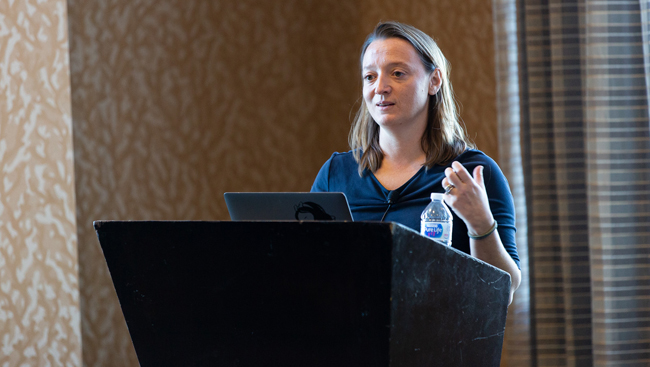 Podcast Career PathsCamilla Bellone started her career working on cellular mechanisms underlying the synaptic function of defined neuronal circuits during postnatal maturation. Now an assistant professor at the University of Geneva, she runs a lab focusing on the molecular determinants and the circuits that control social behavior in physiological and pathological conditions. In this Meet the Expert, she offers a look at the roles of training abroad and openness to new collaborations in allowing her to expand her skillset as a scientist, as well as how she has balanced her evolving interests in synapses, circuits, and behaviors.Jun 11, 2019
 -
 Journal ArticleCell shape is crucial to cell function, particularly in neurons. The cross-sectional diameter, also known as caliber, of axons and dendrites is an important parameter of neuron shape, best appreciated for its influence on the speed of action potential propagation. Many studies of axon caliber focus on cell-wide regulation and assume that caliber is static. Here, we have characterized local variation and dynamics of axon caliber in vivo using the peripheral axons of zebrafish touch-sensing neurons at embryonic stages, prior to sex determination. To obtain absolute measurements of caliber in vivo, we paired sparse membrane labeling with super-resolution microscopy of neurons in live fish. We observed that axon segments had varicose or “pearled” morphologies, and thus vary in caliber along their length, consistent with reports from mammalian systems. Sister axon segments originating from the most proximal branch point in the axon arbor had average calibers that were uncorrelated with each other. Axon caliber ...May 8, 2025
 -
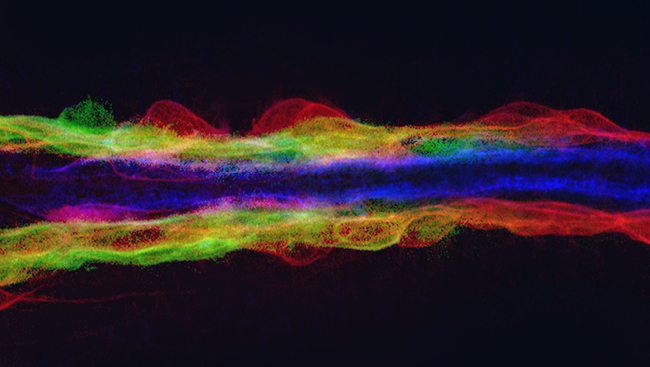 Article Scientific ResearchMaterial below summarizes the article Prefrontal Theta Oscillations Promote Selective Encoding of Behaviorally Relevant Events, published on December 26, 2018, in eNeuro and authored by Justin Jarovi, Julien Volle, Xiaotian Yu, Lisa Guan, and Kaori Takehara-Nishiuchi. Imagine if we remembered every detail of every event we’ve ever experienced. Trying to find a particular memory would be like searching for a needle in a thousand haystacks. Luckily, our brains don’t store carbon copies of all the events we’ve experienced. Rather, our brains tend to remember important events, and trivial ones are often forgotten. This ability to capture the most relevant information from everyday experiences without constantly learning unimportant details is vital to survival and mental health. But how do our brains decide which events are important enough to store as long-term memories? Previous work has shown a brain region called the hippocampus is essential for encoding into memory the events we encounter during everyday life. More recently, evidence has suggested activation of another brain region, the medial prefrontal cortex (mPFC), during events is also important for successful memory encoding.Jun 6, 2019
 -
 Article Professional DevelopmentGraduate research fellowships can be great funding alternatives to teaching and research assistantships. They provide an opportunity to show future PIs that you’re capable of getting funding, and they also give you more freedom with the scope of your project. The National Science Foundation Graduate Research Fellowship (NSF GRFP) is a competitive, prestigious fellowship for graduate students that you apply for as an undergraduate or during your first or second year in graduate school. To ensure your application is competitive, first thoroughly review the GRFP website and understand the mission of the NSF: to conduct research with both intellectual merit and broader impacts. The application requires a personal statement detailing previous research and academic experiences and achievements, outreach and leadership experiences, and future career goals. Additionally, students propose an innovative research project and detail how it will be completed. I’ve benefitted from the excellent funding, professional network, and research flexibility afforded by the NSF GRFP and highly recommend people apply. Consider these tips as you prepare your application.Jun 5, 2019
 -
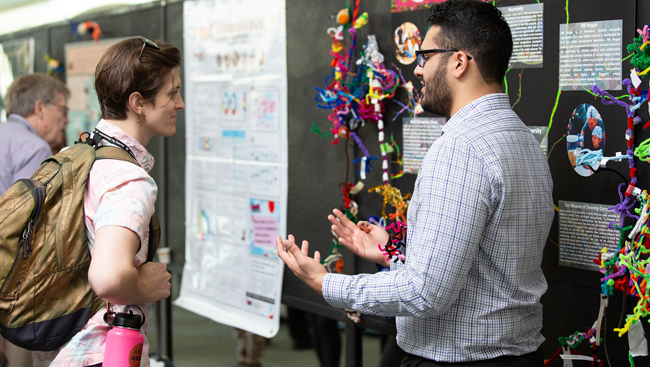 Article Annual Meeting OutreachThe following describes the second storytelling minisymposium at SfN’s annual meeting. The session will be held at every annual meeting going forward, bringing together neuroscientific discovery, science reporting, and personal storytelling through lectures and personal stories. Neuroscientists will understand how to engage the public creatively and effectively and come away with tangible strategies for sharing their passion for science using their imagination and emotions. When she was younger, Jean Mary Zarate played the violin well and hoped to attend a music program for youth at Juilliard, the prestigious music conservatory. However, as the daughter of two medical professionals who moved from the Philippines to the United States, she chose to pursue a career in science. Still, Zarate couldn’t ignore her love of music. As an undergraduate neuroscience major, she planned to become a neurosurgeon, but after dropping out of a premed program to commit more time to teaching music, she realized that career path wasn’t for her. Research allowed her to study the relationship between music and the brain, and she devoted herself to it. Now a Nature Neuroscience senior editor, Zarate has accepted she has two passions — neuroscience and music — and she finds ways to combine them.Jun 4, 2019
 -
 Annual Meeting Video Career PathsA wide range of careers in neuroscience is available to students pursuing a biomedical PhD or an MD/PhD. This workshop offers strategic advice, considerations, and resources for discovering your options and choosing your career path. You’ll learn how to balance finding mentors, networking, and acquiring professional skills while in graduate school or as a postdoctoral fellow, and how to plan for career transitions between sectors. You’ll also learn how to identify your transferable skills and values — what motivates you — and how your skills, values, and interests intersect. Those interested in a career in pharmaceuticals will benefit from hearing what a career in pharma involves, why to go into pharma, and how to assess whether a job in pharma or biotech could be for you.Jun 4, 2019
 -
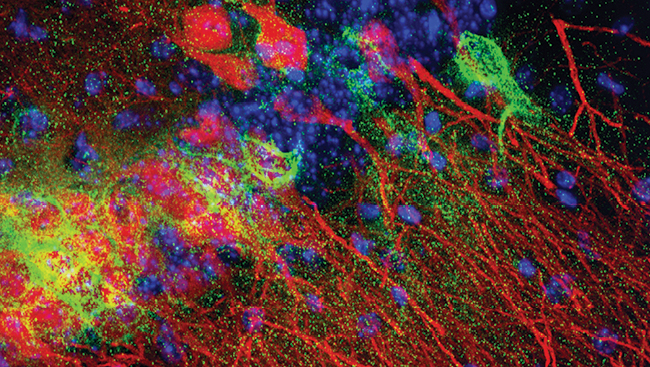 Article Scientific ResearchMaterial below is adapted from the SfN Short Course session How to Study Male and Female Rodents, by Jill B. Becker. Short Courses are daylong scientific trainings on emerging neuroscience topics and research techniques held the day before the start of SfN’s annual meeting. Neurological diseases can show up at different times and with different symptoms for men and women. Yet neuroscience research, which often uses rodent models, does not always account for this diversity. Figuring out how sex differences — such as sex hormones and estrous cycles — affect research outcomes could help neuroscientists gain a greater understanding of the brain and related disorders. When determining sex differences, it is important to remember they are not always clearly binary. Sometimes males and females behave completely differently in well-defined ways, but other times, behaviors may be the same in both sexes and only take place for different lengths of time or at different times of the day.May 30, 2019
 -
 Video AdvocacyScientists are careful to follow animal care regulations, both for the well-being of the animals and for the accuracy of the science. By educating the public on the guidelines in place to ensure animal welfare during experiments, you can help encourage public support of animal research overall. One crucial first step for engaging with nonscientists is partnering with your institution and lab animal caretakers to craft a transparent and positive message. By sharing the full scope of the work — the importance of the research and the care oversight in place — you can help accurately inform the public’s perception and shape the conversations happening around animal research.May 23, 2019
 -
 Article Professional DevelopmentThe Mazer Lab is a member of the NSF Established Program to Stimulate Competitive Research (EPSCoR)-funded Attention Consortium, a team of researchers at four universities collaborating to develop a model for the neural basis of attention. In this interview, James Mazer, an associate professor at Montana State University studying visual perception and cognition, explains how collaborations can be formative for your career and shares advice for acquiring skills that will help you contribute to any team. How do your lab and Montana State University work with other programs in the EPSCoR-funded Attention Consortium? Our EPSCoR grant is specifically intended to encourage and facilitate collaboration between labs and universities. The grant brings together people from different labs at different institutions, using different tools and approaches, who share the common goal of understanding the neural bases of attentional modulation. Members of the consortium are using a variety of physiological and psychophysical techniques, ranging from optical imaging in rodents to human ECoG and deep brain stimulation, to elaborate the neural circuits responsible for attention. At schools like Montana State, which is relatively small, scientific interactions can be difficult to come by — departments are smaller, there aren’t as many neuroscience faculty on campus compared to larger schools, and the neuroscience grad student population is smaller. Programs like EPSCoR can play a critical role in giving students additional opportunities for training and collaboration that might be otherwise hard to find or organize. In our case, the EPSCoR gives our students extensive opportunities to interact and collaborate with students, postdocs, and PIs at other institutions.May 22, 2019




