



Filter
-
(133)
-
(733)
-
(4)
-
(1)
-
(47832)
-
(91)
-
(25)
-
(14)
-
(433)
-
(7)
-
(181)
-
(8)
-
(33)
-
(17)
-
(7)
-
(9)
-
(9)
-
(5)
-
(21)
-
(8)
-
(12)
-
(9)
-
(3)
-
(10)
-
(10)
-
(56)
-
(45)
-
(12)
-
(3)
-
(7)
-
(6)
-
(5)
-
(8)
-
(7)
-
(11)
-
(58)
-
(13)
-
(30)
-
(8)
-
(5)
-
(10)
-
(5)
-
(14)
-
(4)
1001 - 1010
of 52753 results
-
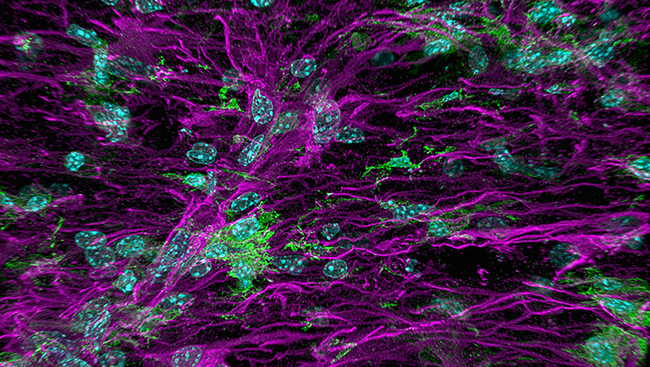 Article Professional DevelopmentImagine a future in which you could tell your spouse about your day by simply transferring the memory to them, or one in which you could pass your memories on even after your death. These scenarios may seem far ahead in the future, but steps are definitely being taken towards this development. To combat our natural memory inaccuracy and decline due to old age or Alzheimer’s disease, which has been found in 1 out of every 10 people over 65 years old, scientists are beginning to investigate the biology of memory and the ways in which the process of making memories can be improved. A recent and controversial article published by Science News reported that RNA may be used to transfer memories from one sea slug to another.Nov 6, 2019
 -
 Journal ArticleHumans exhibit laterality preferences, with handedness being the most extensively studied. Accordingly, brain-handedness associations are well documented. However, laterality preferences extend beyond handedness to include other limbs and organs, such as footedness and eyedness. Despite these distinctions, brain-footedness and brain-eyedness associations using resting-state functional connectomes remain largely unexplored. We utilize two large datasets, the Human Connectome Project-Development (HCP-D) and Human Connectome Project-Aging (HCP-A), to study the associations between sidedness (i.e., handedness, footedness, and eyedness) and whole-brain functional connectomes. While hand and foot preferences were correlated significantly, they explained less than 40% of the variance, suggesting some distinctions between the measures. For both cohorts, significant associations between handedness and connectivity were observed (p<0.05, NBS corrected). Notable patterns include increased connectivity for left-handed...Jun 5, 2025
 -
Journal ArticleRecent fMRI studies reported transformed representations between perception and visual working memory (VWM) in human early visual cortex (EVC). This is inconsistent with the still widely cited original proposal of the sensory account of VWM, which argues for a shared perception-VWM representation based on successful cross-decoding of the two representations. Although cross-decoding was usually lower than within-VWM decoding and consistent with transformed VWM representations, this has been attributed to experimental differences between perceptual and VWM tasks: once they are equated, the same representation is expected to exist in both. Including human participants of both sexes, this study compared target and distractor representations during the same VWM delay period for the same objects, thereby equating experimental differences. Even with strong VWM representations present throughout occipitotemporal cortex (OTC, including EVC) and posterior parietal cortex (PPC), fMRI cross-decoding revealed significa...Jun 5, 2025
-
Journal ArticleSavings refers to the gain in performance upon relearning. In sensorimotor adaptation, savings is tested by having participants adapt to perturbed feedback and, following a washout block during which the system resets to baseline, presenting the same perturbation again. While savings has been observed with these tasks, we have shown that the contribution from implicit adaptation, a process that uses errors to recalibrate the sensorimotor map, is attenuated upon relearning (Avraham et al., 2021). Here, we test the hypothesis that this attenuation is due to interference arising from the different relationship between the movement and the feedback during washout. Removing the perturbation at the start of the washout block typically results in a salient error signal in the opposite direction to that observed during learning. We first replicated the finding that implicit adaptation is attenuated following a washout period that introduces salient opposite errors. When we eliminated feedback during washout, relea...Jun 5, 2025
-
Journal ArticleMazes are a fundamental and widespread tool in behavior and systems neuroscience research in rodents, especially in spatial navigation and spatial memory investigations in freely behaving animals. However, their form and inflexibility often restrict potential experimental paradigms that involve multiple or adaptive maze designs. Unique layouts often lead to elevated costs, whether financially or in terms of time investment from scientists. To alleviate these issues, we have developed an automated, modular maze system that is flexible and scalable. This open source Adapt-A-Maze (AAM) system will allow for experiments with multiple track configurations in rapid succession. Additionally, the flexibility can expedite prototyping of behavioral paradigms. Automation ensures less variability in experimental parameters and higher throughput. Finally, the standardized componentry enhances experimental repeatability within labs and replicability across labs. Our maze was successfully used across labs, in multiple ex...Jun 5, 2025
-
 Video Scientific ResearchTrainingSpace (TS) is an online hub that aims to make neuroscience educational materials more accessible to the global neuroscience community. As a hub, TS provides users with access to: Multimedia educational content from courses, conference lectures, and laboratory exercises from some of the world’s leading neuroscience institutes and societies. Study tracks to facilitate self-guided study. Tutorials on tools and open science resources for neuroscience research. A Q&A forum. A neuroscience encyclopedia that provides users with access to over 1,000,000 publicly available datasets as well as links to literature references and scientific abstracts. Topics currently included in TS include: general neuroscience, clinical neuroscience, computational neuroscience, neuroinformatics, computer science, data science, and open science. All courses and conference lectures in TS include a general description, topics covered, links to prerequisite courses if applicable, and links to software described in or required for the course, as well as links to the next lecture in the course or more advanced related courses. To learn more about TrainingSpace, visit: https://training.incf.org/Nov 5, 2019
 -
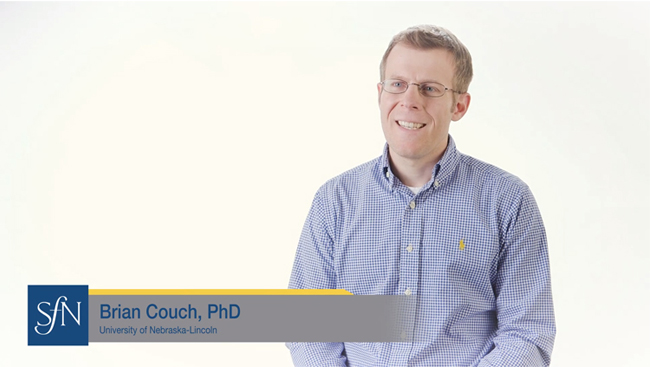 Video Training“Thinking about the evidence behind how we teach and what we teach is important,” reflects Brian Couch, assistant professor at the University of Nebraska-Lincoln, whose research group seeks to understand the undergraduate science education system and identify methods to improve student learning. Undergraduate neuroscience is a broad field with diverse students. Identifying and using tested teaching practices with demonstrated efficacy in the classroom can help educators assess their students’ success and adequately prepare them for future careers. Watch this video to learn how to start small and incorporate specific evidence-based activities into your classroom to improve student learning.Oct 31, 2019
 -
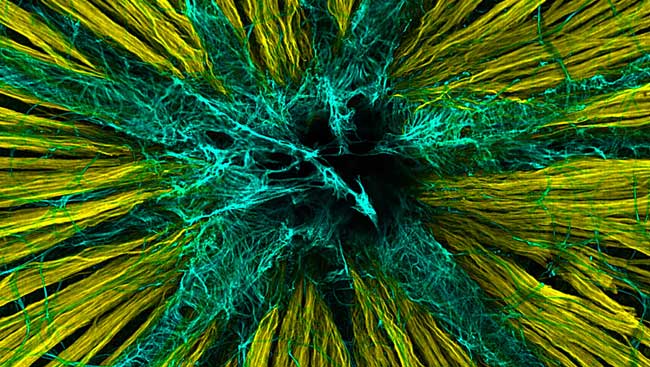 Article Scientific ResearchMaterial below is adapted from the SfN Short Course session Sex Differences in Behavioral Strategies: Avoiding Interpretational Pitfalls, by Rebecca M. Shansky. Short Courses are daylong scientific trainings on emerging neuroscience topics and research techniques held the day before the start of SfN’s annual meeting. Although scientists have studied animal behavior in the lab for years, most of those studies have been in male rodents. The NIH recently mandated that researchers must include both sexes in their experiments, meaning the ways scientists have done and interpreted studies for years are now getting another look. This shift to widely including both male and female animals in experimentation has already and will likely continue to provide insight into the relationship between brain structure and function, and should help to inform translational work.Oct 30, 2019
 -
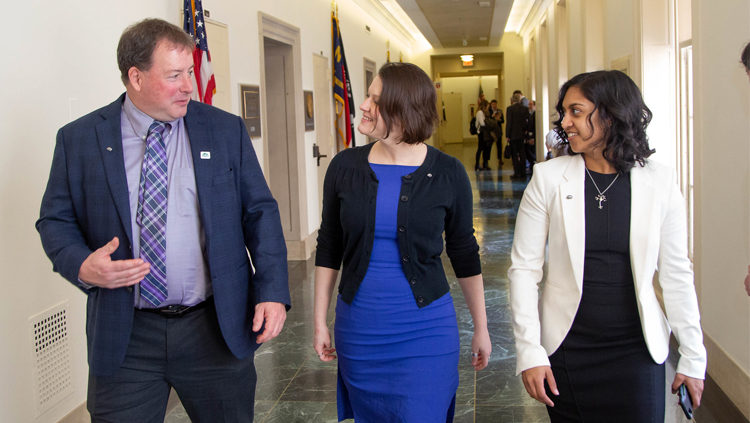 Article AdvocacyI worked on Capitol Hill for about eight years before moving out west, coming back, working at the Alliance for Aging Research, and finally joining the Coalition for Life Sciences. I've been with them for about 15 years now. We’re located in Washington, DC, and as advocates in that world, it’s our responsibility to make sure scientists feel comfortable coming and working with Members of Congress. We help them learn how to talk about their science in ways that are understandable regardless of the last time you took biology.Oct 29, 2019
 -
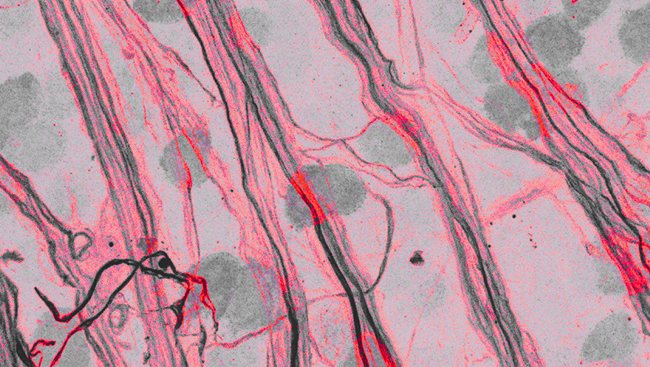 Article Professional DevelopmentWhat can neuroscience tell us about ethics? Some say nothing – ethics is a normative discipline that concerns the way the world should be, while neuroscience is normatively insignificant: it is a descriptive science which tells us about the way the world is. This seems in line with what is sometimes called “Hume’s Law”, the claim that one cannot derive an ought from an is. This claim is contentious and its scope unclear, but it certainly does seem true of demonstrative arguments, at the least. Neuroethics, by its name, however, seems to suggest that neuroscience is relevant for ethical thought, and indeed some have taken it to be a fact that neuroscience has delivered ethical consequences. It seems to me that there is some confusion about this issue, and so here I’d like to clarify the ways in which I think neuroscience can be relevant to ethics.Oct 23, 2019




