



Filter
-
(133)
-
(733)
-
(4)
-
(1)
-
(47830)
-
(91)
-
(25)
-
(14)
-
(433)
-
(7)
-
(181)
-
(8)
-
(33)
-
(17)
-
(7)
-
(9)
-
(9)
-
(5)
-
(21)
-
(8)
-
(12)
-
(9)
-
(3)
-
(10)
-
(10)
-
(56)
-
(45)
-
(12)
-
(3)
-
(7)
-
(6)
-
(5)
-
(8)
-
(7)
-
(11)
-
(58)
-
(13)
-
(30)
-
(8)
-
(5)
-
(10)
-
(5)
-
(14)
-
(4)
821 - 830
of 52751 results
-
 Annual MeetingRevisit SfN annual meeting programming you enjoyed or missed year-round.Sep 18, 2020
 -
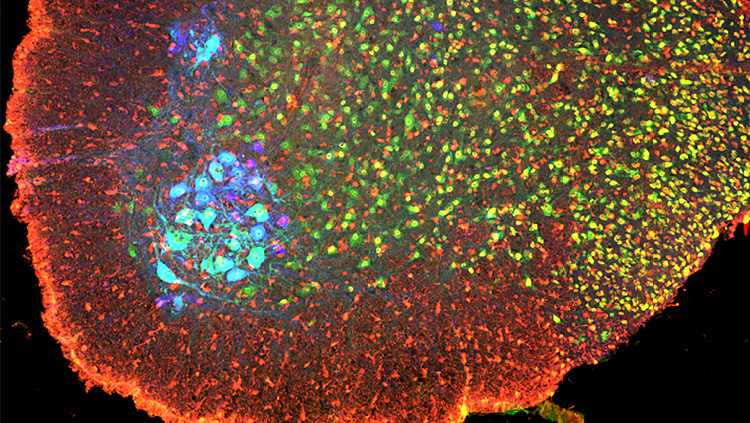 Article Scientific ResearchMaterial below summarizes the article Synaptic Connections of Aromatase Circuits in the Medial Amygdala are Sex Specific, published on May 29, 2020, in eNeuro and authored by Addison Billing, Marcelo Henrique Correia, Diane A. Kelly, Geng-Lin Li, and Joseph Bergan. Highlights Aromatase-producing cells in the mouse medial amygdala receive input originating from sensory cells in the vomeronasal organ that express a single class of receptors known to detect chemicals that convey information about the age, sex, and breeding condition of other mice. We did not observe sex differences in the intrinsic electrophysiological properties of aromatase-producing cells in the medial amygdala; however, we found a robust anatomical sex difference in the number of synapses that connect the accessory olfactory bulb – and thus the vomeronasal organ - to these cells. Males have nearly an order of magnitude more of these synaptic connections than do females, an anatomical difference that could play a role in shaping sex differences in social behaviors mediated by the medial amygdala.Sep 17, 2020
 -
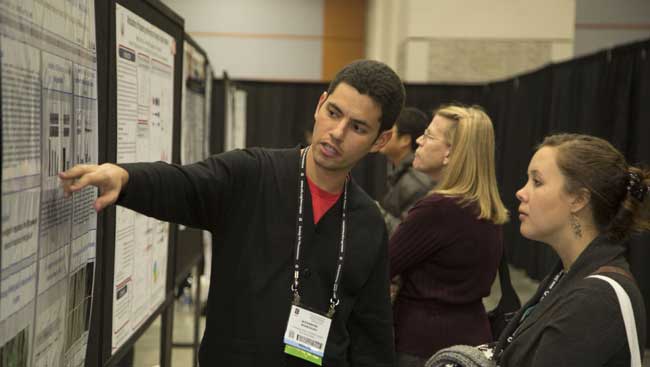 Article Scientific ResearchIn 1971, at the very first plenary session of the newly formed Society for Neuroscience (SfN), Vernon Mountcastle delivered his keynote address as the first SfN president. He took stock of the great achievements of the 1960s, which led to the formation of SfN, and looked forward to how this new group would shape neuroscience and society in the years to come. Now, as we mark the 50th anniversary of the society's founding, SfN's Trainee Advisory Committee (TAC) took on the same task — below and in their Journal of Neuroscience article, The Next 50 Years of Neuroscience — reflecting on a foundation of astounding work and predicting what the next 50 years will hold. Separated by time and space, Mountcastle's words echo in the hearts and minds of the newest generation of scientists.Sep 16, 2020
 -
 Article Career PathsThis resource was featured in the NeuroJobs Career Center. Visit today to search the world’s largest source of neuroscience opportunities. For over 40 years, Nick Ingoglia researched the presence and function of RNA in growing axons. Now retired from a career in neuroscience, Ingoglia has been working toward writing a novel, Madame Lasagna and the Dead Frog, that combines neuroscience research with the fictional lives of a diverse group of characters. In this interview, Ingoglia shares how he incorporates his research experience into his writing, what he hopes audiences take away from his novels, and tips for scientists looking to explore a writing career.Sep 15, 2020
 -
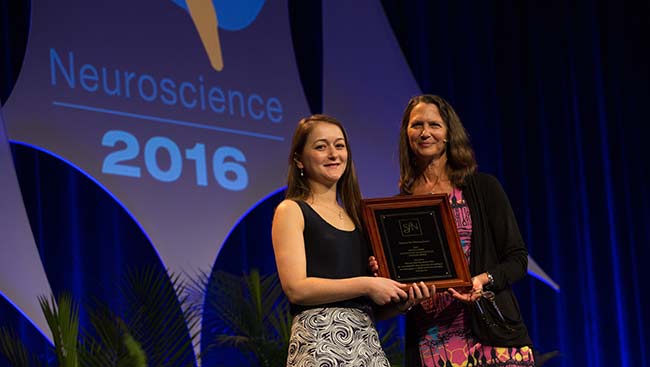 Article Professional DevelopmentUsing molecular, anatomical, and electrophysiological approaches, Sebnem Tuncdemir found that two types of interneurons form transient connections while integrating into their proper positions within the developing brain and that these ephemeral circuits are necessary for the correct assembly of the cerebral cortex. For her outstanding PhD thesis, Tuncdemir won the Nemko Prize in Cellular or Molecular Neuroscience in 2016. Here, she shares more about her research and offers advice for grad students.Sep 10, 2020
 -
 Video CommunityIn this panel discussion, neuroscientists from the United States, South Africa, Korea, Argentina, France, and Croatia share what it will take to counteract bias in their region. The goals of the discussion are to: Determine region-specific challenges in increasing diversity and fighting bias. Identify solutions to these challenges that have been implemented or are being implemented. Share best practices between regions to create a community and move forward as a global initiative. Speakers Keynote speaker: Tracy L. Bale, University of Maryland, USA - IBRO President & Member of the ALBA Board of Directors Africa region: Fleur Howells, University of Cape Town, South Africa Asia/Pacific region: Jinju Han, KAIST, Korea Latin America region: Amaicha Depino, CONICET-University of Buenos Aires, Argentina - Young IBRO Committee member Europe region: Anne Beyeler, University of Bordeaux - INSERM, France - ALBA Ambassador The event was chaired by Zeljka Krsnik, University of Zagreb School of Medicine, Croatia – Young IBRO Committee Chair & Member of the ALBA Board of DirectorsSep 8, 2020
 -
 Journal ArticleNeurodevelopmental disorders disproportionately affect males compared with females. The biological mechanisms of this male susceptibility or female protection have not been identified. There is evidence that fetal/neonatal gonadal hormones, which play a pivotal role in many aspects of development, may contribute. Here, we investigate the effects of excess testosterone (T) during a critical period of sex-specific brain organization on social approach and fear learning behaviors in C57BL/6J wild-type mice. Male, but not female, mice treated with T on the day of birth (Postnatal Day 0; PN0) exhibited decreased social approach as juveniles and decreased contextual fear memory as adults, compared with vehicle (veh)-treated controls. These deficits were not driven by anxiety-like behavior or changes in locomotion or body weight. Mice treated with the same dose of T on PN18, which is outside of the critical period of brain masculinization, did not demonstrate impairments compared with the veh group. These finding...Aug 1, 2025
 -
 Journal ArticleEvery neuron contains the same genomic information, but its complement of proteins is the product of countless neuron-specific steps including pre-mRNA splicing. Despite advances in RNA sequencing techniques, pre-mRNA splicing biases that favor one isoform over another are largely inscrutable in live neurons in situ. Here, in Drosophila , we developed bichromatic fluorescent reporters to investigate alternative splicing of cacophony ( cac )—a gene that codes the pore-forming α1 subunit of the primary neuronal voltage-gated Ca2+ channel (VGCC). These reporters revealed a neuron-specific pattern of exon biases, highly consistent from one animal to the next, suggesting that each neuron splices a unique and consistent portfolio of VGCC isoforms. Stereotypical patterns were observed within motor neurons and multidendritic sensory neurons of female larvae and also within mushroom body Kenyon cells of female adults. In a validation step, we demonstrated that exon splice bias reporting was not dependent on the cho...Aug 1, 2025
 -
 Journal ArticleThe development of motor control over sensory organs is a critical milestone, enabling active exploration and shaping of the sensory environment. Whether the onset of sensory organ motor control directly influences the development of corresponding sensory cortices remains unknown. Here, we confirm and exploit the late onset of whisking behavior in mice to address this question in the somatosensory system. Using ex vivo electrophysiology, we describe a transient increase in the intrinsic excitability of excitatory neurons in layer IV of the barrel cortex, which processes whisker input, immediately following the onset of active whisking on postnatal days 13 and 14. This increase in neuronal gain is specific to layer IV, independent of changes in synaptic strength, and requires prior sensory experience. Further, these effects are not expressed in inhibitory interneurons in barrel cortex. The transient increase in excitability is not evident in layer II/III of barrel cortex or in the visual cortex upon eye ope...Aug 1, 2025
 -
 Journal ArticleThe anterior cingulate cortex (ACC) plays a pivotal role in processing pain and emotion, communicating with both cortical and subcortical regions involved in these functions. The claustrum (CLA), a subcortical region with extensive connectivity to the ACC, also plays a critical role in pain perception and consciousness. Both ACC and CLA express Kappa (KOR), Mu (MOR), and Delta (DOR) opioid receptors, yet whether and how opioid receptors modulate this circuit are poorly understood. This study investigates the effects of opioid receptor activation on glutamatergic signaling in CLA→ACC circuitry using spatial transcriptomics, brain slice electrophysiology, optogenetics, and pharmacological approaches in mice of both sexes. Our results demonstrated that excitatory synaptic transmission generated by the CLA onto Layer 5 pyramidal (L5 PYR) cells in the ACC are reduced by KOR, MOR, and DOR agonists. However, only KOR agonists reduce monosynaptic transmission from the CLA onto L5 ACC PYR cells, highlighting the un...Aug 1, 2025




