



Filter
-
(133)
-
(733)
-
(4)
-
(1)
-
(47833)
-
(91)
-
(25)
-
(14)
-
(433)
-
(7)
-
(182)
-
(8)
-
(33)
-
(17)
-
(7)
-
(9)
-
(9)
-
(5)
-
(21)
-
(8)
-
(12)
-
(9)
-
(3)
-
(10)
-
(10)
-
(56)
-
(45)
-
(12)
-
(3)
-
(7)
-
(6)
-
(5)
-
(8)
-
(7)
-
(11)
-
(58)
-
(13)
-
(30)
-
(8)
-
(5)
-
(10)
-
(5)
-
(15)
-
(4)
1791 - 1800
of 52756 results
-
 Journal ArticleThe pretectum of vertebrates contains neurons responsive to global visual motion. These signals are sent to the cerebellum, forming a subcortical pathway for processing optic flow. Global motion neurons exhibit selectivity for both direction and speed, but this is usually assessed by first determining direction preference at intermediate velocity (16-32 deg/sec), and then assessing speed tuning at the preferred direction. A consequence of this approach is that it is unknown if and how direction preference changes with speed. We measured directional selectivity in 114 pretectal neurons from 44 zebra finches ( Taeniopygia guttata ) across spatial and temporal frequencies, corresponding to a speed range of 0.062 to 1024°/s. Pretectal neurons were most responsive at 32-64°/s with lower activity as speed increased or decreased. At each speed, we determined if cells were directionally-selective, bidirectionally-selective, omnidirectionally responsive, or unmodulated. Notably, at 32°/s, 60% of the cells were dire...Nov 7, 2024
 -
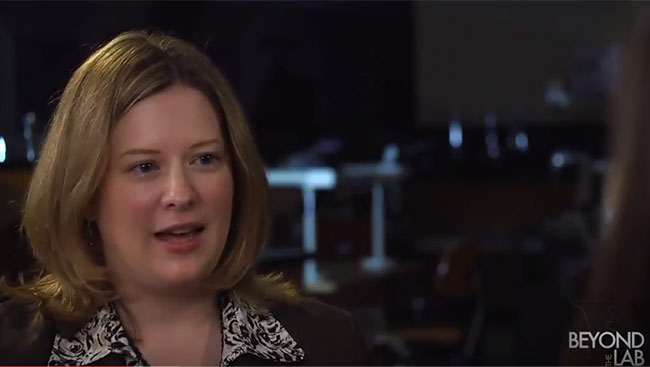 Video Career PathsErin Flynt is a senior medical writer at Envision Communications. Flynt talks about how the skills she developed during her PhD program are integrated in her current role as a medical writer.May 19, 2016
 -
 Article Scientific ResearchThe Tale of Two Roses: The Shaping of Sensory Coding Neuronal Ensembles by Reward and NorepinephrineMaterial below summarizes the article, Arc-Expressing Neuronal Ensembles Supporting Pattern Separation Require Adrenergic Activity in Anterior Piriform Cortex: An Exploration of Neural Constraints on Learning, on October 14, 2015 in The Journal of Neuroscience and authored by Amin MD. Shakhawat, Ali Gheidi, Iain T. MacIntyre, Melissa L. Walsh, Carolyn W. Harley, and Qi Yuan.May 19, 2016
 -
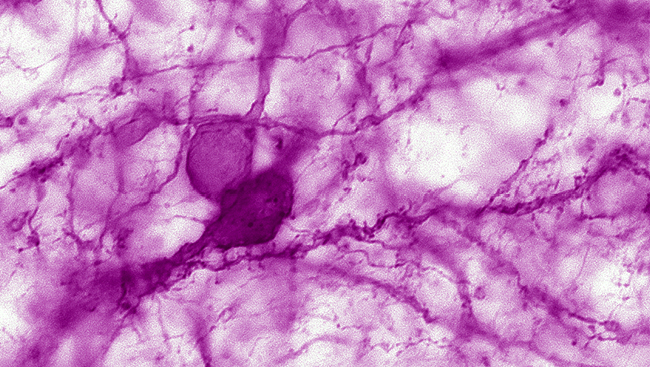 Article TrainingWhen syllabi are already packed with traditional scientific training topics, how can you encourage your department’s faculty to prepare students for a variety of work environments?May 17, 2016
 -
 Article Professional DevelopmentUse this reference sheet as you update or create your first CV.May 17, 2016
 -
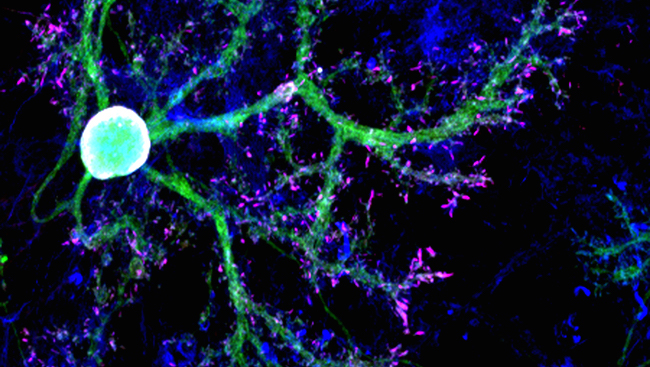 Video Career PathsJerome Jourquin, a scientific grants manager at the Susan G. Komen Breast Cancer Foundation, talks about the crucial skills he developed in his PhD program, and how he applies this skills to his current position.May 12, 2016
 -
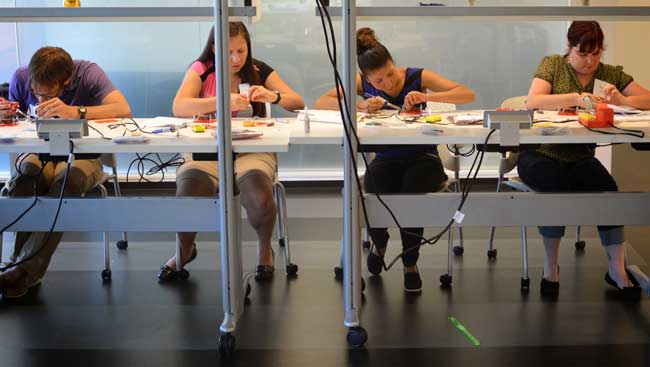 Article OutreachExperimentation is a great way to engage students and teach skills that are useful beyond the classroom or bench. At the Neuroscience Community Outreach Group at the University of Washington in Seattle, we developed neural engineering workshops to get high school students and teachers interested in neuroscience.May 12, 2016
 -
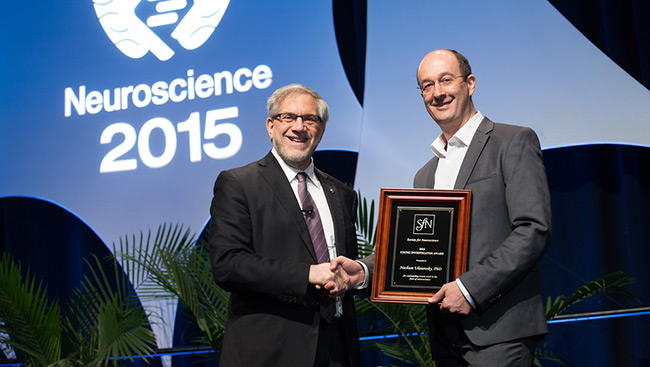 Article Professional DevelopmentNachum Ulanovsky was the first to record neural activity in a freely moving bat. By doing so, he was able to investigate how cells in the hippocampus encode a spatial representation of the three-dimensional environment. For these accomplishments, Ulanovsky received the Young Investigator Award in 2015. Here, he discusses his research.May 10, 2016
 -
 Video Annual Meeting Professional DevelopmentHear how you can best use your international experience as a graduate student, postdoctoral trainee, or your sabbatical to move your career forward. Speakers talk from personal experience and pay careful attention to individuals from developing countries who spend time in a developed country.May 10, 2016
 -
Journal ArticleVisual working memory (VWM) requires precise feature binding. Previous studies have revealed a close relationship between the posterior parietal cortex (PPC) and feature binding during VWM, this study further examined their causal relationship through three transcranial direct current stimulation (tDCS) experiments. In Experiment 1 ( N = 57), participants underwent three sessions of tDCS separately, including PPC stimulation, occipital cortex stimulation, and sham stimulation, and completed delayed estimation tasks for orientations before and after stimulation. Results showed that tDCS over PPC selectively prolonged recall response time (RT) and increased the probability of non-target responses (a.k.a. failure of feature binding, p NT). In Experiment 2 ( N = 29), combining metacognition estimation, we further investigated whether the effects of PPC stimulation were attributed to mis-binding (i.e., participants self-reported "remembered" in non-target responses) or informed guessing trials (participants sel...Nov 5, 2024




