



Filter
-
(133)
-
(733)
-
(4)
-
(1)
-
(47833)
-
(91)
-
(25)
-
(14)
-
(433)
-
(7)
-
(182)
-
(8)
-
(33)
-
(17)
-
(7)
-
(9)
-
(9)
-
(5)
-
(21)
-
(8)
-
(12)
-
(9)
-
(3)
-
(10)
-
(10)
-
(56)
-
(45)
-
(12)
-
(3)
-
(7)
-
(6)
-
(5)
-
(8)
-
(7)
-
(11)
-
(58)
-
(13)
-
(30)
-
(8)
-
(5)
-
(10)
-
(5)
-
(15)
-
(4)
1681 - 1690
of 52756 results
-
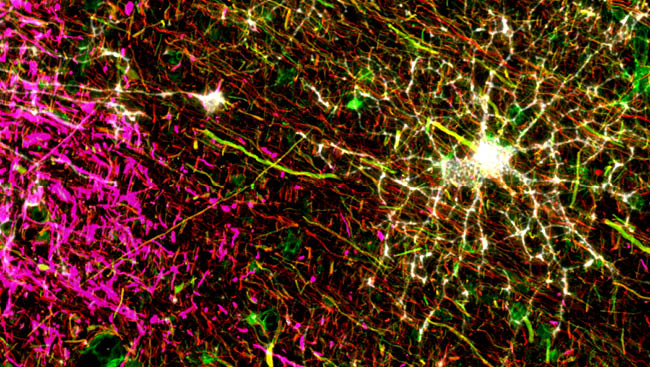 Webinar Scientific ResearchHow can neuroscientists improve the reproducibility of statistical plans and scientific discoveries? In this webinar — the sixth in SfN’s Promoting Awareness and Knowledge to Enhance Scientific Rigor in Neuroscience series — presenters will discuss common applications of statistics in neuroscience, including what types of research questions statistics are best positioned to address, modeling paradigms, and exploratory data analysis. Presenters will provide real world examples of these issues from their own research backgrounds.Nov 3, 2016
 -
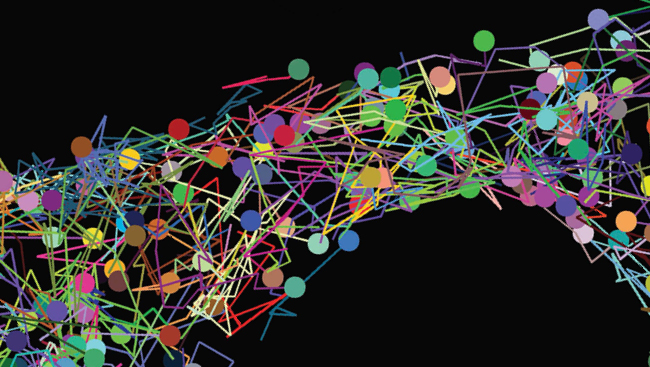 Webinar Scientific ResearchCommon sources of bias in animal behavior and electrophysiology experiments can be minimized or outright avoided by following best practices of unbiased experimental design and data. In this webinar — the fifth in SfN’s Promoting Awareness and Knowledge to Enhance Scientific Rigor in Neuroscience series — presenters will discuss experimental design and hypothesis testing for mouse behavioral assays, as well as sampling, interpretational bias, and referencing in in vitro and in vivo electrophysiology recording studies.Nov 3, 2016
 -
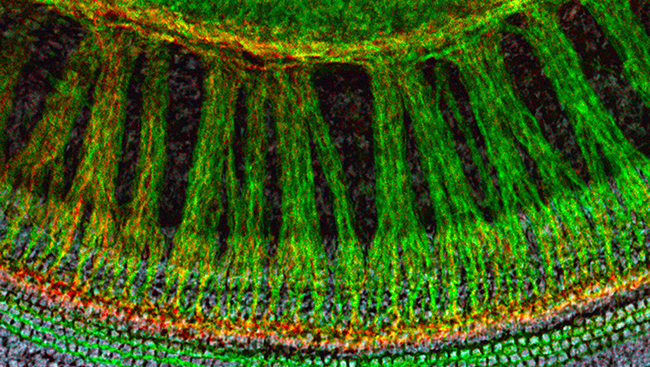 Article Scientific ResearchOur lab focuses on the development and function of a relatively obscure brain region called the habenula.Nov 3, 2016
 -
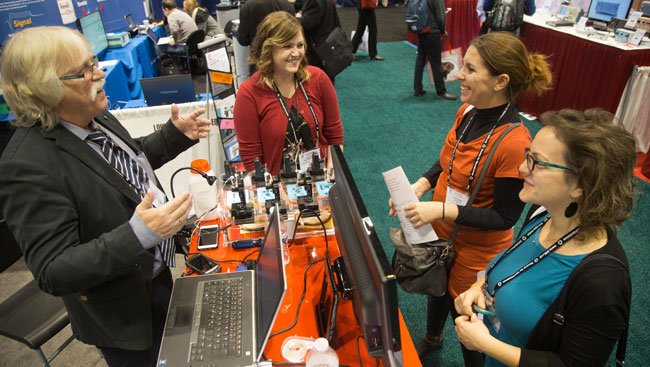 Article Professional DevelopmentWhether it’s improving quality of life or embracing the latest technology, the promise of an advancing field is motivation for many neuroscientists to pursue and support meaningful research.Oct 27, 2016
 -
 Article Professional DevelopmentAs I outlined in a previous article, the first step in applying to graduate school is finding programs that match your research interests is. The next step is weighing other important factors that could impact your experience.Oct 27, 2016
 -
 Article TrainingDeveloping and assessing programs used to be a linear process because the training process was linear: graduate school, postdoctoral training, and academia.Oct 27, 2016
 -
 Journal ArticleUnique microglial states have been identified in Alzheimer's disease (AD) model mice and postmortem AD brains. Although it has been well documented that amyloid-β accumulation induces the alteration of microglial states, the relationship between tau pathology and microglial states remains incompletely understood because of a lack of suitable AD models. In the present study, we generated a novel AD model mouse by the intracerebral administration of tau purified from human brains with primary age-related tauopathy into App knock-in mice with humanized tau. Immunohistochemical analyses revealed that Dectin-1-positive disease-associated microglia were increased in the AD model mice after tau accumulation in the brain. We then performed single-nucleus RNA sequencing on the AD model mice to evaluate the differences in microglial states with and without tau propagation and accumulation. By taking advantage of spatial transcriptomics and existing single-cell RNA sequencing datasets, we showed for the first time th...Dec 1, 2024
 -
 Journal ArticleWe use sensory feedback to form our perception, and control our movements and forces (actions). There is an ongoing debate about the relation between perception and action, with evidence in both directions. For example, there are cases in which perceptual illusions affect action signals and cases where they do not. However, even when they do, it is unknown if perceptual information can be inferred from action signals alone. To answer this question, we utilized a perceptual illusion created by artificial tactile skin stretch, which increases stiffness perception, and affects grip force. We used data recorded in a stiffness discrimination task in which participants compared pairs of virtual objects, comprised of force and artificial skin stretch and indicated which they perceived as stiffer. We explored if models could predict the participants’ perceptual responses, and the increase in stiffness perception caused by the skin stretch, solely from their recorded action signals. That is, with no information pro...Dec 1, 2024
 -
 Journal ArticleNeuropathic pain (NP) caused by sciatic nerve injury can significantly impact the quality of life of patients. The M1 phenotype of microglia has been reported to promote the progression of NP. Procaine is a lipid-soluble local anesthetic drug that exerts narcotic analgesic effects. Nevertheless, the detailed effect of procaine in NP is not clear. In order to explore the role of procaine in the polarization of NP microglia, HAPI cells were exposed to LPS to polarize into M1 type. In addition, the number of the M1 phenotype of HAPI cells was assessed using flow cytometry. The binding site between CCL5 and STAT3 was explored using the dual luciferase assay. Furthermore, in vivo experiments were applied for testing the impact of procaine on NP. LPS significantly inhibited HAPI cell viability, which was reversed by procaine. Consistently, procaine alleviated LPS-induced upregulation of inflammatory factors. Additionally, it significantly inhibited HAPI cell M1 polarization induced by LPS. Meanwhile, overexpress...Dec 1, 2024
 -
Journal ArticleIncreasing data suggest a crucial relationship between glycolipid metabolic disorder and neuropsychiatric injury. The aim of this study is to investigate the behavioral performance changes and neuropathological injuries in mice challenged with high-fat diet (HFD) and streptozotocin (STZ). The glucose metabolism indicators and behavioral performance were detected. The mRNA expression of IL-1β, IL-6, TNF-α, ocln, zo-1, and clnds and protein expression of APP, p-Tau, p-IRS1, p-AKT, p-ERK, and TREM1/2 were measured. The fluorescence intensities of MAP-2, NeuN, APP, p-Tau, GFAP, and IBA-1 were observed. The results showed that combination of HFD and STZ/I.P. could induce glucose metabolic turmoil and Alzheimer's disease (AD)-like neuropsychiatric dysfunction in mice, as indicated by the increased concentrations of fasting blood glucose and impaired learning and memory ability. Moreover, the model mice presented increased levels of APP, p-Tau, p-IRS1, TREM2, IL-1β, IL-6, TNF-α, ocln, zo-1, and clnds; decreased l...Dec 1, 2024




