



Filter
-
(133)
-
(733)
-
(4)
-
(1)
-
(47833)
-
(91)
-
(25)
-
(14)
-
(433)
-
(7)
-
(182)
-
(8)
-
(33)
-
(17)
-
(7)
-
(9)
-
(9)
-
(5)
-
(21)
-
(8)
-
(12)
-
(9)
-
(3)
-
(10)
-
(10)
-
(56)
-
(45)
-
(12)
-
(3)
-
(7)
-
(6)
-
(5)
-
(8)
-
(7)
-
(11)
-
(58)
-
(13)
-
(30)
-
(8)
-
(5)
-
(10)
-
(5)
-
(15)
-
(4)
1521 - 1530
of 52756 results
-
 Journal ArticleThe brain attends to environmental rhythms by aligning the phase of internal oscillations. However, the factors underlying fluctuations in the strength of this phase entrainment remain largely unknown. In the present study we examined whether the strength of low-frequency EEG phase entrainment to rhythmic stimulus sequences varied with pupil size and posterior alpha-band power, thought to reflect arousal level and excitability of posterior cortical brain areas, respectively. We recorded pupil size and scalp EEG while participants carried out an intermodal selective attention task, in which they were instructed to attend to a rhythmic sequence of visual or auditory stimuli and ignore the other perceptual modality. As expected, intertrial phase coherence (ITC), a measure of entrainment strength, was larger for the task-relevant than for the task-irrelevant modality. Across the experiment, pupil size and posterior alpha power were strongly linked with each other. Interestingly, ITC tracked both variables: lar...Jan 8, 2025
 -
 Video Scientific ResearchPascal Wallisch: Data science is a merger between computer science, statistics, and machine learning and fields like that. What made it a thing is that we're now able to get much, much, much, more data.Jun 20, 2017
 -
 Article Scientific ResearchPublished papers are the currency of success in neuroscience, yet the process of publishing a paper can be mysterious, especially to trainees.Jun 20, 2017
 -
 Webinar Scientific ResearchOur understanding of the cell biology of mitochondria has exploded in the last decade, providing a renewed understanding of their contribution to neurological diseases ranging from pediatric encephalomyopathies to Alzheimer’s, Huntington’s, and others. In this webcast, select faculty from the 2016 Neurobiology of Disease Workshop will continue the discussion, emphasizing mitochondrial motility and neurodegeneration, mitochondrial function in Alzheimer ’s disease, and the role of mitochondria in immunity and links to neuroinflammation. After the scientific presentations, join all speakers in the Neuronline Community for a live chat.Jun 19, 2017
 -
 Article Professional DevelopmentAs an undergraduate, the best way you can decide if you want to go to grad school is to sample some of the laboratory environments (for a couple of months, not years) that you think might be interesting.Jun 15, 2017
 -
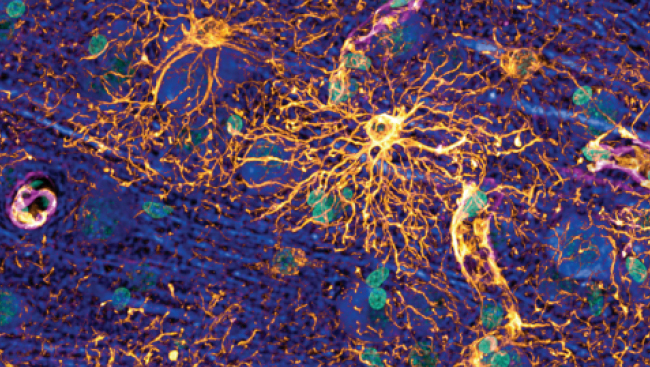 Article Scientific ResearchSerotonin (5-hydroxytryptamine, 5-HT) is a neurotransmitter implicated in a vast array of sensory, motor, and cognitive functions.Jun 15, 2017
 -
 Article Professional DevelopmentWhen scientists communicate effectively about their research, science thrives. Making our science digestible to nonscientists helps people understand the wider relevance of science in society. Given the current stark funding realities, making our science accessible can also promote more informed decision-making, especially with policymakers, government agencies, and other types of funders.Jun 14, 2017
 -
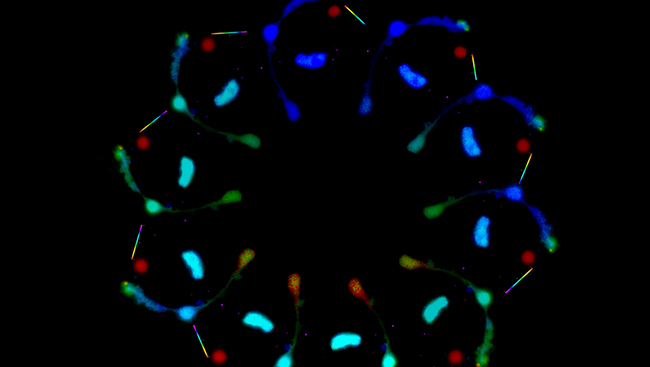 Article Annual Meeting Scientific ResearchUntil recently, analyzing a single cell to determine what genes it expresses and how it functions was beyond reach. But new techniques have emerged within the last 10 years that give researchers this capability, as well as the ability to analyze aspects of many individual cells at once. When combined with analyses of cell shape, connectivity, and activity, probing the genomes and expression profiles of single cells has the potential to yield powerful insights, yet also holds challenges.Jun 13, 2017
 -
 Article Professional DevelopmentFive neuroscience program faculty share the traits that they think can help graduate students excel in their training. Here’s what to keep in mind.Jun 8, 2017
 -
 Article Scientific ResearchOur decisions are influenced by the value of the outcome we expect to obtain. For example, a person who prefers pizza over pasta will naturally choose pizza if both are on a menu.Jun 8, 2017




