



Filter
-
(133)
-
(733)
-
(4)
-
(1)
-
(47833)
-
(91)
-
(25)
-
(14)
-
(433)
-
(7)
-
(182)
-
(8)
-
(33)
-
(17)
-
(7)
-
(9)
-
(9)
-
(5)
-
(21)
-
(8)
-
(12)
-
(9)
-
(3)
-
(10)
-
(10)
-
(56)
-
(45)
-
(12)
-
(3)
-
(7)
-
(6)
-
(5)
-
(8)
-
(7)
-
(11)
-
(58)
-
(13)
-
(30)
-
(8)
-
(5)
-
(10)
-
(5)
-
(15)
-
(4)
1141 - 1150
of 52756 results
-
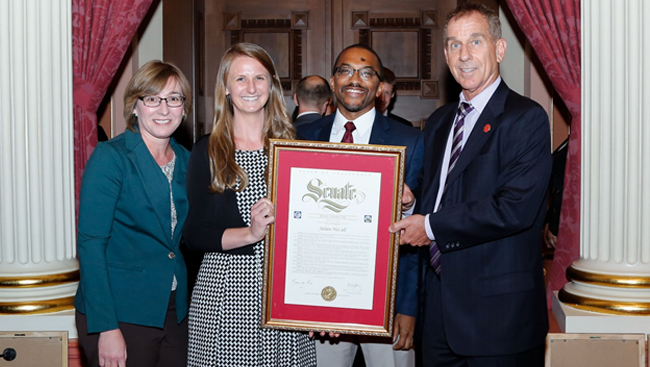 Article Career PathsWhat value do neuroscientists offer to the policy making process? A scientific approach creates quality legislation by adding a critical filter to analyses and by contributing to a general regard that conclusions must be backed up independently. A Senator in the state of California represents nearly one million constituents and votes on more than 5,000 bills every two-year cycle. In such a fast-paced environment, legislators rely on a system of information delivery that takes the form of timely, packaged ideas gleaned from news articles, the legislator’s own staff or personal network, advocacy groups, think tanks, and lobbyists. Lobbying firms, considered the “Third House” of the legislative branch, hold particular power because they have the means to constantly present information to decision-makers and their staff at the right time, with clear context and vision, and with a sophisticated strategy for enacting legislation. Government plays a role in creating the conditions necessary for scientific progress, primarily via public funding and patterns of regulation. However, scientific progress needs scientists at each step of the research pipeline, from extracting experimental data to fostering market and legal viability. Applying my scientific training often takes the form of evaluating statements of variable credibility, Googling like an expert, and communicating recommendations. A rigorous process akin to bench research is not always possible, often for reasons such as urgent timing or a simple lack of data, but the more policy is based in fact, the stronger it will be.Apr 3, 2019
 -
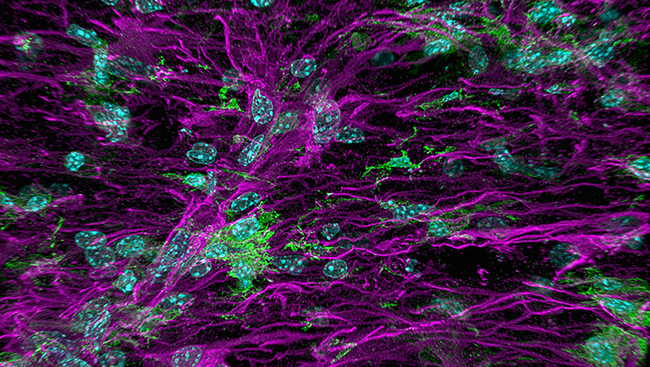 Video Annual Meeting Scientific ResearchSex is an important biological variable to account for in experiments. Watch this short course from Neuroscience 2018 to become familiar with the mechanisms underlying molecular, neural circuit, and behavioral differences between the sexes to help you better incorporate both sexes into your preclinical research. Learn about fundamental concepts and hypotheses that have contributed to the current understanding of sex differences in the brain, as well as some of the latest discoveries related to the developmental origins of sex differences, gonadal steroid hormones, stress and vulnerability, reward and affective behaviors, and adolescence. Speakers discuss sex differences in stress responses and how they may result in different disease pathologies, activation by single hormones of multiple physiological endpoints, latent sex and population differences, reorganization of reward circuity during adolescence, molecular genetic tools for investigating neural circuits that may contribute to sex differences seen at the behavioral level, and more.Apr 2, 2019
 -
 Video AdvocacyAs part of an effort to provide scientists with strategies to openly communicate about animal research with the wider public, the European Animal Research Association, a communications and advocacy organization promoting biomedical research across Europe, hosted a workshop series — Improving Openness in Animal Research in Germany — where speakers shared best practices for communicating about animal research. “Today, transparency and openness are the zeitgeist,” says EARA Executive Director Kirk Leech, who emphasizes that sharing information can help the public and media to understand the necessity of animal models and to support responsible animal research. Watch the workshop and panel discussion to learn how to: - Improve public understanding of the importance of animal research in basic and applied scientific research by explaining statistics on animal use and partnering with other countries to develop a unified message. - Increase trust among the broader public by talking to journalists, opening up your lab, and sharing emotions you’ve experienced as well as values you uphold in conducting your research. - Anticipate sensitive issues, respond to negative media campaigns, and work with your institution to follow a communications plan.Mar 26, 2019
 -
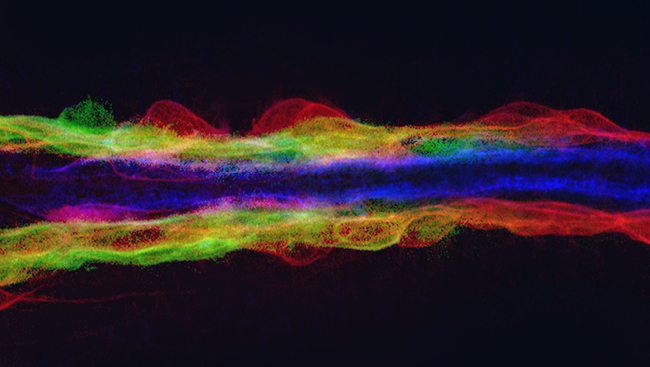
 Podcast Scientific ResearchNeural recording technology has advanced significantly over the past sixty years, from Hubel and Wiesel’s tungsten wires to tetrodes to Neuropixels, a low-cost, high-channel-count silicon probe. In this Meet-the-Expert, Timothy Harris, who led the team that developed Neuropixels, discusses the technology that allows this new electrophysiological tool to contribute a long, dense array. He assesses alternative paths for high-channel-count recording sensors and the origin of limits for these devices. He also explains how they give researchers the ability to cover more tissue and how they can be combined with light sources, electrical stimulation, and photometry.Mar 21, 2019
 -
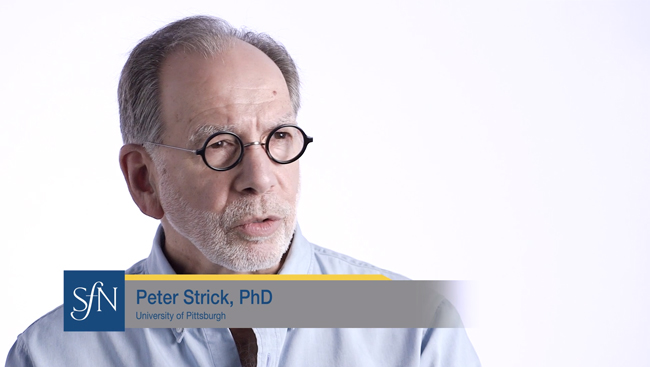 Video AdvocacyWatch this video with Chair of SfN’s Committee on Animals in Research Peter Strick to know how to more effectively advocate for the importance of working with animal models. You’ll also learn steps you can take to reframe public opinion of animal research, such as continuing to prioritize the well-being of animal subjects, increasing transparency, and partnering with advocacy groups. With increased public support for animal research, scientists can continue to develop treatments for brain diseases and disorders that are increasingly touching the lives of people across the world.Mar 20, 2019
 -
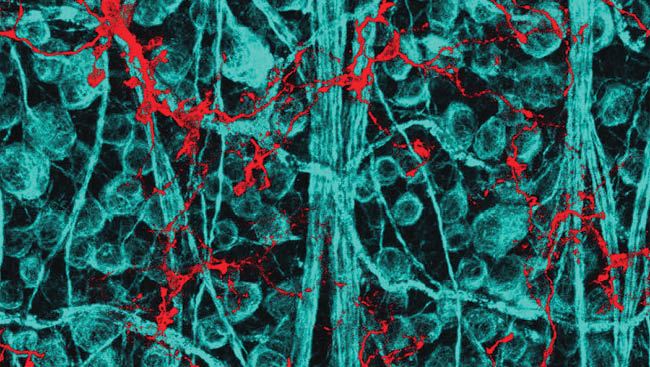
 Journal ArticleInvestigating Mechanically Activated Currents from Trigeminal Neurons of Non-Human Primates | eNeuroPain sensation often involves mechanical modalities. Mechanically activated (MA) ion channels on sensory neurons underly responsiveness to mechanical stimuli. MA current properties have mainly been derived from rodent sensory neurons. This study aimed to address gaps in knowledge regarding MA current properties in trigeminal (TG) neurons of a higher order species, common marmoset non-human primates (NHP). MA currents triggered by a piezo-actuator were recorded in patch clamp configuration . MA responses were associated with action potential (AP) properties, such as width, dV/dt on the falling phase, and presence/absence of AP firing in NHP TG neurons. According to responsiveness to mechanical stimuli and AP properties, marmoset TG neurons were clustered into 4 S-type and 5 M-type groups. S-type TG neurons had broader AP with two dV/dt peaks on the AP falling phase. Only one S-type group of NHP TG neurons produced small MA currents. M-type TG neurons had narrow AP without two dV/dt peaks on the AP falling p...Apr 25, 2025
 -
Journal ArticlePrincipal neurons (PNs) of the lateral superior olive (LSO) are a critical component of brain circuits that compare information between the two ears to extract sound source-location-related cues. LSO PNs are not a homogenous group but differ in their transmitter type, intrinsic membrane properties, and projection pattern to higher processing centers in the inferior colliculus. Glycinergic inhibitory LSO PNs have higher input resistance than glutamatergic excitatory LSO PNs (∼double). This suggests that the inhibitory cell type has a lower minimum input or signal intensity required to produce an output (activation threshold) which may impact how they integrate binaural inputs. However, cell type-specific differences in the strength of synaptic drive could offset or accentuate differences in intrinsic excitability and have not been assessed. To evaluate this possibility, we used a knock-in mouse model to examine spontaneous and electrically stimulated (evoked) synaptic events in LSO PN types using voltage-cl...Apr 25, 2025
-
 Article Professional DevelopmentThere’s no one right way to set up a lab. From building a culture to purchasing supplies, determine what works best for you — and then run with it. Tim Mosca, an assistant professor at Thomas Jefferson University, shares what he’s learned and observed from setting up and running his own lab, including one of the most important elements to success: Talk to people. “Though it can feel like an isolating experience, as a new PI you’re not alone. There are people at your institution who have done it before you or who were hired at the same time as you,” he advises. “Listen to everything going on at your university to learn with whom you should talk.” Read on for his lab setup checklist, which includes hiring and motivating staff, purchasing supplies, growing as a manager, and more.Mar 13, 2019
 -
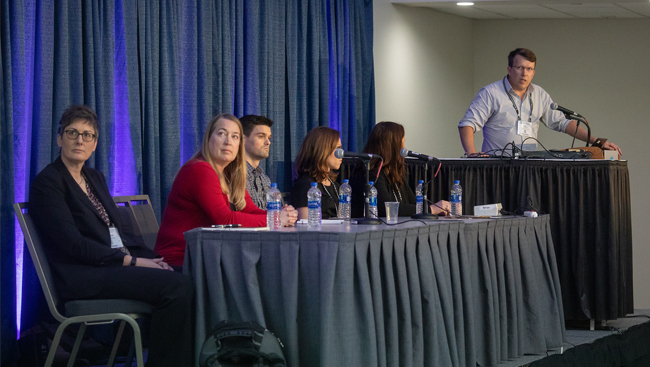 Annual Meeting Video Career PathsCareers in making medicines can take many forms. “Drug discovery doesn't only happen in the pharmaceutical industry. It happens in academia, small biotech companies, and government,” says Fiona Randall, head of external innovation at Eisai Andover Innovative Medicines Institute. This workshop provides an overview of career opportunities in making medicines. Through panelists’ personal stories, hear how basic science can inform drug discovery programs that lead to new medicines. Watch the recording above, and read on for a preview of their varied career paths and advice for scientists thinking about transitioning to industry.Mar 12, 2019
 -
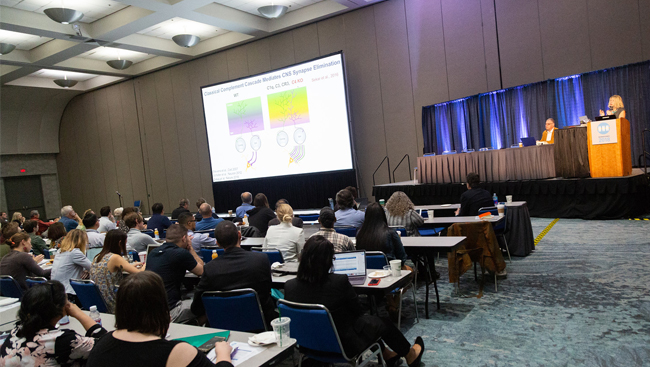 Annual Meeting Video Scientific ResearchNeuroinflammation is a major contributor to the pathophysiology of a variety of nervous system disorders. The innate immune system is an important mechanism that engages microglia, leads to neuroinflammation, and underlies clinical problems ranging from neurodevelopmental disorders to neurodegenerative diseases. Understanding how microglia develop and act in the brain and the pathways by which they cause neuroinflammation is a primary goal for finding treatments for such diseases. This Neurobiology of Disease Workshop, held at Neuroscience 2018, reveals ways in which neuroinflammation contributes to the pathophysiology of disorders of the central nervous system.Mar 7, 2019




