



Filter
-
(133)
-
(733)
-
(4)
-
(1)
-
(47833)
-
(91)
-
(25)
-
(14)
-
(433)
-
(7)
-
(182)
-
(8)
-
(33)
-
(17)
-
(7)
-
(9)
-
(9)
-
(5)
-
(21)
-
(8)
-
(12)
-
(9)
-
(3)
-
(10)
-
(10)
-
(56)
-
(45)
-
(12)
-
(3)
-
(7)
-
(6)
-
(5)
-
(8)
-
(7)
-
(11)
-
(58)
-
(13)
-
(30)
-
(8)
-
(5)
-
(10)
-
(5)
-
(15)
-
(4)
1101 - 1110
of 52756 results
-
 Video AdvocacyScientists are careful to follow animal care regulations, both for the well-being of the animals and for the accuracy of the science. By educating the public on the guidelines in place to ensure animal welfare during experiments, you can help encourage public support of animal research overall. One crucial first step for engaging with nonscientists is partnering with your institution and lab animal caretakers to craft a transparent and positive message. By sharing the full scope of the work — the importance of the research and the care oversight in place — you can help accurately inform the public’s perception and shape the conversations happening around animal research.May 23, 2019
 -
 Article Professional DevelopmentThe Mazer Lab is a member of the NSF Established Program to Stimulate Competitive Research (EPSCoR)-funded Attention Consortium, a team of researchers at four universities collaborating to develop a model for the neural basis of attention. In this interview, James Mazer, an associate professor at Montana State University studying visual perception and cognition, explains how collaborations can be formative for your career and shares advice for acquiring skills that will help you contribute to any team. How do your lab and Montana State University work with other programs in the EPSCoR-funded Attention Consortium? Our EPSCoR grant is specifically intended to encourage and facilitate collaboration between labs and universities. The grant brings together people from different labs at different institutions, using different tools and approaches, who share the common goal of understanding the neural bases of attentional modulation. Members of the consortium are using a variety of physiological and psychophysical techniques, ranging from optical imaging in rodents to human ECoG and deep brain stimulation, to elaborate the neural circuits responsible for attention. At schools like Montana State, which is relatively small, scientific interactions can be difficult to come by — departments are smaller, there aren’t as many neuroscience faculty on campus compared to larger schools, and the neuroscience grad student population is smaller. Programs like EPSCoR can play a critical role in giving students additional opportunities for training and collaboration that might be otherwise hard to find or organize. In our case, the EPSCoR gives our students extensive opportunities to interact and collaborate with students, postdocs, and PIs at other institutions.May 22, 2019
 -
 Podcast Annual Meeting Career PathsThrough seeking out clinical learning opportunities as a graduate student, you’ll open yourself up to career paths you may not have considered, as well as inspiration for your research now and in the future. This Meet-the-Clinician-Expert features Y. Joyce Liao, a physician-scientist and the director of Neuro-Opthalmology at Stanford University, who walks through ways to strategically structure your training. “As a person hoping to cross the basic research and the clinical realm, it's really important that you're growing on both sides continuously. While you're in graduate school, you want to be doing good research so that you can graduate and learn all the skills to be a scientist, but you should be doing some clinical research too,” she shares.May 21, 2019
 -
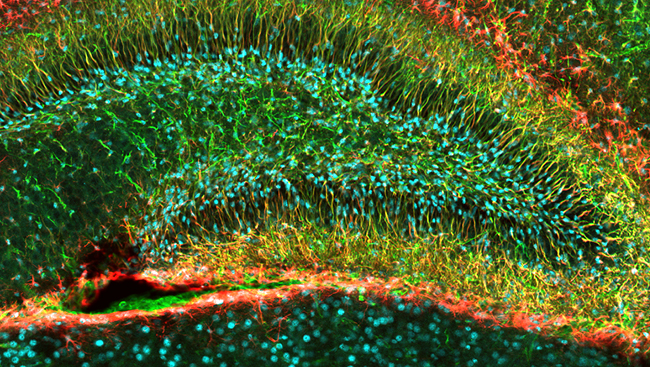 Article Scientific ResearchIn the temporal lobe, nestled underneath the cortex, is an almond-shaped capsule of neurons known as the basolateral amygdala (BL). It has long been considered central to the production of learned emotional behaviors. For instance, when you avoid a dark alley or run into a store to get a refreshing bottle of water on a hot day, your BL is likely coordinating with a wide variety of brain regions to enable these behaviors. Traditionally, the BL has been thought to do this by linking input stimuli with appropriate behavioral effectors through segregated circuits. Such “feed-forward” circuits were thought to support rapid emotional responses to environmental cues a subject previously experienced. This contrasts with how cortical circuits, which are highly interconnected and coordinate their activities using oscillatory cycles of excitation and inhibition, are thought to operate. Rhythms can be recorded using implanted electrodes that measure the local field potential (LFP), which reflects the combined electrical activities of numerous nearby neurons.May 16, 2019
 -
 Annual Meeting Video Scientific ResearchAs scientists across fields continue to innovate functional, structural, and molecular imaging tools, the potential for using advanced strategies to analyze large physiological and anatomical datasets is rising dramatically. These technologies have the capacity to facilitate high-impact discoveries in basic and applied neuroscience, especially when combined in optimal ways. This short course from Neuroscience 2018 will offer practical considerations for combining imaging tools that will help you select those that will most assist you in investigating a specific scientific question in your basic or translational research. You’ll come away with an understanding of: • Optimization of optogenetics for interrogating neural circuits. • Miniature microscopes, voltage imaging techniques, and other techniques to examine neural ensemble activity. • Adaptive optics for in vivo imaging. • Technologies to extract single-neuron activity from large datasets. • Statistical modeling of connectomes. • Expansion microscopy, optogenetic control, and fluorescent imaging of neural dynamics.May 14, 2019
 -
 Annual Meeting Video Professional DevelopmentThe most important skill a scientist needs, after the skills needed to execute a study, is the ability to report his or her scientific endeavors in writing. The editors-in-chief of four international neuroscience journals — Brain and Behavior, the European Journal of Neuroscience, the Journal of Neuroscience Research, and Neuroscience, the journal of the International Brain Research Organization — come together in this workshop to offer insight into what editors look for, what their roles are, and what you can to do to make your paper stand out. Watch the recording to learn more about the review process, including why peer review is important, what’s essential to include in your paper, and how to be ethical and ensure reproducibility in your experiments.May 8, 2019
 -
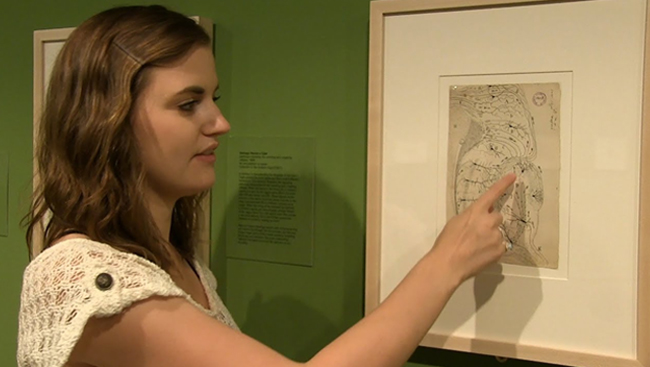 Article OutreachLearn how to make yourself a stronger job candidate, consider career paths you may not have thought of, connect with like-minded scientists, and find work-life balance. In this interview, Samantha Baglot, a PhD student at the University of Calgary, in Canada, shares how she’s pursuing her passion for improving education through neuroscience outreach and project management. What made you want to start doing outreach, and how did you get involved? When I started my master's degree about three years ago, I joined the Neuroscience Graduate Student Association at The University of British Columbia. I was interested in what their vice president of outreach was doing. At the time, she was organizing Vancouver's Brain Bee and Brain Awareness Week events, as well as collaborative events with artists and other communities on campus. I worked with her. Then an opportunity came up for a project where we look at the history of neuroscience through cartoons, and I took the lead on that. I do a lot of delegating, organizing, and recruiting volunteers.May 7, 2019
 -
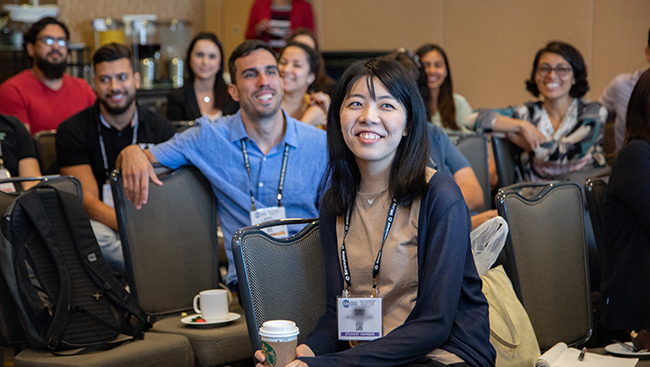 Annual Meeting Video Professional DevelopmentDeveloping strategic research and personal connections — a global network — can help you navigate career transitions and challenges and be successful in your career. In this workshop from Neuroscience 2018, a panel of researchers with experience living and working away from their home countries offered advice for building these culturally based support systems, centered around the four themes below. Read on for highlights and advice, and watch the recording to listen in on this interactive panel discussion.May 1, 2019
 -
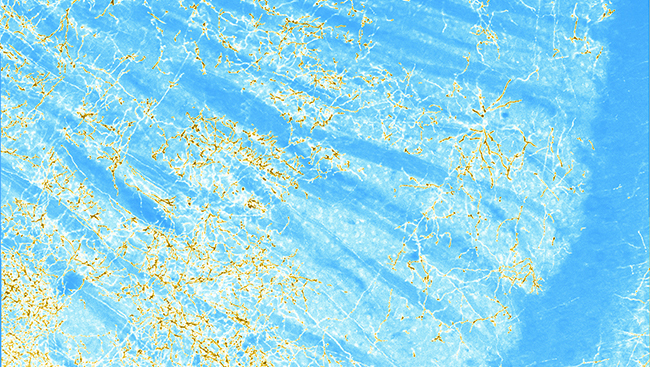
 Article Scientific ResearchLive imaging of neuronal populations often reveals a background signal that engulfs the signal from individual neurons. Typically, this background signal is dismissed as uninformative or as an epiphenomenon. We imaged in freely moving mice acetylcholine-releasing (cholinergic) interneurons in the striatum that play a critical role in basal ganglia function and dysfunction in movement disorders. Importantly, these interneurons give rise to a profusely dense neuropil of fine neuronal processes that fill the striatum. Under these circumstances, our analysis revealed the background signal arising from the neuropil represents a “mean-field” readout of the collective recurrent activity of cholinergic interneurons. Thus, the neuropil signal functions as a physiological readout of the network state. For over half a century, clinicians and scientists have known a disruption of the so-called balance between acetylcholine and dopamine released in the region of the brain called the striatum is a central pathological correlate of various movement disorders such as Parkinson’s disease and Huntington’s disease. This imbalance was deduced from biochemical and histological studies of the striatum. However, evidence for such an imbalance in the physiological activity of brain circuits has been lacking.May 1, 2019
 -
 Podcast Scientific ResearchIn the mouse, no complete innate behavioral circuit has been defined, and mechanistic understanding of the neurons that drive behavior remains largely unknown. Lisa Stowers was one of the first postdocs to work with Howard Hughes Medical Institute investigator Catherine Dulac on decoding the mouse olfactory system. In this Meet-the-Expert, she delves into why, 20 years after they began, there’s work left to do, and why innate behavior is not so easy to study as advertised. By watching you’ll gain an understanding of the means and metrics of analysis, assumptions of circuit coding, and interpretations of the effects of viral and optogenetic manipulations, contributing to a greater overall understanding of the coding of innate behavior.Apr 30, 2019




