



Filter
-
(133)
-
(733)
-
(4)
-
(1)
-
(47833)
-
(91)
-
(25)
-
(14)
-
(433)
-
(7)
-
(182)
-
(8)
-
(33)
-
(17)
-
(7)
-
(9)
-
(9)
-
(5)
-
(21)
-
(8)
-
(12)
-
(9)
-
(3)
-
(10)
-
(10)
-
(56)
-
(45)
-
(12)
-
(3)
-
(7)
-
(6)
-
(5)
-
(8)
-
(7)
-
(11)
-
(58)
-
(13)
-
(30)
-
(8)
-
(5)
-
(10)
-
(5)
-
(15)
-
(4)
1051 - 1060
of 52756 results
-
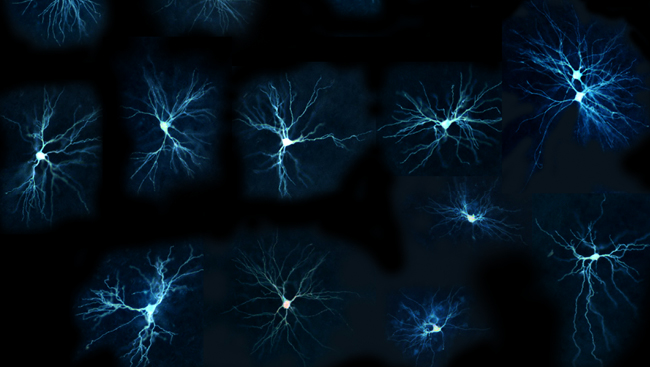 Article Scientific ResearchDetermination of postsynaptic targets, as well as the shape and size of the synaptic junctions, provides critical data about synaptic functionality and circuit organization. As far as we know, 3D synaptic morphology has never been performed together with the identification of postsynaptic targets in normal human brain samples or in the brain of patients with Alzheimer’s disease (AD). Thus, this study represents the first attempt to unveil the synaptic organization of the neuropil of the human brain at the ultrastructural level. Thanks to 3D electron microscopy (FIB/SEM technology), it is possible to obtain large numbers of 3D reconstructed synapses. This study provides a large new quantitative ultrastructure dataset of the transentorhinal cortex, including both normal and AD cases. In addition, the morphological synaptic alterations and changes in the postsynaptic targets found in AD may further understanding of the relationship between alterations of the synaptic circuits and the cognitive deterioration observed in these patients.Sep 26, 2019
 -
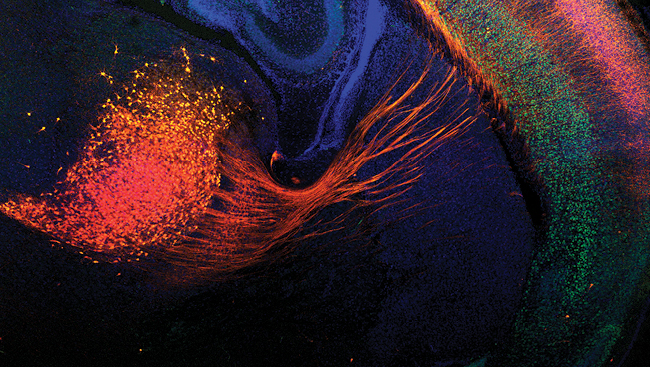 Article Scientific ResearchAdolescence — the transition from childhood to adulthood — is a time of great change in the brain and behavior. In addition to sexual maturity, individuals also develop social and emotional skills during this time that will serve them as adults. Traditionally, researchers trying to understand this period have focused on a mismatch in the brain between increased sensitivity to rewarding stimuli and still-developing inhibitory control, which appears to lead to vulnerability to psychiatric disorders and risky behavior such as drug-seeking. What follows is a discussion of how hormones, the brain, and social factors affect adolescent development.Sep 19, 2019
 -
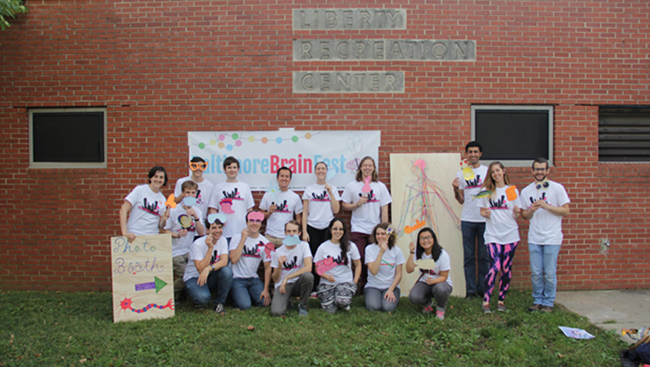 Article OutreachSince becoming president of SfN’s Greater Baltimore Chapter earlier this year, Kristina Nielsen has noted the chapter’s enthusiasm for sharing knowledge with the community. She has a lot of ideas — launching a website and establishing other communications channels among them — and is considering ways to further coordinate activities and recognize chapter members for their efforts. “I'm amazed by how much the students and postdocs are doing in terms of outreach. It's impressive,” she says. Here she shares her observations of the neuroscience community in Baltimore, outlines some of the numerous outreach activities the chapter coordinates among its constituent organizations, and explains how connecting with the Baltimore community improves science by opening conversations and encouraging youth to explore careers in the field.Sep 17, 2019
 -
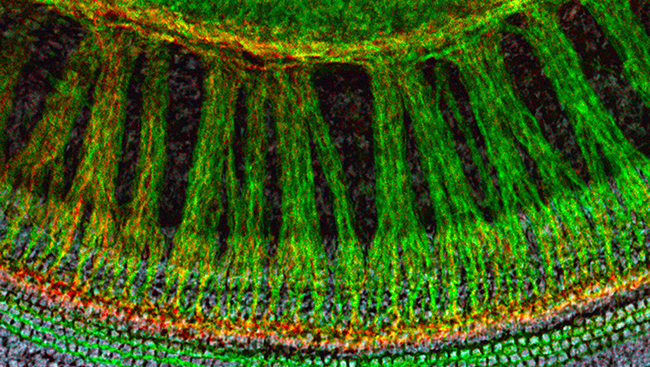 Video TrainingShare your experiences and ideas about scientific cultural factors that can undermine rigorous research practices and identify solutions to these issues that can be employed by all members of the neuroscience community. The Foundations of Rigorous Neuroscience Research (FRN) program will engage members of the neuroscience community to raise awareness of barriers and solutions related to practicing rigorous research and create new resources that will empower neuroscientists at all career stages to implement these practices in their work.Sep 13, 2019
 -
 Annual Meeting Article Professional DevelopmentAs an undergraduate and first-time annual meeting attendee at Neuroscience 2018, my biggest goal was to learn new aspects of neuroscience, especially outside the bounds of my research project. I also wanted to develop my professional and presentation skills and to become more comfortable navigating a national conference. The meeting was more than I hoped for. I came away with knowledge that enlightened aspects of my research, and I had the opportunity to grow as both a scientist and a presenter. The best advice I could give undergrad attendees is to plan ahead, explore all of the sessions listed on SfN.org and in the Neuroscience Meeting Planner, and download the meeting app for your phone, which has helpful maps of the convention center. If you’re giving any sort of presentation, I cannot overstate the importance of practice. You can’t be too prepared. In this guide to the annual meeting for undergraduate students and other first-time attendees, I outline what to do to prepare, share how I chose sessions to attend, recount surprises and what I learned from them, and offer advice for how to have a successful SfN annual meeting.Sep 11, 2019
 -
 Journal ArticleRod and cone photoreceptor cells selectively contact different compartments of axon-bearing retinal horizontal cells in the mammalian retina. Cones synapse exclusively on the soma whereas rods synapse exclusively on a large axon terminal compartment. The possibility that rod signals can travel down the axon from terminal to soma has been proposed as a means of producing spectrally opponent interactions between rods and cones, but there is conflicting data about whether this actually occurs. The spectral overlap between rods and cones in mouse makes it difficult to stimulate rod and cone pigments separately. We therefore used optogenetic techniques to analyze photoreceptor inputs into horizontal somas by selectively expressing channelrhodopsin in rods and/or cones. Optogenetic stimulation of rods and cones both evoked large fast inward currents in horizontal cell somas. Cone-driven responses were abolished by eliminating synaptic release in a cone-specific knockout of the exocytotic calcium sensor, synaptot...May 27, 2025
 -
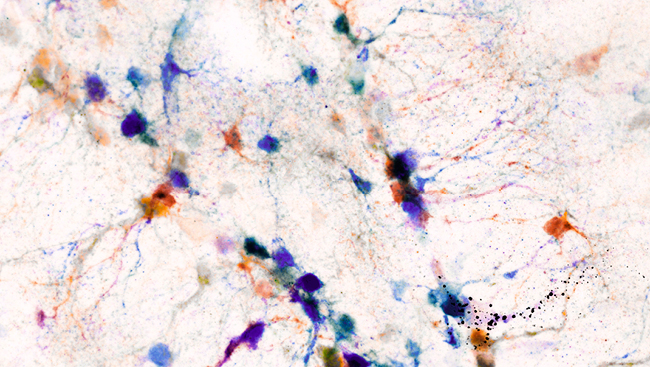 Article Scientific ResearchStudy Question We and others have recently identified molecularly distinct subpopulations of dopamine neurons within the ventral tegmental area (VTA). Our main question in the current study was: Is it possible to identify distinct behaviors that a specific VTA subpopulation contributes to? For example, what about the recently identified NeuroD6 subpopulation? Where do these neurons project, how do they signal, and what types of behaviors are they involved in? How This Research Advances What We Know Heterogeneity has become a central feature in many aspects of neuroscience, and this is true also for the VTA. This midbrain region was recognized in the 1960s to contain dopamine neurons, and VTA dopamine neurons have since then been shown to be involved in various aspects of reward-related behavior such as reward prediction, reinforcement, incentive salience, and motivation. Consequently, dysregulation of VTA neurons is correlated with severe brain disorders. While it is puzzling how such a small population of cells can be involved in so many different functions, clues have appeared in the form of cellular heterogeneity. VTA dopamine neurons, long believed to comprise a rather homogeneous population, can be sorted into subpopulations/subtypes based on features such as afferent and efferent projections, electrophysiological properties, and molecular identity, properties that likely ascribe distinct neurons different functional roles. The puzzle of how distinct VTA neurons contribute to behavior is important to solve, not least to help advance drug discovery of dopamine disorders. It has also become clear that the VTA contains GABA and glutamate-releasing neurons, as well as co-releasing neurons. These neurons affect dopamine neurons and play distinct functional roles, which means the VTA is heterogeneous is many ways.Sep 5, 2019
 -
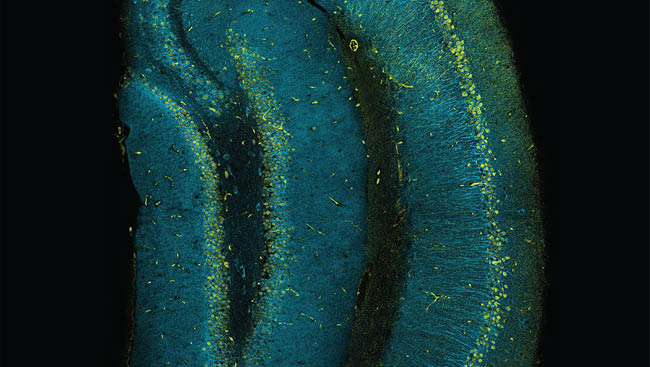 Article Scientific ResearchTrainingSpace (TS) is an online hub that aims to make neuroscience educational materials more accessible to the global neuroscience community. As a hub, TS provides users with access to: - Multimedia educational content from courses, conference lectures, and laboratory exercises from some of the world’s leading neuroscience institutes and societies. - Study tracks to facilitate self-guided study. - Tutorials on tools and open science resources for neuroscience research. - A Q&A forum. - A neuroscience encyclopedia that provides users with access to over 1,000,000 publicly available datasets as well as links to literature references and scientific abstracts. Topics currently included in TS include: general neuroscience, clinical neuroscience, computational neuroscience, neuroinformatics, computer science, data science, and open science. All courses and conference lectures in TS include a general description, topics covered, links to prerequisite courses if applicable, and links to software described in or required for the course, as well as links to the next lecture in the course or more advanced related courses. To learn more about TrainingSpace, visit: https://training.incf.org/Sep 4, 2019
 -
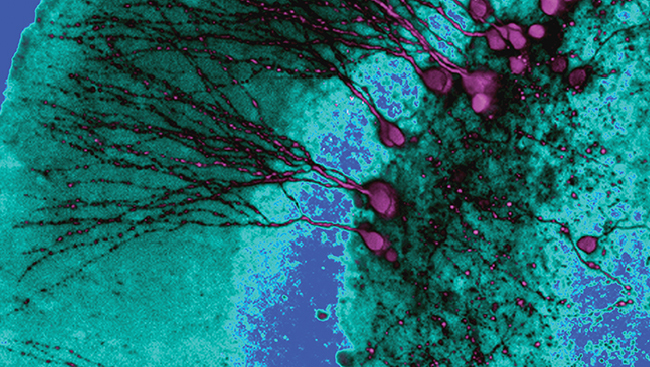 Video Scientific ResearchAs social animals, our mental health depends on interactions with others, but millions suffer from chronic isolation globally, of which solitary confinement is the extreme example. What are the effects of isolation on the brains and behavior of animals and people? What can animal studies reveal about the human brain, and how can findings influence how society and policymakers think of solitary confinement? What role do neuroscientists play in collecting data and sharing it with the public? This panel discussion comprising a neurobiologist, a psychologist, a physician, a lawyer, and an individual held in solitary confinement for 29 years attempts to illuminate some of these questions.Aug 29, 2019
 -
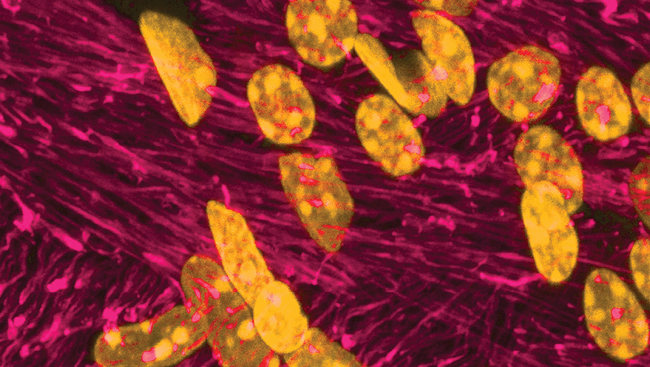 Article Scientific ResearchMaterial below is adapted from the SfN Short Course session How to Study the Origins of Sex Differences in Brain and Behavior, by Margaret M. McCarthy. Short Courses are daylong scientific trainings on emerging neuroscience topics and research techniques held the day before the start of SfN’s annual meeting. Scientists have known for nearly 60 years that the hormones produced by the endocrine system influence fetal brain development and subsequent adult behavior. Yet only now are researchers beginning to gain a greater understanding of how neuroscience and those hormones interact in both male and female animals. Sex is largely determined by an organism’s chromosomes. Mammals use an XY chromosome system in which biological females have two X chromosomes and biological males have both an X and Y, which carries the Sry gene that directs the development of the testes, the male gonads or sex glands. The testes arise early during fetal development and quickly start producing endocrine hormones that influence the growth and development of other sex organs and the masculinization or sexual differentiation of the brain.Aug 29, 2019




