



Filter
-
(133)
-
(733)
-
(4)
-
(1)
-
(47833)
-
(91)
-
(25)
-
(14)
-
(433)
-
(7)
-
(182)
-
(8)
-
(33)
-
(17)
-
(7)
-
(9)
-
(9)
-
(5)
-
(21)
-
(8)
-
(12)
-
(9)
-
(3)
-
(10)
-
(10)
-
(56)
-
(45)
-
(12)
-
(3)
-
(7)
-
(6)
-
(5)
-
(8)
-
(7)
-
(11)
-
(58)
-
(13)
-
(30)
-
(8)
-
(5)
-
(10)
-
(5)
-
(15)
-
(4)
1011 - 1020
of 52756 results
-
 Journal ArticleMazes are a fundamental and widespread tool in behavior and systems neuroscience research in rodents, especially in spatial navigation and spatial memory investigations in freely behaving animals. However, their form and inflexibility often restrict potential experimental paradigms that involve multiple or adaptive maze designs. Unique layouts often lead to elevated costs, whether financially or in terms of time investment from scientists. To alleviate these issues, we have developed an automated, modular maze system that is flexible and scalable. This open source Adapt-A-Maze (AAM) system will allow for experiments with multiple track configurations in rapid succession. Additionally, the flexibility can expedite prototyping of behavioral paradigms. Automation ensures less variability in experimental parameters and higher throughput. Finally, the standardized componentry enhances experimental repeatability within labs and replicability across labs. Our maze was successfully used across labs, in multiple ex...Jun 5, 2025
 -
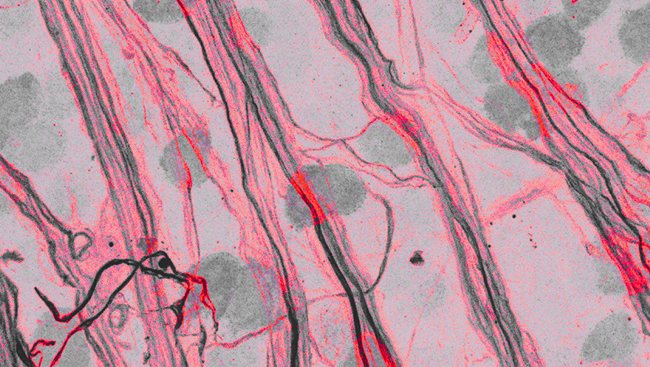 Article Professional DevelopmentWhat can neuroscience tell us about ethics? Some say nothing – ethics is a normative discipline that concerns the way the world should be, while neuroscience is normatively insignificant: it is a descriptive science which tells us about the way the world is. This seems in line with what is sometimes called “Hume’s Law”, the claim that one cannot derive an ought from an is. This claim is contentious and its scope unclear, but it certainly does seem true of demonstrative arguments, at the least. Neuroethics, by its name, however, seems to suggest that neuroscience is relevant for ethical thought, and indeed some have taken it to be a fact that neuroscience has delivered ethical consequences. It seems to me that there is some confusion about this issue, and so here I’d like to clarify the ways in which I think neuroscience can be relevant to ethics.Oct 23, 2019
 -
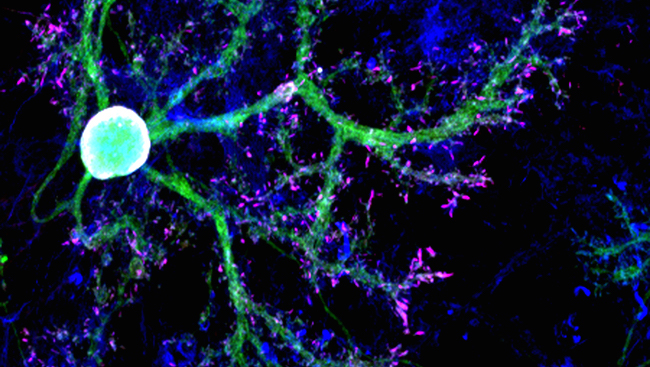 Article Scientific ResearchTrainingSpace (TS) is an online hub that aims to make neuroscience educational materials more accessible to the global neuroscience community. As a hub, TS provides users with access to: Multimedia educational content from courses, conference lectures, and laboratory exercises from some of the world’s leading neuroscience institutes and societies. Study tracks to facilitate self-guided study. Tutorials on tools and open science resources for neuroscience research. A Q&A forum. A neuroscience encyclopedia that provides users with access to over 1,000,000 publicly available datasets as well as links to literature references and scientific abstracts. Topics currently included in TS include: general neuroscience, clinical neuroscience, computational neuroscience, neuroinformatics, computer science, data science, and open science. All courses and conference lectures in TS include a general description, topics covered, links to prerequisite courses if applicable, and links to software described in or required for the course, as well as links to the next lecture in the course or more advanced related courses. To learn more about TrainingSpace, visit: https://training.incf.orgOct 15, 2019
 -
 Webinar Scientific ResearchEffects of early life stress are found to be dependent on many factors, including sex and genetic background, the age of early exposure, and the age and context within which the long-term impact is examined. This webinar will discuss the resultant high individual variability of early life stress and its impact on coping abilities and cognitive functions later in life.Oct 14, 2019
 -
Journal ArticleNeurons in the paraventricular nucleus of the thalamus (PVT) integrate visceral and limbic inputs and project to multiple brain regions to bias behavior towards aversive or defensive states. This study examines MOR signaling in anterior PVT neurons in brain slices from untreated and morphine treated animals. Imaging in a MOR-Cre reporter rat revealed extensive expression in in aPVT cells, and the application of [Met]5-enkephalin (ME) induced outward currents which were abolished by the MOR-selective antagonist CTAP. A saturating concentration of ME resulted in desensitization that was blocked by compound101, indicating a phosphorylation-dependent process. The opioid sensitivity of amygdala-, nucleus accumbens-, and prefrontal cortex-projecting neurons was then examined. Neurons that projected to the amygdala were more sensitive to ME than cortical- and accumbal-projecting cells. Following chronic treatment, tolerance to morphine was found in neurons projecting to the amygdala and nucleus accumbens with a t...Jun 2, 2025
-
Journal ArticleGlymphatic transport in rodents has primarily been studied using cisterna magna cannulation (CMC), a minimally invasive method for cerebrospinal fluid (CSF) tracers’ infusion. However, CMC is suboptimal due to the lack of bony structures to stabilize the cannula, leading to potential movement artifacts. Here, we present an alternative approach involving chronic cannulation of the lateral ventricles of mice for CSF tracer delivery. A direct comparison demonstrated that intraventricular cannulation (IVC) reproduces CMC results in vivo, including perivascular labeling of the middle cerebral artery, which was further confirmed by ex vivo analysis. IVC enables tracer infusion in awake mice, facilitating glymphatic transport studies in conjunction with behavioral assessments that were previously unattainable. Additionally, IVC supports repeated infusions in awake animals, offering the potential to reduce the number of experimental animals required. This study establishes IVC as a robust alternative for studying ...Jun 2, 2025
-
Journal ArticlePaying attention to a target talker in multi-talker scenarios is associated with its more accurate neural-tracking relative to competing non-target speech. This “neural-bias” to target speech has largely been demonstrated in experimental setups where target and non-target speech are acoustically controlled and interchangeable. However, in real-life situations this is rarely the case. For example, listeners often look at the talker they are paying attention to while non-target speech is heard (but not seen) from peripheral locations. To enhance the ecological-relevance of attention research, here we studied whether neural-bias towards target speech is observed in a spatially realistic audiovisual context, and how this is affected by switching the identity of the target talker. Group-level results show robust neural-bias towards target speech, an effect that persisted and generalized after switching the identity of the target talker. In line with previous studies, this supports the utility of the speech-trac...Jun 2, 2025
-
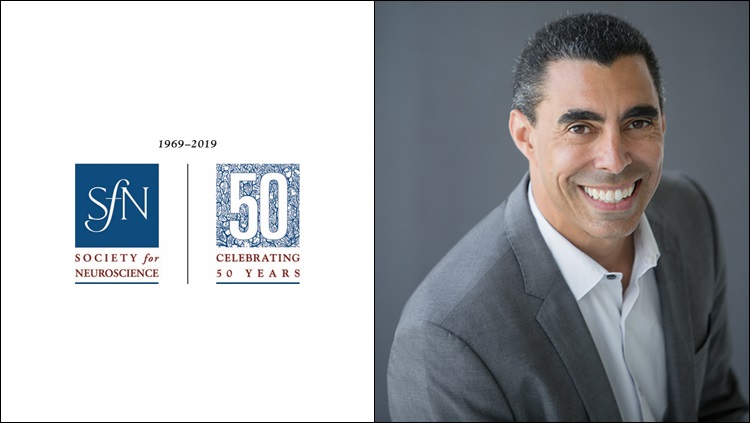 Podcast AdvocacyMuch of science advocacy is local by nature, but it also has tremendous potential to bring neuroscientists together on a global scale. In this episode of History of SfN: 50th Anniversary, Bill Martin, the president and chief operating officer of Blackthorn Therapeutics, traces the evolution of SfN’s role in global advocacy efforts throughout his time on its Government and Public Affairs Committee and continued involvement with the Society.Oct 10, 2019
 -
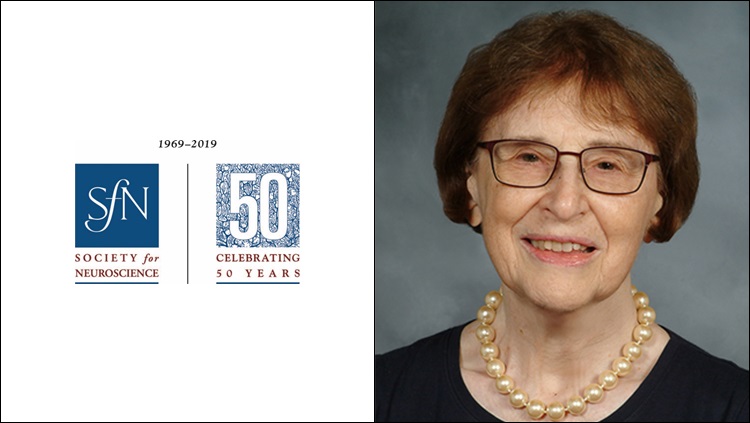 Podcast Scientific ResearchIn this episode of History of SfN: 50th Anniversary, Bernice Grafstein, Vincent and Brooke Astor Distinguished Professor in Neuroscience at Cornell University, Trustee and Vice-President of the Grass Foundation — and the first female president of the Society for Neuroscience — recounts how the formation of the Society for Neuroscience brought together neuroscientists of diverse backgrounds.Oct 10, 2019
 -
-Mickey-Goldberg-on-the-Expansion-of-SfN.jpg) Podcast OutreachIn its 50 years, the Society for Neuroscience has become an international society representing the interests of scientists from diverse backgrounds across the globe. In this episode of History of SfN: 50th Anniversary, Mickey Goldberg, David Mahoney Professor of Brain and Behavior at Columbia University, and a past president of the Society for Neuroscience, describes how the Society and meeting have evolved, including through the digitization of abstract submissions. History of SfN: 50th Anniversary is a limited series podcast highlighting stories from the history of the Society for Neuroscience, recounting groundbreaking moments in the growth of the Society from the perspectives of current, past, and future leaders. Alongside his scientific background and time as SfN president, Goldberg also offers a look at his involvement with science outreach and the importance of outreach to building public trust in science.Oct 10, 2019
Podcast OutreachIn its 50 years, the Society for Neuroscience has become an international society representing the interests of scientists from diverse backgrounds across the globe. In this episode of History of SfN: 50th Anniversary, Mickey Goldberg, David Mahoney Professor of Brain and Behavior at Columbia University, and a past president of the Society for Neuroscience, describes how the Society and meeting have evolved, including through the digitization of abstract submissions. History of SfN: 50th Anniversary is a limited series podcast highlighting stories from the history of the Society for Neuroscience, recounting groundbreaking moments in the growth of the Society from the perspectives of current, past, and future leaders. Alongside his scientific background and time as SfN president, Goldberg also offers a look at his involvement with science outreach and the importance of outreach to building public trust in science.Oct 10, 2019




