



Filter
-
(133)
-
(733)
-
(4)
-
(1)
-
(47833)
-
(91)
-
(25)
-
(14)
-
(433)
-
(7)
-
(182)
-
(8)
-
(33)
-
(17)
-
(7)
-
(9)
-
(9)
-
(5)
-
(21)
-
(8)
-
(12)
-
(9)
-
(3)
-
(10)
-
(10)
-
(56)
-
(45)
-
(12)
-
(3)
-
(7)
-
(6)
-
(5)
-
(8)
-
(7)
-
(11)
-
(58)
-
(13)
-
(30)
-
(8)
-
(5)
-
(10)
-
(5)
-
(15)
-
(4)
1571 - 1580
of 52756 results
-
 Journal ArticleThe anterior hypothalamic area (AHA) is a key brain region for orchestrating defensive behaviors. Using in vivo calcium imaging in mice, we observed that AHA neuronal activity increases during footshock delivery and footshock-associated auditory cues. We found that following shock-induced increases in AHA activity, a decrease in activity coincides with the onset of grooming behavior. Next, we optogenetically activated the projections from the ventromedial hypothalamus (VMH) to the AHA and observed that photoactivation of the VMH→AHA pathway drives avoidance. Interestingly, repetitive grooming behavior occurs following cessation of stimulation. To identify changes in brain-wide activity patterns that occur due to optogenetic VMH→AHA stimulation, we combined optogenetic stimulation with positron emission tomography (PET)-based metabolic mapping. This approach revealed the amygdala as a downstream area activated by the stimulation of this pathway. Our findings show that the rise and fall of AHA neuronal activ...Jan 1, 2025
 -
Journal ArticleIn the article “Short-Term Synaptic Plasticity Makes Neurons Sensitive to the Distribution of Presynaptic Population Firing Rates,” by Luiz Tauffer and Arvind Kumar, which was published online …Jan 1, 2025
-
 Journal ArticleFragile X autosomal homolog 1 (FXR1), a member of the fragile X messenger riboprotein 1 family, has been linked to psychiatric disorders including autism and schizophrenia. Parvalbumin (PV) interneurons play critical roles in cortical processing and have been implicated in FXR1-linked mental illnesses. Targeted deletion of FXR1 from PV interneurons in mice has been shown to alter cortical excitability and elicit schizophrenia-like behavior. This indicates that FXR1 regulates behaviorally relevant electrophysiological functions in PV interneurons. We therefore expressed a genetically encoded hybrid voltage sensor in PV interneurons and used voltage imaging in slices of mouse somatosensory cortex to assess the impact of targeted FXR1 deletion. These experiments showed that PV interneurons lacking FXR1 had excitatory synaptic potentials with larger amplitudes and shorter latencies compared with wild type. Synaptic potential rise-times, decay-times, and half-widths were also impacted to degrees that varied bet...Jan 1, 2025
 -
 Journal ArticleThe subjective visual vertical (VV), the visually estimated direction of gravity, is essential for assessing vestibular function and visuospatial cognition. In this study, we aimed to investigate the mechanisms underlying altered VV perception in stroke participants with unilateral spatial neglect (USN), specifically by examining their eye movement patterns during VV judgment tasks. Participants with USN demonstrated limited eye movement scanning along a rotating bar, often fixating on prominent ends, such as the top or bottom. This suggests a reflexive response to visually salient areas, potentially interfering with accurate VV perception. In contrast, participants without USN showed broader scanning around the center of the bar. Notably, participants with USN without frontal lobe lesions occasionally exhibited extended scanning that included the bar’s center, which was associated with accurate VV judgments. These findings suggest that (1) a tendency to fixate on peripheral, prominent areas and (2) fronta...Jan 1, 2025
 -
 Journal ArticleThe human medial parietal cortex (MPC) is recruited during multiple cognitive processes. Previously, we demonstrated regions specific to recall of people or places and proposed that the functional organization of MPC mirrors the category selectivity defining the medial–lateral axis of the ventral–temporal cortex (VTC). However, prior work considered recall of people and places only, and VTC also shows object selectivity sandwiched between face- and scene-selective regions. Here, we tested a strong prediction of our proposal: like VTC, MPC should show a region specifically recruited during object recall, and its relative cortical position should mirror the one of VTC. While responses during people and place recall showed a striking replication of prior findings, we did not observe any evidence for object-recall effects within MPC, which differentiates it from the spatial organization in VTC. Importantly, beyond MPC, robust recall effects were observed for people, places, and objects on the lateral surface o...Jan 1, 2025
 -
 Journal ArticleThe study of the neural circuitry underlying complex mammalian decision-making, particularly cognitive flexibility, is critical for understanding psychiatric disorders. To test cognitive flexibility, as well as potentially other decision-making paradigms involving multimodal sensory perception, we developed FlexRig, an open-source, modular behavioral platform for use in head-fixed mice. FlexRig enables the administration of tasks relying upon olfactory, somatosensory, and/or auditory cues and employing left and right licking as a behavior readout and reward delivery mechanism. The platform includes hardware and software components that are customizable, scalable, and portable, supporting a variety of behavioral assays. Using FlexRig, we established a head-fixed task to model attentional set-shifting, offering a new tool for neuroscience research that enhances the capacity for investigation of cognitive processes and their neural substrates, with broad applications in translational neuroscience.Jan 1, 2025
 -
 Journal ArticleStatus epilepticus (SE) links to high mortality and morbidity. Considering the neuroprotective property of baicalein (BA), we investigated its effects on post-SE neuronal injury via the NLRP3/GSDMD pathway. Mice were subjected to SE modeling and BA interference, with seizure severity and learning and memory abilities evaluated. The histological changes, neurological injury and neuron-specific enolase (NSE)-positive cell number in hippocampal CA1 region, and cell death were assessed. Levels of the NOD-, LRR-, and pyrin domain-containing 3 (NLRP3)/gasdermin-D (GSDMD) pathway-related proteins, inflammatory factors, and Iba-1 + NLRP3+ and Iba-1 + GSDMD-N+ cells were determined. BA ameliorated post-SE cognitive dysfunction and neuronal injury in mice, as evidenced by shortened escape latency, increased number of crossing the target quadrant within 60 s and the time staying in the target quadrant, alleviated hippocampal damage, increased viable cell number, decreased neuronal injury, and increased NSE-positive c...Jan 1, 2025
 -
 Article Scientific ResearchThroughout the primate visual cortex, individual neurons and clusters of neurons respond quite strongly to specific features within a viewed image.May 19, 2017
 -
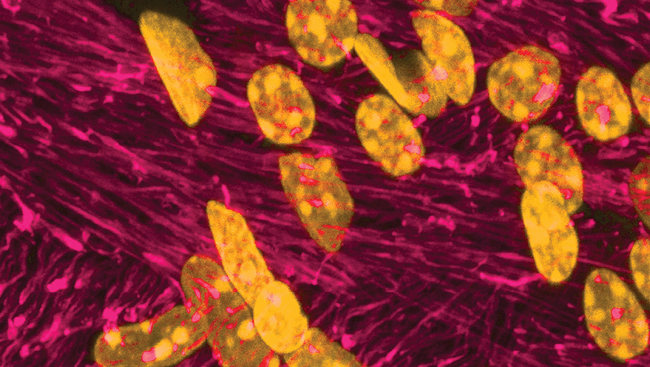 Article Scientific ResearchThe symptoms characterizing Alzheimer’s disease — memory loss and general cognitive decline — appear to derive from physical changes within the brain including amyloid plaque accumulation in the extracellular spaces, tangled fibrils of tau proteins within neural cells, and gross atrophy.May 18, 2017
 -
 Annual Meeting Video Professional DevelopmentYou may have heard terms such reproducibility, rigor, reliability, and robustness being increasingly used by SfN, the scientific community at large, journalists, and policymakers.May 17, 2017




