



Filter
-
(133)
-
(733)
-
(4)
-
(1)
-
(47832)
-
(91)
-
(25)
-
(14)
-
(433)
-
(7)
-
(181)
-
(8)
-
(33)
-
(17)
-
(7)
-
(9)
-
(9)
-
(5)
-
(21)
-
(8)
-
(12)
-
(9)
-
(3)
-
(10)
-
(10)
-
(56)
-
(45)
-
(12)
-
(3)
-
(7)
-
(6)
-
(5)
-
(8)
-
(7)
-
(11)
-
(58)
-
(13)
-
(30)
-
(8)
-
(5)
-
(10)
-
(5)
-
(14)
-
(4)
971 - 980
of 52753 results
-
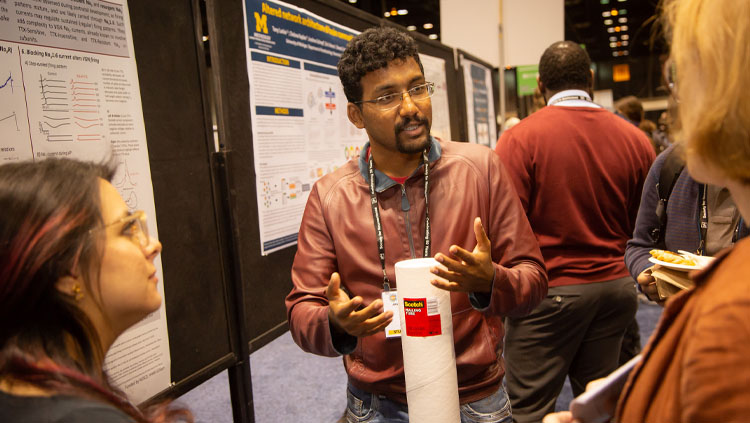 Article Professional DevelopmentExciting scientific opportunities are available practically anywhere in the world, but many PhD students consider the United States or countries in Europe as primary destinations for a postdoc. Deciding between the two can be a challenge, as they have similar demands on research quality, quantity, and impact. As with any work environment, however, science is highly influenced by local culture. If you’re deciding between Europe and the United States, focus your efforts on learning about the culture of the places you’re considering. In this article, we’ll share cultural themes that arose among our personal experiences moving from Europe to the United States. Our intent is to empower you to make a more informed choice about where to take this next step in your career.Feb 19, 2020
 -
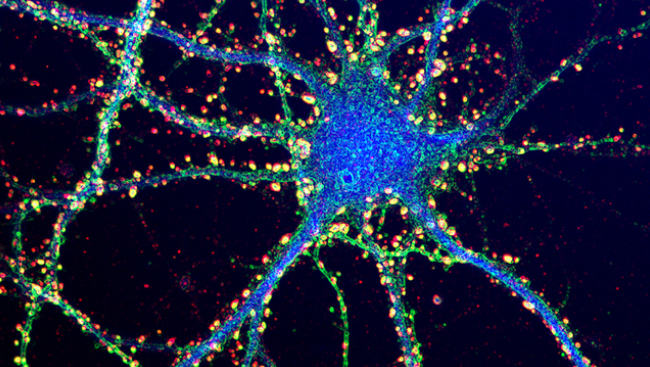 Video DiversityHaving mentors with backgrounds different than your own can bring you valuable perspective. A shared passion for science can be a great connector across disparate life experiences.Feb 18, 2020
 -
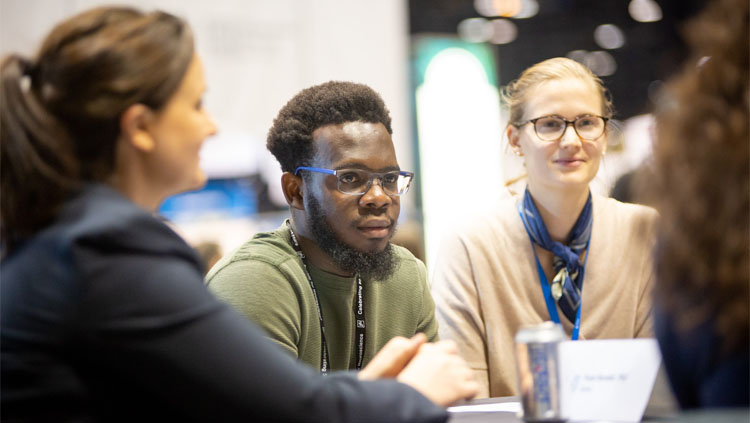 Article Professional DevelopmentTwo often forgotten but important parts of project management are relationship management and communication. This article will cover how to effectively manage relationships among collaborators and communicate the progress and results of the project to other scientists and the public.Feb 11, 2020
 -
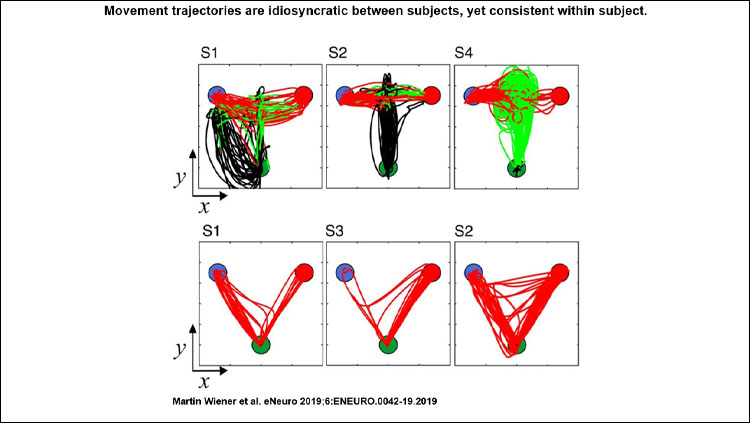 Article Scientific ResearchMaterial below summarizes the article Movement Improves the Quality of Temporal Perception and Decision-Making, published on August 8, 2019, in eNeuro and authored by Martin Wiener, Weiwei Zhou, Farah Bader, and Wilsaan M. Joiner. Highlights Physical movements during encoding of auditory stimuli improve the final determination of time duration. Time perception is an integral component of motor planning and adaptation. Timing is directly computed in the motor system.Feb 6, 2020
 -
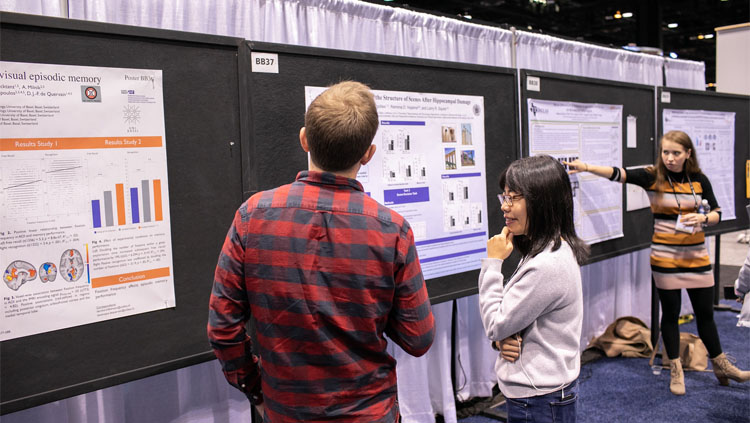 Article Professional DevelopmentThis resource was featured in the NeuroJobs Career Center. Visit today to search the world’s largest source of neuroscience opportunities. The research we do defines who we are as scientists. We’re proud of our work, so we publish in peer-reviewed journals and present at professional conferences. Some of us may have an opportunity to promote our work to the media, or to interview for a job we’ve always wanted. We hope we’re making a difference in people’s lives. But many researchers don’t communicate in a way that resonates with their intended audience — whether that’s their professional community, scientists in other fields, the public, the media, or a potential boss. It’s not just what you say, but also how you say it, that matters.Feb 4, 2020
 -
 Journal ArticleVirtual reality (VR) has gained popularity in recent years, integrating with conventional music stimulation, action observation (AO), and motor imagination (MI). It offers promising opportunities for developing innovative rehabilitation treatments, though the mechanisms underlying these effects remain unclear. This study aims to compare brain activation and network mechanisms following the fusion of MS, AO, and MI with VR. 50 healthy participants were recruited and underwent functional near-infrared spectroscopy (fNIRS) synchronization with three virtual reality tasks: music stimulation (VRMS), action observation (VRAO), and motor imagery (VRMI). The results indicate that VRMS significantly enhances functional connectivity of the bilateral primary sensory cortex (S1), pre-motor cortex and supplementary motor area (PM&SMA) compared to VRAO and VRMI. Furthermore, the interaction among the bilateral PM&SMA, right dorsolateral prefrontal cortex (DLPFC), and right primary motor cortex (M1) regions is notably st...Jun 23, 2025
 -
Journal ArticleIn the mammalian visual system, three functionally distinct parallel processing streams extend from retina to visual thalamus and then to visual cortex: magnocellular, parvocellular, and koniocellular. Tree shrews ( Tupaia belangeri ), a pre-primate species, provide an advantageous model to study the koniocellular pathway in isolation because, while magnocellular and parvocellular pathways remain mixed in Lamina 1(L1), L2, L4, and L5 of the lateral geniculate nucleus (LGN), L3 and L6 receive strictly koniocellular input from the contralateral eye. Additionally, koniocellular-input laminae selectively receive glutamatergic axons from the superior colliculus (SC). To reveal how cellular and synaptic properties of koniocellular geniculate laminae may differ from magnocellular/parvocellular laminae, and how SC input may shape the koniocellular relay to cortex, we studied the morphology and connectivity of retinal and tectal terminals in pathway-specific laminae. While confirming that K-laminae relay cells cont...Jun 23, 2025
-
 Article Annual Meeting Professional DevelopmentA lab environment where individual members feel heard can help you to run a successful lab in diverse settings. An important part of creating this kind of inclusive environment is in fact what happens outside the day-to-day work of the lab — asking lab members about their research interests, for example, or encouraging reflection. At the 2019 Meet-the-Experts session “Twenty Years of Fear Research and Mentoring in Puerto Rico,” Gregory Quirk, PI of the Laboratory of Fear Learning at the University of Puerto Rico, shared that Puerto Rico has been building its presence in science, and that hard work has been bringing results for science across the island—in part due to attention to the lab environment.Jan 29, 2020
 -
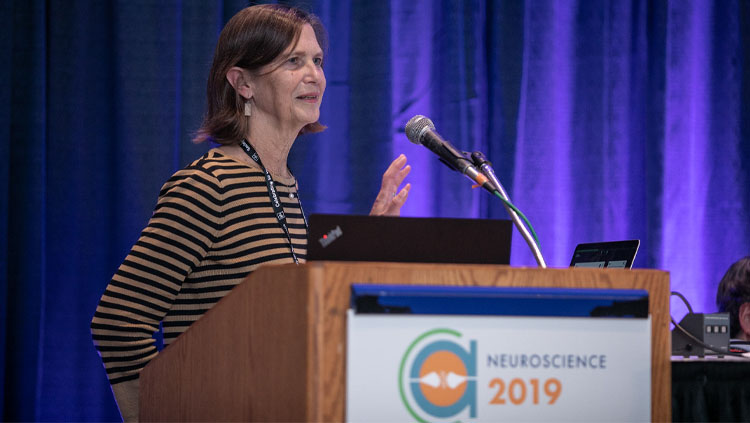 Annual Meeting Video Professional DevelopmentInstitutions have a role to play in creating the right environment for team science. As more scientists participate in interdisciplinary teamwork and global collaboration, academic recruitment and promotion processes need to account for this. In this workshop, faculty, administrators, and other institutional leaders will learn how to recognize and evaluate team science when it comes to faculty hiring and advancement, as well as how to adapt their hiring and tenure practices to reflect the growing team science approach to research.Jan 28, 2020
 -
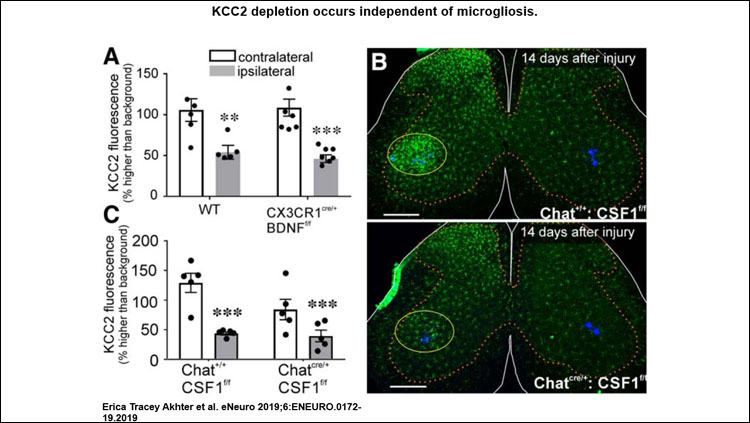 Article Scientific ResearchMaterial below summarizes the article Removal of the Potassium Chloride Co-Transporter From the Somatodendritic Membrane of Axotomized Motoneurons Is Independent of BDNF/TrkB Signaling but Is Controlled by Neuromuscular Innervation, published on September 20, 2019, in eNeuro and authored by Erica Tracey Akhter, Ronald W. Griffith, Arthur W. English, and Francisco J. Alvarez. Highlights Potassium chloride-cotransporter 2 (KCC2) mRNA and protein are downregulated within days of peripheral axotomy of spinal motoneurons. KCC2 downregulation on axotomized motoneurons is not dependent on microgliosis or BDNF/TrkB signaling by difference to pathways reported previously in other disease and pathology associated with KCC2 dysregulation. Extensive KCC2 depletion is tied to the regenerative state and recovers after motor axons reinnervate muscle, suggesting that GABA/glycinergic synapse action in the absence of KCC2 might contribute to axon regeneration.Jan 23, 2020




