



Filter
-
(133)
-
(733)
-
(4)
-
(1)
-
(47830)
-
(91)
-
(25)
-
(14)
-
(433)
-
(7)
-
(181)
-
(8)
-
(33)
-
(17)
-
(7)
-
(9)
-
(9)
-
(5)
-
(21)
-
(8)
-
(12)
-
(9)
-
(3)
-
(10)
-
(10)
-
(56)
-
(45)
-
(12)
-
(3)
-
(7)
-
(6)
-
(5)
-
(8)
-
(7)
-
(11)
-
(58)
-
(13)
-
(30)
-
(8)
-
(5)
-
(10)
-
(5)
-
(14)
-
(4)
891 - 900
of 52751 results
-
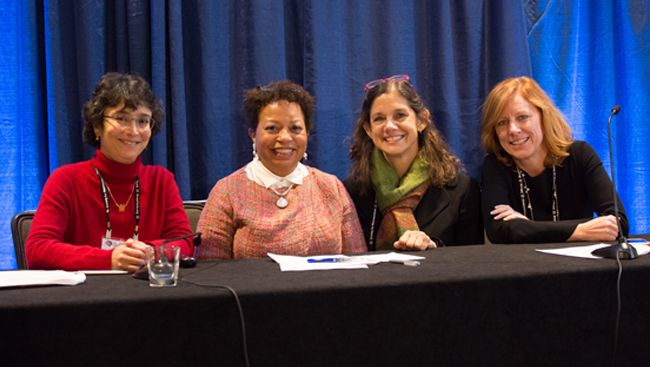 Article Professional DevelopmentOver the course of my career, I’ve probably said “yes” to service opportunities more often than I’ve said “no.” In fact, service has been a key element of my professional development and is likely one of the reasons I moved from the bench into academic administration. I am now president of Trinity College. I enjoyed the opportunities collegewide and external service afforded me. I met interesting people and was constantly stimulated to learn something new and broaden my horizon. For example, during my second year as an assistant professor at Wellesley College, I was invited to serve on the presidential search committee because of my previous volunteer work. This wasn’t a burden but rather a unique opportunity to see academic leadership in action.Jun 10, 2020
 -
 Article Career PathsNo two careers are identical. Yet, all neuroscientists will likely share certain commonalities: the first sparks of scientific curiosity, difficult challenges, resilience to press on, accomplishments large and small, hard-earned wisdom, and support from professional and personal communities. Here, James Townsel, professor emeritus at Meharry Medical College, focuses on how his time in the military influenced his decision to become a neuroscientist, how he has actively supported and created opportunities for underrepresented minorities, what he’s most proud of, and more. “I believe in diversity because it enhances the overall effectiveness of the research,” says James Townsel, a professor emeritus at Meharry Medical College. A dream of both Townsel and Joe Martinez was to create a perpetual fund to facilitate training diverse scientists. The Scholarships to Enhance and Empower Diversity (SEED) fund, part of the American Psychological Foundation (APF) Fund for Racial and Ethnic Diversity, helps achieve their goal of supporting the training and mentoring of the brightest trainees in neuroscience from diverse backgrounds. Read this interview to learn how and why Townsel has devoted his career to making educational opportunities available to underrepresented minorities in the biomedical sciences, and how you can help do the same.Jun 10, 2020
 -
 Article Professional DevelopmentSometimes, we forget that science is not just an individual quest. It is much more.Jun 10, 2020
 -
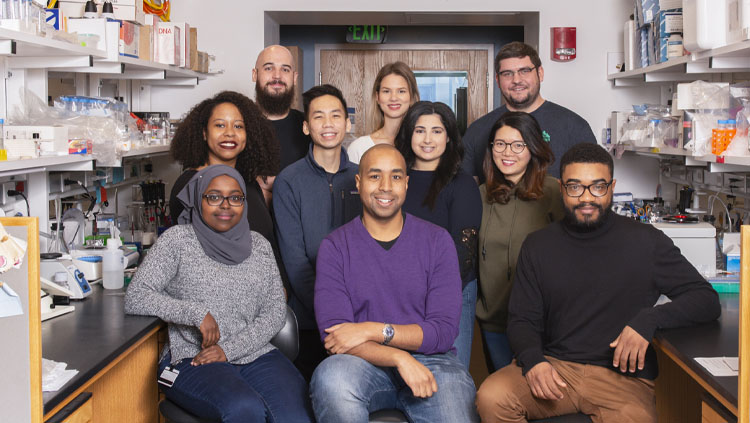 Article DiversityCorey Harwell, an assistant professor at Harvard Medical School, aims to create a diverse, collegial, and collaborative lab environment. Part of that stems from the influence of his own ambitious and caring mentors who supported his career step-by-step, often by sharing new research opportunities he wouldn’t have known existed. Here, he reflects on those relationships, his path into science, and his hopes for increasing diversity in the field, through exposing underrepresented minorities to science as a career path. His message to them, "We need you." This interview is a complement to SfN's podcast series, History of SfN: 50th Anniversary. Guests on the podcast were asked to nominate individuals whose careers are making positive cultural or scientific impacts that will shape the next 50 years of neuroscience. Corey Harwell was nominated by Bill Martin, president and chief operating officer of Blackthorn Therapeutics.Jun 9, 2020
 -
 Article Professional DevelopmentPeer review is a critical process for upholding the scientific integrity in publishing. Each year, Peer Review Week spotlights key issues and engages scientists, communicators, and the public worldwide. This year’s theme is diversity and inclusion. SfN is joining the global conversation and welcomes you to participate.Jun 9, 2020
 -
 Article CommunityEvery academic institution has its own unique climate — a term that refers to its structures, policies, values, and work conditions as perceived by its members, as well as the quality of the interactions among its leaders and members.Jun 9, 2020
 -
 Journal ArticleThe prepositus hypoglossi nucleus (PHN), involved in horizontal gaze control, contributes to this function via cooperation with the vestibulocerebellum (VC). Furthermore, some PHN neurons have also been observed to project to cerebellar regions outside the VC. We previously reported a neuronal population in the ventral caudal PHN that projects to lobules III–V of the anterior vermis or to the cerebellar hemispheric crus. Because the properties of these neurons have not been clarified, this study aimed to determine their localization, projections, and electrophysiological and morphological characteristics in male rats. Tracing experiments revealed that these neurons were clustered within the ventral caudal PHN, approximately between bregma -12.72 mm and -12.00 mm, and did not project to the uvula/nodulus (UN), which is part of the VC. Whole-cell recordings and morphological experiments revealed that these PHN neurons exhibited high input capacitance, low input resistance, low-frequency firing, prominent vol...Jul 15, 2025
 -
Journal ArticleRecognition of conspecific individuals in mammals is an important skill, thought to be mediated by a distributed array of neural networks, including those processing olfactory cues. Recent data from our groups have shown that social memory can be supported by olfactory cues alone, and that interactions with an individual lead to increased neural representations of that individual in the anterior olfactory nucleus, an olfactory network strongly modulated by the neuropeptide oxytocin. We here show, using a computational model, how enhanced representations in the AON can easily arise during the encoding phase, how they can be modulated by OXT and how a dynamic memory signature in the form of enhanced oscillations in the beta range arises from the architecture of the neural networks involved. These findings have implications for our understanding how social memories are formed and retrieved and generate further hypotheses that can be tested experimentally. Significance statement Memory for con-specifics is of...Jul 15, 2025
-
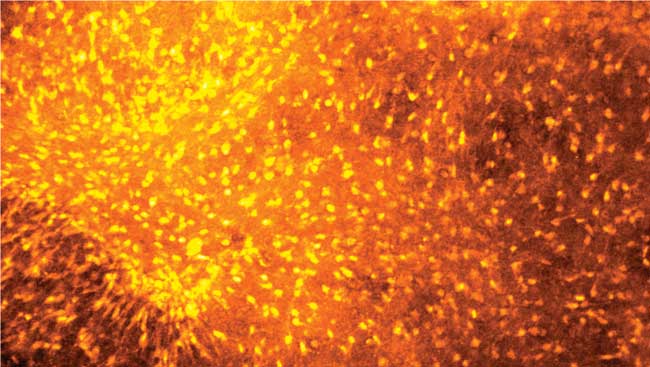 Webinar Scientific ResearchTo understand the function of the brain and how its dysfunction leads to brain diseases, it is essential to have a deep understanding of the cell type composition of the brain, how the cell types are connected with each other, and what their roles are in circuit function.Jun 4, 2020
 -
 Podcast OutreachIn this episode of History of SfN: 50th Anniversary, Nick Spitzer, inaugural editor-in-chief of BrainFacts.org, shares how BrainFacts.org came to be, his experience on SfN’s Public Education and Communication Committee, and the importance of scientific outreach.Jun 2, 2020




