



Filter
-
(133)
-
(733)
-
(4)
-
(1)
-
(47830)
-
(91)
-
(25)
-
(14)
-
(433)
-
(7)
-
(181)
-
(8)
-
(33)
-
(17)
-
(7)
-
(9)
-
(9)
-
(5)
-
(21)
-
(8)
-
(12)
-
(9)
-
(3)
-
(10)
-
(10)
-
(56)
-
(45)
-
(12)
-
(3)
-
(7)
-
(6)
-
(5)
-
(8)
-
(7)
-
(11)
-
(58)
-
(13)
-
(30)
-
(8)
-
(5)
-
(10)
-
(5)
-
(14)
-
(4)
851 - 860
of 52751 results
-
 Journal ArticleFiber photometry is a neuroscience technique that can continuously monitor in vivo fluorescence to assess population neural activity or neuropeptide/transmitter release in freely behaving animals. Despite the widespread adoption of this technique, methods to statistically analyse data in an unbiased, objective, and easily adopted manner are lacking. Various pipelines for data analysis exist, but they are often system-specific, only for pre-processing data, and/or lack usability. Current post hoc statistical approaches involve inadvertently biased user-defined time-binned averages or area under the curve analysis. To date, no post-hoc user-friendly tool with few assumptions for a standardised unbiased analysis exists, yet such a tool would improve reproducibility and statistical reliability for all users. Hence, we have developed a user-friendly post hoc statistical analysis package in Python that is easily downloaded and applied to data from any fiber photometry system. This Fi ber Pho tometry P ost H oc A...Jul 29, 2025
 -
Journal ArticleThe development of motor control over sensory organs is a critical milestone, enabling active exploration and shaping of the sensory environment. Whether the onset of sensory organ motor control directly influences the development of corresponding sensory cortices remains unknown. Here, we confirm and exploit the late onset of whisking behavior in mice to address this question in the somatosensory system. Using ex vivo electrophysiology, we describe a transient increase in the intrinsic excitability of excitatory neurons in layer IV of the barrel cortex, which processes whisker input, immediately following the onset of active whisking on postnatal days 13 and 14. This increase in neuronal gain is specific to layer IV, independent of changes in synaptic strength, and requires prior sensory experience. Further, these effects are not expressed in inhibitory interneurons in barrel cortex. The transient increase in excitability is not evident in layer II/III of barrel cortex or in the visual cortex upon eye ope...Jul 29, 2025
-
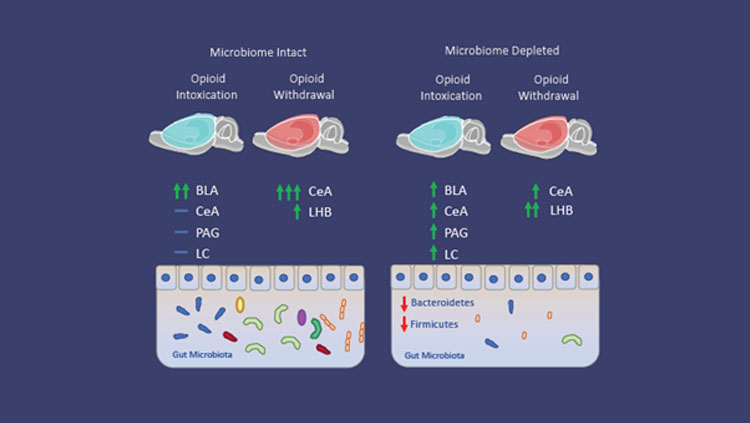 Article Scientific ResearchSubstance use disorders are complex. Genetics, environment, and exposure to drugs pre- and post-natally all play a role in drug use. Recently, there has been evidence that another factor may play a role in substance use disorders: the gut-brain axis. The gut-brain axis is the bidirectional communication pathways between the gut microbiome and the brain. My most recent publication provides new evidence that alterations of the gut microbiome directly impact the neuronal ensembles recruited during both intoxication and withdrawal from oxycodone.Aug 13, 2020
 -
 Webinar Scientific ResearchA first-generation college student from rural East Texas, Ellen A. Lumpkin pursued a non-traditional career path from vocational agriculture to sensory neuroscience. Over the past two decades, Lumpkin’s group has discovered how epithelial Merkel cells collaborate with the nervous system to encode different qualities of touch sensation. In this interactive Meet-the-Expert session, Lumpkin will present highlights of her research and discuss factors that helped her persist along the high-pressure journey to academic neuroscience.Aug 12, 2020
 -
Journal ArticleThe degeneration of midbrain dopamine (DA) neurons disrupts the neural control of natural behavior, such as walking, posture, and gait in Parkinson’s disease. While some aspects of motor symptoms can be managed by dopamine replacement therapies, others respond poorly. Recent advancements in machine learning-based technologies offer opportunities to better understand the organizing principles of behavior modules at fine time scales and its dependence on dopaminergic modulation. In the present study, we applied the motion sequencing (MoSeq) platform to study the spontaneous locomotor activities of neurotoxin and genetic mouse models of Parkinsonism as the midbrain DA neurons progressively degenerate. We also evaluated the treatment efficacy of levodopa (L-DOPA) on behavioral modules at fine time scales. We revealed robust changes in the kinematics and usage of the behavioral modules that encode spontaneous locomotor activity. Further analysis demonstrates that fast behavioral modules with higher velocities w...Jul 28, 2025
-
 Webinar TrainingThis webinar is exclusive for SfN members. Please log in or join or renew your membership below for access. As a new school year approaches, graduate neuroscience training programs are having to consider how COVID is changing not just their current trainees but also how they recruit and evaluate this year’s applications for admissions. In this discussion panel, four speakers involved in graduate admission at their universities will share the conversations they are having about changes to the upcoming admission cycle, as well as the known and unknown factors complicating these decisions. Attendees are encouraged to bring their questions and experiences to share with the panelists and the rest of the neuroscience training community.Aug 11, 2020
 -
 Article CommunityI remembered something I’d read in passing, about non-invasive brain stimulation and strength training in improving motor function in children with cerebral palsy. I wondered if a similar approach could be used in adults. I actually live with cerebral palsy and have seen how adults with cerebral palsy are underrepresented in medical research. It all clicked, and I became even more motivated to pursue this goal. But I still needed to find a supportive supervisory team.Aug 11, 2020
 -
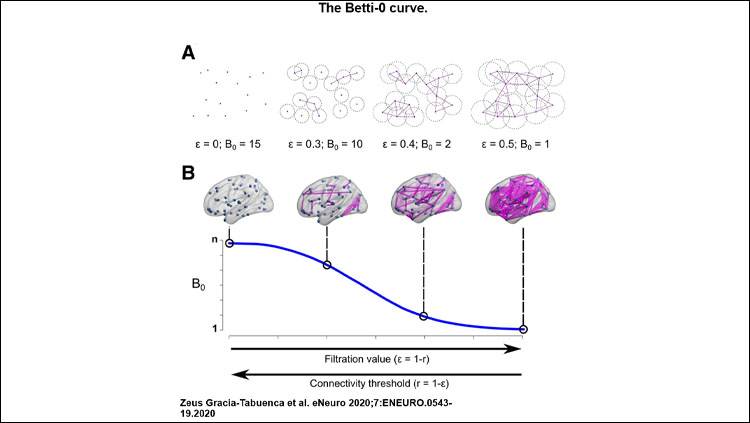 Article Scientific ResearchTopological Data Analysis (TDA) showed significant differences between ADHD and typically developing children. Such differences are not dependent on how we segment the brain into multiple regions. ADHD patients showed higher connectivity than controls. Particularly, two high-order or association networks showed the most increases in connectivity: the frontal lobe and the default mode network.Aug 6, 2020
 -
 Article Advocacy“In my career, I spent a long time educating undergraduate students, and what I realized is I was teaching my students how to communicate with scientists, by writing scientific papers — but what I hadn't done was teach them how to talk about science to people who weren't scientists,” says Jennifer Yates, assistant director of the Innovation in Learning Center at the University of South Alabama. Yates’ story isn’t an anomaly in the scientific community. That’s why stories like hers illustrate the importance of creating a culture within training programs that prioritizes sharing science with nonscientists and teaching students how to do that effectively. Sharing science is a form of advocacy and a simple way to contribute to the field beyond your individual research. Yates got her start in science communication as a former member of SfN’s Public Education and Communication Committee, which guides SfN’s initiatives and programs to educate the public and educators alike about neuroscience. “After that, I started getting my students to think about how, now that they're becoming scientists, they’re going to tell people about that science,” she says. “Most scientists have a passion for sharing their science, but they’re fearful because they don't know what words to use or how to talk to nonexperts,” says Lori McMahon, director of the Comprehensive Neuroscience Center and a professor at the University of Alabama at Birmingham (UAB), and a member of SfN’s Government and Public Affairs Committee. “Giving them the tools is critical.” Here are four lessons for improving students’ science communication skills and helping them share science with others.Aug 5, 2020
 -
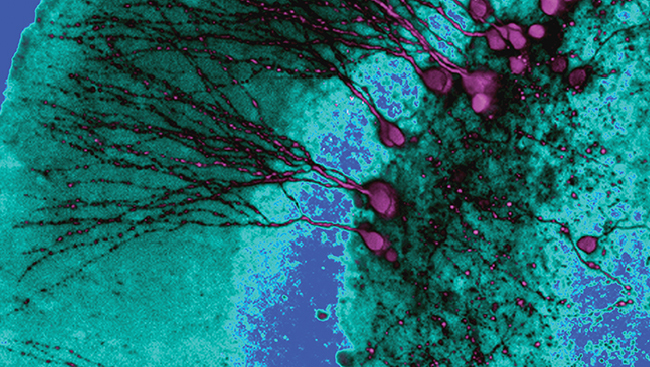 Article Scientific ResearchMaterial below summarizes the article Differential Involvement of Three Brain Regions during Mouse Skill Learning, published on August 1, 2019, in eNeuro and authored by Aldis P. Weible, Michael I. Posner and Christopher M. Niell. Highlights For mice learning a visual discrimination task, improvements in speed and accuracy were qualitatively similar to changes seen with human skill learning. Effects of optogenetic suppression of anterior cingulate cortex, primary visual cortex, and dorsal hippocampus favor parallel, rather than serial, involvement of these structures in our mouse model of skill learning. Suppression in each region lengthened correct-choice reaction times immediately following an error.Jul 30, 2020




