



Filter
-
(133)
-
(733)
-
(4)
-
(1)
-
(47830)
-
(91)
-
(25)
-
(14)
-
(433)
-
(7)
-
(181)
-
(8)
-
(33)
-
(17)
-
(7)
-
(9)
-
(9)
-
(5)
-
(21)
-
(8)
-
(12)
-
(9)
-
(3)
-
(10)
-
(10)
-
(56)
-
(45)
-
(12)
-
(3)
-
(7)
-
(6)
-
(5)
-
(8)
-
(7)
-
(11)
-
(58)
-
(13)
-
(30)
-
(8)
-
(5)
-
(10)
-
(5)
-
(14)
-
(4)
241 - 250
of 52751 results
-
 Journal ArticleMissense variants in O-GlcNAc transferase (OGT) result in OGT congenital disorder of glycosylation (OGT-CDG), an intellectual disability syndrome associated with O-GlcNAc dyshomeostasis and a range of neurodevelopmental defects. Inhibition of O-GlcNAcase (OGA), the enzyme responsible for removing protein O-GlcNAcylation, has been explored as a target for modulating brain O-GlcNAc homeostasis in neurodegenerative diseases and may also be a target for OGT-CDG. Here, we describe an OGT-CDG mouse line, studied in male mice, that exhibits microcephaly, motor deficits, and brain O-GlcNAc dyshomeostasis, closely mirroring patient symptoms. We genetically explored OGA as a target for OGT-CDG by crossing these mice with a line carrying catalytically inactive OGA. Encouragingly, this partially restored O-GlcNAc homeostasis in brain and blood as determined by Ogt/Oga mRNA ratio. These findings suggest that OGA inhibition can modulate enzymatic imbalance in OGT-CDG mice possessing microcephaly and motor deficits, and ...May 28, 2026
 -
Journal ArticleHuntington’s disease (HD) is a hereditary neurodegenerative disease that typically presents during midlife and is characterized by a combination of motor, cognitive and psychiatric symptoms. HD is fatal and arises from a mutation in the huntingtin ( HTT ) gene, which results in decreased neuronal health followed by brain atrophy, with spiny projection neurons (SPNs) of the striatum being especially vulnerable to degeneration. HTT loss-of-function, caused by haploinsufficiency of the wild-type HTT gene (wt HTT ), is an important feature of HD pathophysiology that has previously been understudied compared to mutant HTT gain-of-function mechanisms. wtHTT is essential for nervous system development and functions as a scaffolding protein to support many vital cellular functions including axonal transport, autophagy and synaptic plasticity. Here, we examined the consequences of wtHTT deletion in the adult cortex and striatum by conditionally inactivating wtHTT in 2–4-month-old male and female Htt fl/fl mice. wtH...May 28, 2026
-
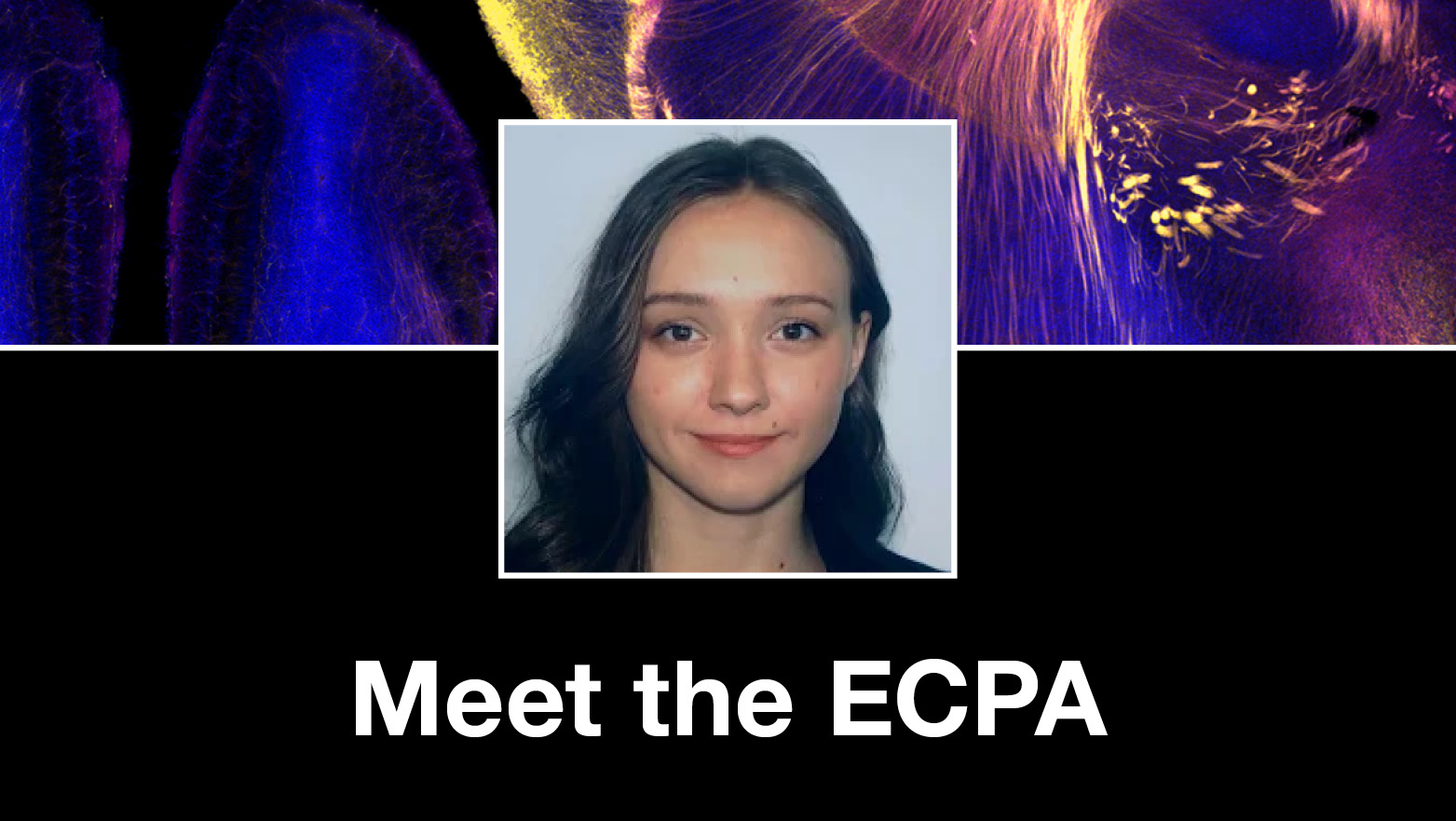 Article AdvocacyThis interview is part of the “Meet the ECPAs” collection, which spotlights current Early Career Policy Ambassadors (ECPA) on their careers, interest in science policy, and current advocacy work. Read onto learn about Anastasiia Gryshyna, a doctoral student at the University of Alabama at Birmingham interested in basic science and pelvic pain.Apr 5, 2024
 -
 Webinar Video Scientific ResearchJoin this interactive session as Anthony Burgos-Robles and Ada Felix-Ortiz discuss their paper, “Prefrontal Regulation of Safety Learning during Ethologically Relevant Thermal Threat”, with eNeuro Editor-in-Chief Christophe Bernard.Mar 20, 2024
 -
 Webinar Video Professional DevelopmentIn this one-hour long webinar, we will discuss key points of poster preparation and presentation, including where to start, how to visualize your ideas using text and figures, how to present to different audiences, how to handle questions and discussions at your poster, and how to follow up with your audience.Mar 19, 2024
 -
 Webinar Video Professional DevelopmentJoin Program Committee Chair Laura Colgin, Program Committee Member India Morrison, and Trainee Advisory Committee Member J. Alex Grizzell as they discuss how to put together an impactful abstract for Neuroscience 2024, which will be held in Chicago on October 5 – 9.Mar 8, 2024
 -
Journal ArticleInhibitory synapse formation is poorly understood compared to excitatory synaptogenesis, in part because the molecular events underlying assembly occur asynchronously and on timescales that have been difficult to resolve. Here, we exploit the ability of Semaphorin 4D (Sema4D) to rapidly and selectively induce GABAergic synapse formation in cultured hippocampal neurons, synchronizing these events to enable direct observation of pre- and postsynaptic protein dynamics by two-channel live imaging. We find that Sema4D promotes a population-wide increase in the mobility of GAD65-containing presynaptic boutons within 20 minutes of treatment while postsynaptic gephyrin scaffolds are mobilized only locally in a proximity-dependent manner, consistent with a presynapse-first model of inhibitory synapse assembly. Sema4D also drives recruitment of GABAARγ2 subunits to receptor-poor postsynaptic gephyrin scaffolds within 10 minutes of treatment, prior to detectable changes in GAD65–gephyrin colocalization, suggesting th...May 19, 2026
-
 Article DiversityMelody Schwenk is a PhD student studying the intersection of language, cognition, and education at Gallaudet University. Schwenk’s parents discovered that she was Deaf when she was two and a half years old. She also discovered at a young age that she was interested in science. Through every stage of her life, from learning ASL and spoken English at an early intervention school, to now working in the Action & Brain Lab at Gallaudet, Schwenk aims to show others that it is possible to succeed in science and be Deaf.Feb 28, 2024
 -
Article CommunityMelody Schwenk is a PhD student studying the intersection of language, cognition, and education at Gallaudet University. Schwenk’s parents discovered that she was Deaf when she was two and a half years old. She also discovered at a young age that she was interested in science. Through every stage of her life, from learning ASL and spoken English at an early intervention school, to now working in the Action & Brain Lab at Gallaudet, Schwenk aims to show others that it is possible to succeed in science and be Deaf.Feb 28, 2024
-
 Webinar Video Scientific ResearchNeuronline is a benefit of SfN membership. Renew your membership now to make sure you don’t lose access.Feb 21, 2024




