



Filter
-
(133)
-
(733)
-
(4)
-
(1)
-
(47833)
-
(91)
-
(25)
-
(14)
-
(433)
-
(7)
-
(182)
-
(8)
-
(33)
-
(17)
-
(7)
-
(9)
-
(9)
-
(5)
-
(21)
-
(8)
-
(12)
-
(9)
-
(3)
-
(10)
-
(10)
-
(56)
-
(45)
-
(12)
-
(3)
-
(7)
-
(6)
-
(5)
-
(8)
-
(7)
-
(11)
-
(58)
-
(13)
-
(30)
-
(8)
-
(5)
-
(10)
-
(5)
-
(15)
-
(4)
1941 - 1950
of 52756 results
-
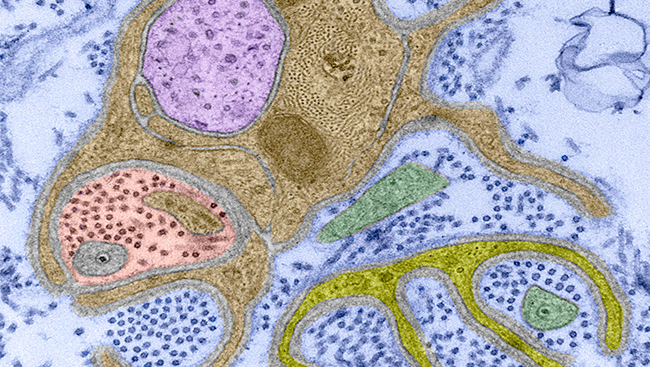 Video Career PathsSteve Roberds, chief scientific officer of the Tuberous Sclerosis Alliance, talks about how his PhD training shaped his work as a scientific adviser to a nonprofit organization.Sep 25, 2015
 -
 Article Annual Meeting DiversityJoin more than 300 of your colleagues to network and discuss the most pressing issues women in the field are facing at the Celebrating Women in Neuroscience (CWiN) Luncheon during Neuroscience 2015. Maria Neimark Geffen, assistant professor of otorhinolaryngology at the University of Pennsylvania Perelman School of Medicine, will deliver the keynote speech.Sep 24, 2015
 -
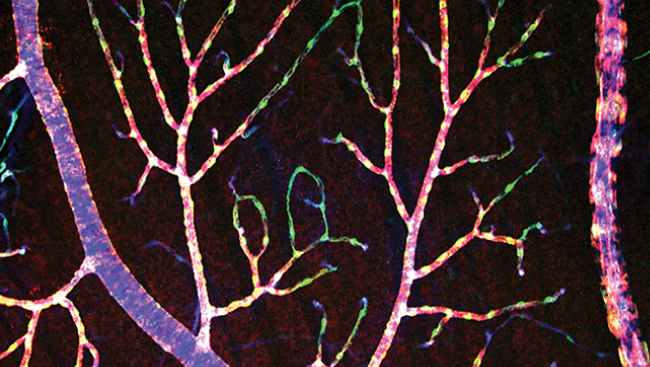 Article Scientific ResearchIn humans, several mutations in a particular calcium channel, the P/Q type, lead to neurological diseases, one of which manifests to ataxia. Ataxia is a disorder where an individual loses coordination or control of muscle movement. SCA6, or spinocerebellar ataxia type 6, is a movement disorder, which results in the loss of a special type of neuron in the cerebellum called Purkinje cells. These neurons process sensory information to coordinate movements. The disease has a late onset and develops in the second period of life. Patients are often wheelchair-bound, and no therapies are available.Sep 22, 2015
 -
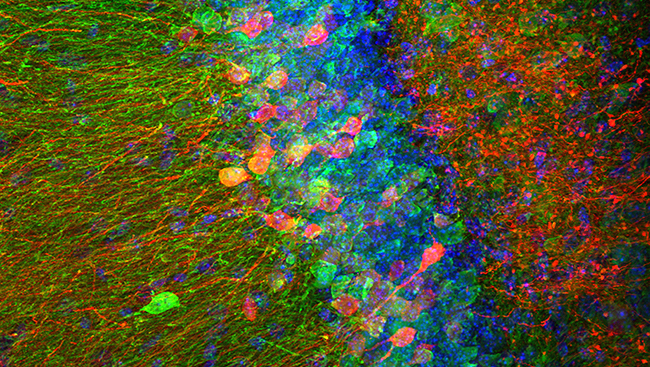 Annual Meeting Video Scientific ResearchThe aim of the 2013 Neurobiology of Disease workshop at the Society for Neuroscience’s annual meeting was to help frame important unanswered research questions related to iPSC-based disease modeling, and to stimulate the interest and understanding of investigators new to the field. The Neurobiology of Disease Workshop provides students and early-career scientists with in-depth overviews of diseases of the nervous system.Sep 17, 2015
 -
 Article Annual Meeting Professional DevelopmentMake the most out of your time at Neuroscience 2015 by knowing what to expect and how to prepare. Here’s what former attendees suggest you do.Sep 17, 2015
 -
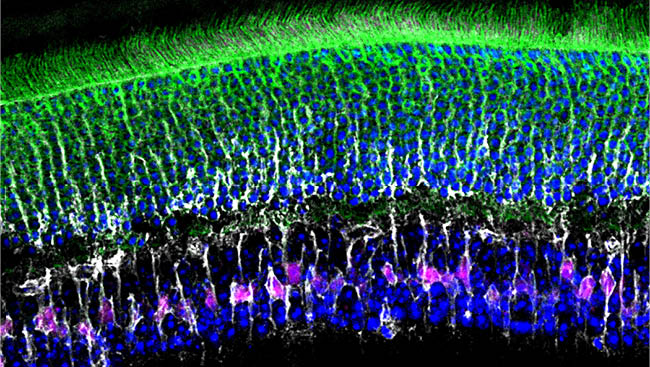 Annual Meeting Video Scientific ResearchLorenz Studer, director at the Center for Stem Cell Biology, discusses using induced pluripotent stem cells to model human diseases and development at the 2013 Neurobiology of Disease workshop at the Society for Neuroscience’s annual meeting.Sep 17, 2015
 -
 Article OutreachThe goal of science outreach is increasing public awareness about brain research. All you need to move your love of science out of the lab and into the public sphere is a desire to communicate your science and an outlet for doing so.Sep 17, 2015
 -
 Article TrainingAs the knowledge base in neuroscience continues to expand, educators need timely resources to engage their students.Sep 15, 2015
 -
 Journal ArticleExperimental evidence showed that an increase in intracellular chloride concentration <mml:math xmlns:mml="http://www.w3.org/1998/Math/MathML" display="inline"><mml:mo stretchy="false">(</mml:mo><mml:mrow><mml:msub><mml:mrow><mml:mo stretchy="false">[</mml:mo><mml:mrow><mml:mrow><mml:mi mathvariant="normal">C</mml:mi></mml:mrow><mml:msup><mml:mrow><mml:mi mathvariant="normal">l</mml:mi></mml:mrow><mml:mo>−</mml:mo></mml:msup></mml:mrow><mml:mo stretchy="false">]</mml:mo></mml:mrow><mml:mrow><mml:mi mathvariant="normal">i</mml:mi></mml:mrow></mml:msub></mml:mrow><mml:mo stretchy="false">)</mml:mo></mml:math> caused by gamma-aminobutyric acid (GABA) input can promote epileptic firing activity, but the actual mechanisms remain elusive. Here in this theoretical work, we show that influx of chloride and concomitant bicarbonate ion <mml:math xmlns:mml="http://www.w3.org/1998/Math/MathML" display="inline"><mml:mo stretchy="false">(</mml:mo><mml:mrow><mml:msubsup><mml:mrow><mml:mi mathvariant="normal">HCO</mml:mi...Oct 1, 2024
 -
Journal ArticleHuman and mouse dorsal root ganglia (hDRG and mDRG) neurons are important tools in understanding the molecular and electrophysiological mechanisms that underlie nociception and drive pain behaviors. One of the simplest differences in firing phenotypes is that neurons are single-firing (exhibit only one action potential) or multi-firing (exhibit 2 or more action potentials). To determine if single- and multi-firing hDRG neurons exhibit differences in intrinsic properties, firing phenotypes, and AP waveform properties, and if these properties could be used to predict multi-firing, we measured 22 electrophysiological properties by whole-cell patch-clamp electrophysiology of 94 hDRG neurons from six male and four female donors. We then analyzed the data using several machine learning models to determine if these properties could be used to predict multi-firing. We used 1,000 iterations of Monte Carlo cross-validation to split the data into different train and test sets and tested the logistic regression, k -ne...Oct 1, 2024




