



Filter
-
(133)
-
(733)
-
(4)
-
(1)
-
(47833)
-
(91)
-
(25)
-
(14)
-
(433)
-
(7)
-
(182)
-
(8)
-
(33)
-
(17)
-
(7)
-
(9)
-
(9)
-
(5)
-
(21)
-
(8)
-
(12)
-
(9)
-
(3)
-
(10)
-
(10)
-
(56)
-
(45)
-
(12)
-
(3)
-
(7)
-
(6)
-
(5)
-
(8)
-
(7)
-
(11)
-
(58)
-
(13)
-
(30)
-
(8)
-
(5)
-
(10)
-
(5)
-
(15)
-
(4)
1721 - 1730
of 52756 results
-
 Journal ArticleChromatin regulation plays a crucial role in neocortical neurogenesis, and mutations in chromatin modifiers are linked to neurodevelopmental disorders. RBBP4 is a core subunit of several chromatin-modifying complexes; however, its functional role and genome-wide occupancy profile in the neocortical primordium are unknown. To address this, we performed RBBP4 knockdown using CRISPR/Cas9 on neocortical progenitors derived from mice of both sexes at embryonic age 12.5 during deep-layer neurogenesis. Our study demonstrates that downregulation of RBBP4 in the E12.5 neocortical progenitors reduced neuronal output, specifically affecting CTIP2-expressing neurons. We demonstrate that RBBP4 plays an essential role in regulating neocortical progenitor proliferation. However, overexpression of RBBP4 alone was not sufficient to regulate neuronal fate. Genome-wide occupancy analysis revealed that RBBP4 primarily binds to distal regulatory elements, and neuron differentiation is a significant GO biological pathway of RB...Nov 26, 2024
 -
Journal ArticleWe use sensory feedback to form our perception, and control our movements and forces (actions). There is an ongoing debate about the relation between perception and action, with evidence in both directions. For example, there are cases in which perceptual illusions affect action signals and cases where they do not. However, even when they do, it is unknown if perceptual information can be inferred from action signals alone. To answer this question, we utilized a perceptual illusion created by artificial tactile skin stretch, which increases stiffness perception, and affects grip force. We used data recorded in a stiffness discrimination task in which participants compared pairs of virtual objects, comprised of force and artificial skin stretch and indicated which they perceived as stiffer. We explored if models could predict participants’ perceptual responses, and the increase in stiffness perception caused by the skin stretch, solely from their recorded action signals. That is, with no information provid...Nov 26, 2024
-
 Article Scientific ResearchScientific rigor is about trying to make sure that our experimental design, analytical techniques, and how we interpret, reproduce, and replicate data are strong enough that we can make sure we are on the right path for scientific discovery.Sep 27, 2016
 -
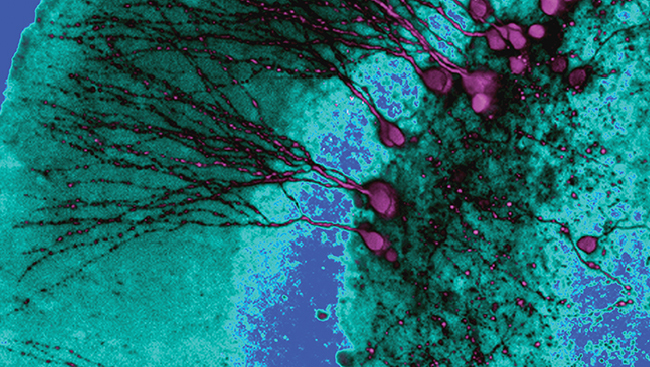 Video TrainingHow can you make neuroscience interesting and not scary to non-science majors? As Marc Breedlove, professor of neuroscience at Michigan State University, explains, it’s all about presenting the science in an accessible way.Sep 27, 2016
 -
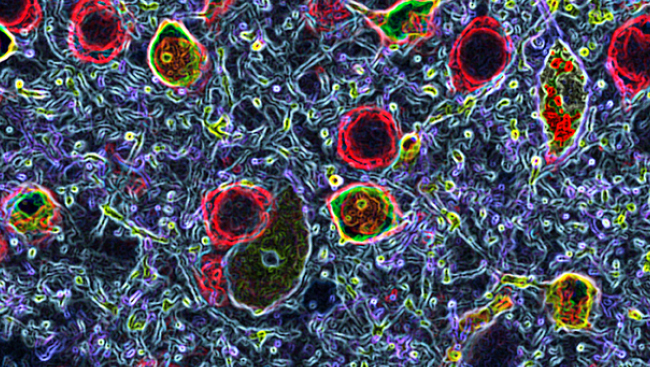 Webinar Scientific ResearchNeuroscientists are now collecting datasets of unprecedented scale thanks to technological advances. Yet, there are many unanswered questions that must be addressed to keep moving the field forward. In this webinar moderated by Gardiner von Trapp, panelists Michael Miller, Richard Myers, and Pascal Wallisch discuss: What types of research problems can a data-science approach solve? How will neuroscientists analyze large-scale data sets most effectively, and with what tools? What training challenges do mentors and trainees face for implementing large-scale data science practices? What skills are valuable for neuroscientists to have to successfully understand and adopt this approach?Sep 22, 2016
 -
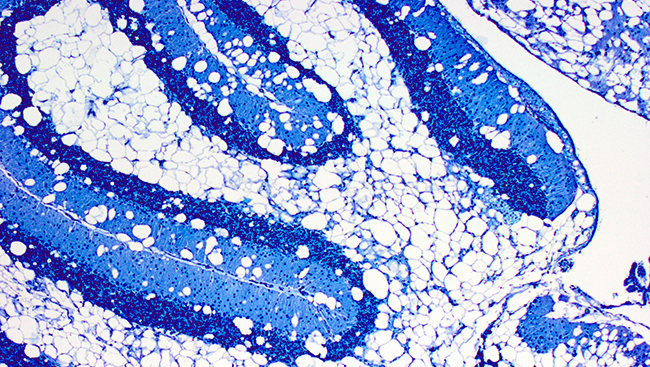 Article Scientific ResearchMost studies of plasticity in the nervous system focus on mechanisms regulating the synaptic connectivity between neurons.Sep 22, 2016
 -
 Article Scientific ResearchScientific rigor means implementing the highest standards and best practices of the scientific method and applying those to one’s research.Sep 21, 2016
 -
Article Scientific ResearchMaterial below is adapted from the SfN Short Course, Modeling Predisposition to Schizophrenia, a Genetically Heterogeneous Neuropsychiatric Disorder, Using Induced Pluripotent Stem Cells, by Seok-Man Ho, BSc, Erin Flaherty, BSc, and Kristen J. Brennand, PhD. Short Courses are day-long scientific trainings on emerging neuroscience topics and research techniques held just prior to SfN’s annual meeting. Schizophrenia is a chronic and severe mental disorder affecting approximately one percent of the world population. In recent years, scientists have employed animal models and genome-wide association studies to gain important insights into the biological underpinnings of schizophrenia. However, it remains unclear exactly how environmental and genetic factors interact to increase the risk for this debilitating disease.Sep 15, 2016
-
 Article Scientific ResearchMaterial below summarizes the article, Pleiotropic Control by Testosterone of a Learned Vocal Behavior and Its Underlying Neuroplasticity, published on January 12, 2016, in eNeuro and authored by Beau A. Alward, Farrah N. Madison, Shannon E. Parker, Jacques Balthazart, and Gregory F. Ball. Adaptive variation in behavior often involves dynamic changes in different brain regions (neuroplasticity) that form a regulatory circuit. Steroid hormones can profoundly modulate behavior in multiple ways: generally, such as alteration of arousal, or specifically, such as enhancing a particular sensory experience.Sep 15, 2016
 -
 Article Professional DevelopmentThe following Q&A is adapted from the webinar, Neuroscience Training Programs without Borders.Sep 15, 2016




