



Filter
-
(133)
-
(733)
-
(4)
-
(1)
-
(47833)
-
(91)
-
(25)
-
(14)
-
(433)
-
(7)
-
(182)
-
(8)
-
(33)
-
(17)
-
(7)
-
(9)
-
(9)
-
(5)
-
(21)
-
(8)
-
(12)
-
(9)
-
(3)
-
(10)
-
(10)
-
(56)
-
(45)
-
(12)
-
(3)
-
(7)
-
(6)
-
(5)
-
(8)
-
(7)
-
(11)
-
(58)
-
(13)
-
(30)
-
(8)
-
(5)
-
(10)
-
(5)
-
(15)
-
(4)
1701 - 1710
of 52756 results
-
 Journal ArticleCertain structural brain connections have been confirmed to influence sleep duration in children. However, the causal relationships between all brain regions and children's sleep duration remain unclear. A two-sample Mendelian randomization analysis was conducted using data from genome-wide association studies (GWAS) to examine the relationships between 206 structural connections and sleep duration in children. Sensitivity analyses were employed to validate the findings and assess the robustness of the causal inferences. Stronger connectivity from the left hemisphere (LH) control network to the accumbens ( β = −0.15; 95% CI = [−0.30, −2.88 × 10⁻³]; p = 0.05) and from the LH somatomotor network to the LH default network ( β = −0.18; 95% CI = [−0.34, −0.03]; p = 0.02) in white-matter structural connectivity (SC) were associated with shorter sleep durations. Conversely, increased white-matter SC from the LH dorsal attention network to the thalamus ( β = 0.14; 95% CI = [8.45 × 10⁻⁴, 0.27]; p = 0.05), fro...Dec 1, 2024
 -
 Journal ArticleLysosomes and related precursor organelles robustly build up in swollen axons that surround amyloid plaques and disrupted axonal lysosome transport has been implicated in worsening Alzheimer's pathology. Our prior studies have revealed that loss of Adaptor protein-4 (AP-4) complex function, linked primarily to spastic paraplegia (HSP), leads to a similar build of lysosomes in structures we term “AP-4 dystrophies.” Surprisingly, these AP-4 dystrophies were also characterized by enrichment of components of APP processing machinery, β-site cleaving enzyme 1 (BACE1) and Presenilin 2. Our studies examining whether the abnormal axonal lysosome buildup resulting from AP-4 loss could lead to amyloidogenesis revealed that the loss of AP-4 complex function in an Alzheimer's disease model resulted in a strong increase in size and abundance of amyloid plaques in the hippocampus and corpus callosum as well as increased microglial association with the plaques. Interestingly, we found a further increase in enrichment of ...Dec 1, 2024
 -
Journal ArticleReported associations between functional connectivity and affective disorder symptoms are minimally reproducible, which can partially be attributed to difficulty capturing highly variable clinical symptoms in cross-sectional study designs. “Dense sampling” protocols, where participants are sampled across multiple sessions, can overcome this limitation by studying associations between functional connectivity and variable clinical states. Here, we characterized effect sizes for the association between functional connectivity and time-varying positive and negative daily affect in a nonclinical cohort. Data were analyzed from 24 adults who attended four research visits, where participants self-reported daily affect using the PANAS-X questionnaire and completed 39 min of functional magnetic resonance imaging across three passive viewing conditions. We modeled positive and negative daily affect in relation to network-level functional connectivity, with hypotheses regarding within-network connectivity of the defa...Dec 1, 2024
-
 Article Professional DevelopmentWhether it’s improving quality of life or embracing the latest technology, the promise of an advancing field is motivation for many neuroscientists to pursue and support meaningful research.Oct 27, 2016
 -
 Article Professional DevelopmentAs I outlined in a previous article, the first step in applying to graduate school is finding programs that match your research interests is. The next step is weighing other important factors that could impact your experience.Oct 27, 2016
 -
 Article TrainingDeveloping and assessing programs used to be a linear process because the training process was linear: graduate school, postdoctoral training, and academia.Oct 27, 2016
 -
 Article OutreachAn elevator speech is one of your most important networking tools.Oct 25, 2016
 -
 Article AdvocacyAs an assistant professor at Columbia University, founder of the Greater New York City Chapter of SfN (braiNY), and active advocate for science funding, Haung (Ho) Yu’s perspectives on the benefits of outreach are far reaching.Oct 20, 2016
 -
 Video DiversityGet an inside look at how unconscious bias during the recruitment process can negatively impact female applicants and how to proactively change the approach in this Institució CERCA video.Oct 20, 2016
 -
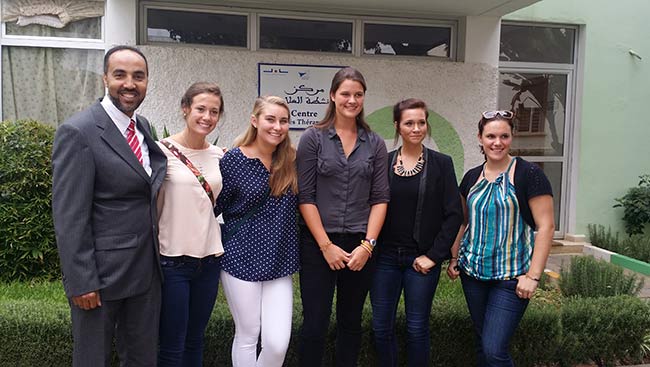 Article OutreachAt the University of New England (UNE), we have invested in our community through both local outreach efforts in Maine and also through advancing the impact of global scientific and cultural exchange.Oct 18, 2016




