



Filter
-
(133)
-
(733)
-
(4)
-
(1)
-
(47833)
-
(91)
-
(25)
-
(14)
-
(433)
-
(7)
-
(182)
-
(8)
-
(33)
-
(17)
-
(7)
-
(9)
-
(9)
-
(5)
-
(21)
-
(8)
-
(12)
-
(9)
-
(3)
-
(10)
-
(10)
-
(56)
-
(45)
-
(12)
-
(3)
-
(7)
-
(6)
-
(5)
-
(8)
-
(7)
-
(11)
-
(58)
-
(13)
-
(30)
-
(8)
-
(5)
-
(10)
-
(5)
-
(15)
-
(4)
1681 - 1690
of 52756 results
-
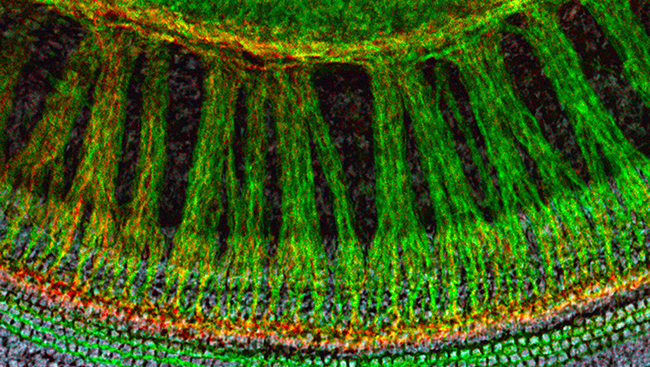 Article Scientific ResearchOur lab focuses on the development and function of a relatively obscure brain region called the habenula.Nov 3, 2016
 -
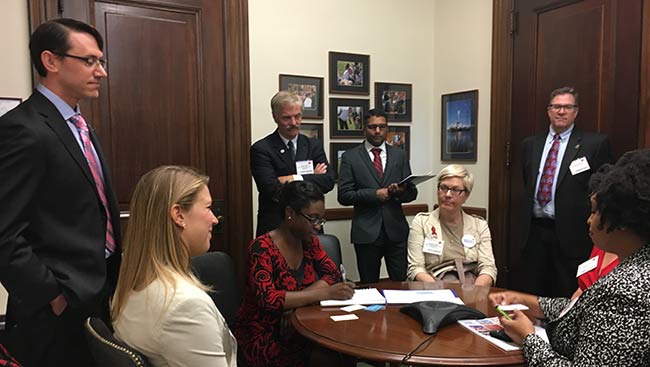 Article AdvocacyIn addition to running a laboratory at the Virginia Tech Carilion Research Institute (VTCRI), Mike Fox devotes his time to a wide range of outreach activities.Nov 3, 2016
 -
 Webinar Scientific ResearchHow can neuroscientists improve the reproducibility of statistical plans and scientific discoveries? In this webinar — the sixth in SfN’s Promoting Awareness and Knowledge to Enhance Scientific Rigor in Neuroscience series — presenters will discuss common applications of statistics in neuroscience, including what types of research questions statistics are best positioned to address, modeling paradigms, and exploratory data analysis. Presenters will provide real world examples of these issues from their own research backgrounds.Nov 3, 2016
 -
 Journal ArticleAlthough most adults in the United States will drink alcohol in their life, only ∼6% will go on to develop an alcohol use disorder (AUD). While a great deal of work has furthered our understanding of the cycle of addiction, it remains unclear why certain people transition to disordered drinking. Altered activity in regions implicated in AUDs, like the basolateral amygdala (BLA), has been suggested to play a role in the pathophysiology of AUDs, but how these networks contribute to alcohol misuse remains unclear. Here we investigated how the impact of alcohol on the BLA network relates to alcohol exposure. We first examined the effect of acute ethanol administration on the BLA and frontal cortical networks and the relationship with subsequent voluntary ethanol consumption using the Intermittent Access paradigm. In addition, we recorded network activity from the BLA and frontal cortex throughout the Drinking-in-the-Dark-Multiple Scheduled Access paradigm to assess the impact of voluntary alcohol consumption o...Dec 1, 2024
 -
 Journal ArticleDelay discounting (DD) is a phenomenon where individuals devalue a reward associated with a temporal delay, with the rate of devaluation being representative of impulsive-like behavior. Here, we first sought to develop and validate a mouse DD task to study brain circuits involved in DD decision-making within short developmental time windows, given widespread evidence of developmental regulation of impulse control and risk-taking. We optimized a T-maze DD task for mice that enables training and DD trials within 2 weeks. Mice learned to choose between a large and a small reward located at opposite arms of a T-maze. Once training criteria were met, mice underwent DD whereby the large reward choice was associated with a temporal delay. Task validation showed that adolescent C57BL/6J mice display an increased preference for the small reward upon a temporal delay, confirming increased impulsivity compared with adults. We next used this DD task to explore the neural basis of decision-making. We used tyrosine hydr...Dec 1, 2024
 -
 Journal ArticleChromatin regulation plays a crucial role in neocortical neurogenesis, and mutations in chromatin modifiers are linked to neurodevelopmental disorders. RBBP4 is a core subunit of several chromatin-modifying complexes; however, its functional role and genome-wide occupancy profile in the neocortical primordium are unknown. To address this, we performed RBBP4 knockdown using CRISPR/Cas9 on neocortical progenitors derived from mice of both sexes at embryonic age 12.5 during deep layer neurogenesis. Our study demonstrates that downregulation of RBBP4 in the E12.5 neocortical progenitors reduced neuronal output, specifically affecting CTIP2-expressing neurons. We demonstrate that RBBP4 plays an essential role in regulating neocortical progenitor proliferation. However, overexpression of RBBP4 alone was not sufficient to regulate neuronal fate. Genome-wide occupancy analysis revealed that RBBP4 primarily binds to distal regulatory elements, and neuron differentiation is a significant GO biological pathway of RBB...Dec 1, 2024
 -
 Journal ArticleThe pretectum of vertebrates contains neurons responsive to global visual motion. These signals are sent to the cerebellum, forming a subcortical pathway for processing optic flow. Global motion neurons exhibit selectivity for both direction and speed, but this is usually assessed by first determining direction preference at intermediate velocity (16–32°/s) and then assessing speed tuning at the preferred direction. A consequence of this approach is that it is unknown if and how direction preference changes with speed. We measured directional selectivity in 114 pretectal neurons from 44 zebra finches ( Taeniopygia guttata ) across spatial and temporal frequencies, corresponding to a speed range of 0.062–1,024°/s. Pretectal neurons were most responsive at 32–64°/s with lower activity as speed increased or decreased. At each speed, we determined if cells were directionally selective, bidirectionally selective, omnidirectionally responsive, or unmodulated. Notably, at 32°/s, 60% of the cells were directionall...Dec 1, 2024
 -
 Journal ArticleGoal-directed actions require transforming sensory information into motor plans defined across multiple parameters and reference frames. Substantial evidence supports the encoding of target direction in gaze- and body-centered coordinates within parietal and premotor regions. However, how the brain encodes the equally critical parameter of target distance remains less understood. Here, using Bayesian pattern component modeling of fMRI data during a delayed reach-to-target task, we dissociated the neural encoding of both target direction and the relative distances between target, gaze, and hand at early and late stages of motor planning. This approach revealed independent representations of direction and distance along the human dorsomedial reach pathway. During early planning, most premotor and superior parietal areas encoded a target’s distance in single or multiple reference frames and encoded its direction. In contrast, distance encoding was magnified in gaze- and body-centric reference frames during la...Dec 1, 2024
 -
 Journal ArticleOverexpression of the eukaryotic initiation factor 4E ( eIF4E ) gene has been associated with excessive stereotypic behaviors and reduced sociability, which manifest as autism-like social cognitive deficits. However, the precise mechanisms by which eIF4E overexpression insufficiently induces these autism-like behaviors and the specific brain regions implicated remain insufficiently understood. Oxytocin (OXT), a neurotransmitter known for its role in social behavior, has been proposed to modulate certain autism-related symptoms by influencing microglial function and attenuating neuroinflammation. Nonetheless, the contributions of the hippocampus and oxytocin in the content of eIF4E overexpression-induced autistic behaviors remain elucidated. To investigate this issue, researchers utilized the three-chamber social interaction test, the open-field test, and the Morris water maze to evaluate the social cognitive behaviors of the two groups of mice. Additionally, ELISA, immunofluorescence, Western blotting, and...Dec 1, 2024
 -
 Journal ArticleWhen making perceptual decisions, humans combine information across sensory modalities dependent on their respective uncertainties. However, it remains unknown how the brain integrates multisensory feedback during movement and which factors besides sensory uncertainty influence sensory contributions. We performed two reaching experiments on healthy adults to investigate whether movement corrections to combined visual and mechanical perturbations scale with visual uncertainty. To describe the dynamics of multimodal feedback responses, we further varied movement time and visual feedback duration during the movement. The results of our first experiment show that the contribution of visual feedback decreased with uncertainty. Additionally, we observed a transient phase during which visual feedback responses were stronger during faster movements. In a follow-up experiment, we found that the contribution of vision increased more quickly during slow movements when we presented the visual feedback for a longer tim...Dec 1, 2024




