



Filter
-
(133)
-
(733)
-
(4)
-
(1)
-
(47833)
-
(91)
-
(25)
-
(14)
-
(433)
-
(7)
-
(182)
-
(8)
-
(33)
-
(17)
-
(7)
-
(9)
-
(9)
-
(5)
-
(21)
-
(8)
-
(12)
-
(9)
-
(3)
-
(10)
-
(10)
-
(56)
-
(45)
-
(12)
-
(3)
-
(7)
-
(6)
-
(5)
-
(8)
-
(7)
-
(11)
-
(58)
-
(13)
-
(30)
-
(8)
-
(5)
-
(10)
-
(5)
-
(15)
-
(4)
1501 - 1510
of 52756 results
-
 Journal ArticleHigh-frequency stimulation (HFS)-induced long-term potentiation (LTP) is generally regarded as a homosynaptic Hebbian-type LTP, where synaptic changes are thought to occur at the synapses that project from the stimulation site and terminate onto the neurons at the recording site. In this study, we first investigated HFS-induced LTP on urethane-anesthetized rats and found that cortical HFS enhances neural responses at the recording site through the strengthening of local connectivity with nearby neurons at the stimulation site, rather than through synaptic strengthening at the recording site. This enhanced local connectivity at the stimulation site leads to increased output propagation, resulting in signal potentiation at the recording site. Additionally, we discovered that HFS can also non-specifically strengthen distant afferent synapses at the HFS site, thereby expanding its impact beyond local neural connections. This form of plasticity exhibits a neo-Hebbian characteristic as it exclusively manifests i...Jan 14, 2025
 -
Journal ArticleSelectively stopping individual parts of planned or ongoing movements is an everyday motor skill. For example, while walking in public you may stop yourself from waving at a stranger who you mistook for a friend while continuing to walk. Despite its ubiquity, our ability to selectively stop actions is limited. Canceling one action can delay the execution of other simultaneous actions. This stopping-interference effect on continuing actions during selective stopping may be attributed to a global inhibitory mechanism with widespread effects on the motor system. Previous studies have characterized a transient global reduction in corticomotor excitability by combining brain stimulation with electromyography (EMG). Here, we examined whether global motor inhibition during selective stopping can be measured peripherally and with high temporal resolution using EMG alone. Eighteen participants performed a bimanual anticipatory response inhibition task with their index fingers while maintaining a tonic contraction o...Jan 14, 2025
-
 Annual Meeting Video OutreachRepeated concussions and other sports-related brain injuries have been recently thrust into the center of public attention. This forum looks at several aspects of this issue from the science of concussions through athletes' perspectives on the competitive system that can put young athletes at risk of injury. Panelists raise questions about whether society can reconcile its insatiable appetite for competition with safety owed to those who risk being harmed by them.Aug 4, 2017
 -
 Poster Scientific ResearchExplore the key tenants, best practices, and other considerations, such as those related to funding, to learn what it means to conduct rigorous and reproducible neuroscience research.Aug 1, 2017
 -
 Webinar Professional DevelopmentLearn about the diverse training experiences facilitated by NIH Intramural Research Programs, including how to apply for various fellowship opportunities.Jul 28, 2017
 -
 Article Scientific ResearchAn important characteristic of living systems/organisms is that they undergo cyclical episodes of rest and activity, which in higher species has evolved into sleep and waking.Jul 28, 2017
 -
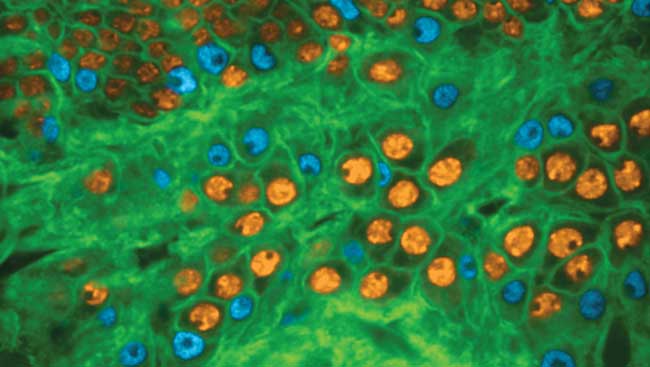 Article Scientific ResearchBrain rhythms, produced by the synchronized electrical activity of millions of neurons, are ubiquitous throughout the mammalian brain. Rhythmic — or oscillatory — activities can be detected using direct recordings in animals and electroencephalographic (EEG) recordings in humans and are seen across the brain at frequencies from less than one hertz to over 100 hertz.Jul 21, 2017
 -
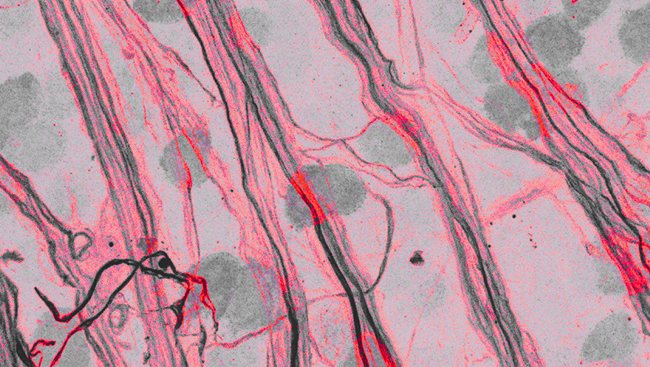 Article Annual Meeting Scientific ResearchScientists do not always agree about how many different types of cells are found in the mammalian brain, nor do they understand all the variation in gene expression that exists even within well-studied categories of cells.Jul 19, 2017
 -
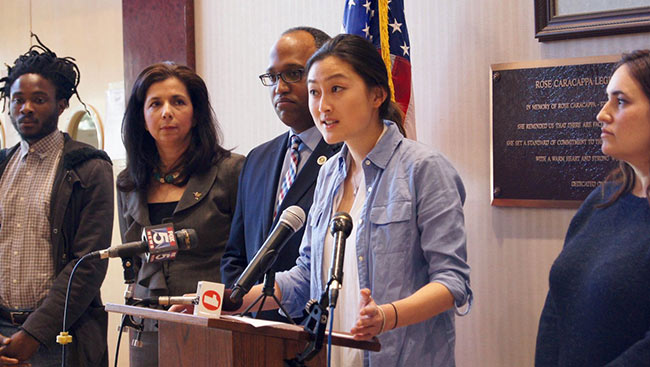 Article AdvocacyThis past April, I proudly marched in Washington, DC, with 100,000 fellow scientists and nonscientists to show our support for the role of science in policy-making.Jul 18, 2017
 -
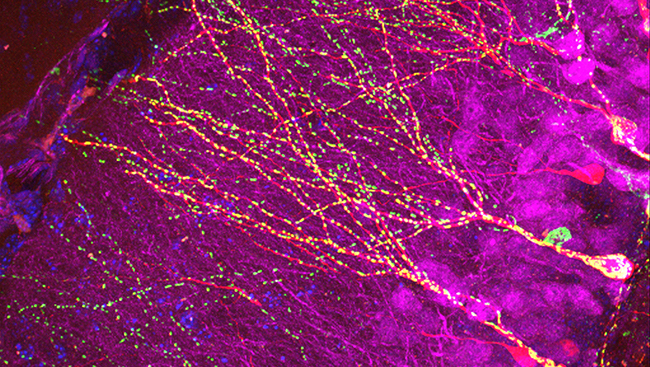 AdvocacyTime spent on applying for grants is on the rise, and many SfN members have also expressed uncertainty about the future of neuroscience funding in the United States. On August 10, from 12-1 pm, Michael Heintz, SfN's director of advocacy and training, will host a live chat in the Neuronline community to answer members' questions regarding the federal budget and its potential impact on NIH and NSF grants. During the live chat, Michael and his team will also answer member questions related to SfN’s advocacy efforts and the best approaches members can take for communicating with elected officials. Members are encouraged to submit their questions for Michael in advance of the live chat by posting in the live chat discussion thread in the Neuronline community.Jul 14, 2017




