



Filter
-
(133)
-
(733)
-
(4)
-
(1)
-
(47833)
-
(91)
-
(25)
-
(14)
-
(433)
-
(7)
-
(182)
-
(8)
-
(33)
-
(17)
-
(7)
-
(9)
-
(9)
-
(5)
-
(21)
-
(8)
-
(12)
-
(9)
-
(3)
-
(10)
-
(10)
-
(56)
-
(45)
-
(12)
-
(3)
-
(7)
-
(6)
-
(5)
-
(8)
-
(7)
-
(11)
-
(58)
-
(13)
-
(30)
-
(8)
-
(5)
-
(10)
-
(5)
-
(15)
-
(4)
1421 - 1430
of 52756 results
-
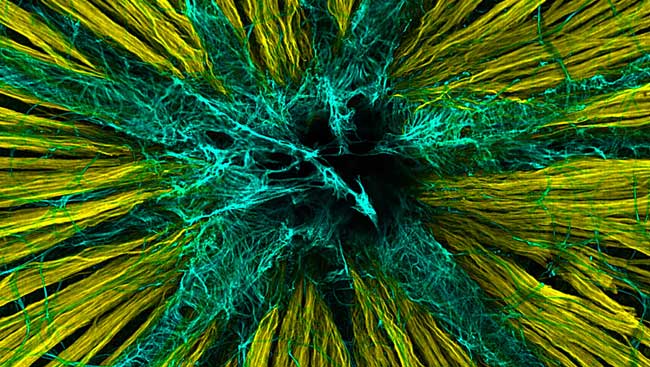 Article Professional Development“There are always new discoveries. It never ends,” says Angela Kim from Harvard Medical School on the most exciting aspect of studying neuroscience. As you prepare for another year of scientific discovery, professional development, and training, revisit Neuronline’s most popular resources from 2017. You’ll find fascinating scientific research, surprising facts about publishing a paper, a behind-the-scenes look at what goes into award-winning research, and more.Dec 12, 2017
 -
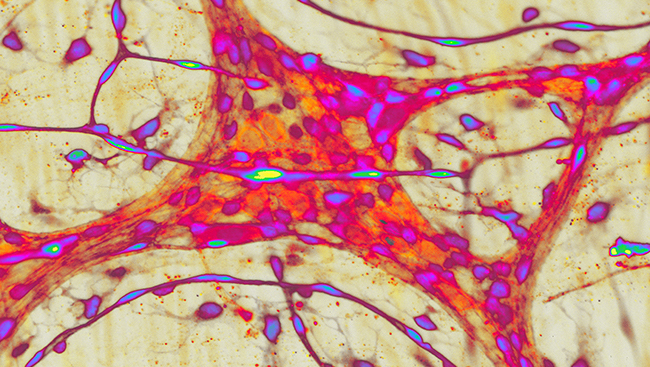 Article Annual Meeting Scientific ResearchMaterial below is adapted from the SfN Short Course, Adult Mouse Cortical Cell Taxonomy Revealed by Single-Cell Transcriptomics, by Bosiljka Tasic, PhD. Short Courses are day-long scientific trainings on emerging neuroscience topics and research techniques held just prior to SfN’s annual meeting. Single-cell RNA sequencing (RNA-seq) is a powerful tool that can help researchers look more deeply at individual cells, in order to better understand differences within tissues or groups of cells. One research team used RNA-seq to classify more than 1,600 cells from the cortex of adult male mice.Dec 12, 2017
 -
 Journal ArticleTransgenic mice provide unprecedented access to manipulate and visualize neural circuits, however, those on a C57BL/6 background develop progressive hearing loss, significantly confounding systems-level and behavioral analysis. While outbreeding can limit hearing loss, it introduces strain variability and complicates the generation of complex genotypes. Here, we propose an approach to preserve hearing by crossing transgenic mice with congenic B6.CAST- Cdh23Ahl+ mice, which maintain low-threshold hearing into adulthood. Widefield and two-photon imaging of the auditory cortex revealed that 2.5-month-old C57BL/6 mice exhibit elevated thresholds to high frequency tones and widespread cortical reorganization, with most neurons responding best to lower frequencies. In contrast, Ahl+ C57BL/6 mice exhibited robust neural responses across tested frequencies and sound levels (4-64 kHz, 30-90 dB SPL) and retained low thresholds into adulthood. Our approach offers a cost-effective solution for generating complex genot...Feb 3, 2025
 -
Journal ArticleGrowth hormone (GH) is a neuromodulator that binds to receptors in the hippocampus and alters synaptic plasticity. Decline in GH levels is associated with normal ageing, stress and disease, and mechanisms proposed involve the hippocampal circuit plasticity. To see how GH affects the hippocampal neural code, we recorded single neurons in the CA1 region of male Long Evans rats with locally altered GH levels. Rats received injections of adeno-associated viruses into the hippocampus to make the cells overexpress either GH or an antagonizing mutated GH (aGH). Place cells were recorded in both familiar and novel environments to allow the assessment of pattern separation in the neural representations termed remapping. All the animals showed intact and stable place fields in the familiar environment. In the novel environment, aGH transfection increased the average firing rate, peak rate and the information density of the CA1 place fields. The tendency of global remapping increased in the GH animals compared to the...Feb 3, 2025
-
Journal ArticleThe adrenal medulla is packed with chromaffin cells, modified postganglionic sympathetic neurons that secrete the catecholamines, epinephrine and norepinephrine, during the fight-or-flight response. Sometimes overlooked, is a population of immune cells that also resides within the gland but whose distribution and function is not clear. Here I examine the location of CD45+ hematopoietic cells in the mouse adrenal medulla and show the majority are F4/80+/Lyz2+ macrophages. These cells are present from early post-natal development and widely distributed. Anatomically they are associated with chromaffin cells, found aligned alongside synapsin-ir neuronal varicosities and juxtaposed to CD31-ir blood vessels. Using Lyz2cre-GCaMP6f mice to quantify calcium signaling in macrophages revealed these cells respond directly and indirectly to a wide variety of neuromodulators, including pre- and post-ganglionic transmitters and systemic hormones. Purinergic agonists, histamine, acetylcholine and bradykinin rapidly and r...Feb 3, 2025
-
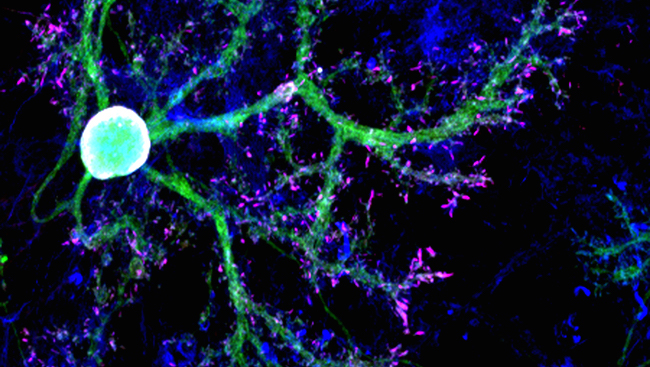 Article Career PathsPhillip West is an assistant professor of microbial pathogenesis and immunology at the Texas A&M University Health Science Center. He led a breakout group at the 2016 Neurobiology of Disease Workshop, From Pediatric Encephalopathy to Alzheimer's: Linking Mitochondria to Neurological Diseases, and presented in 2017 follow-up webinar, Linking Mitochondria to Neurological Disease. Here, he shares what led him to this research path and why it excites him. As told to, and edited by, SfN staff.Dec 6, 2017
 -
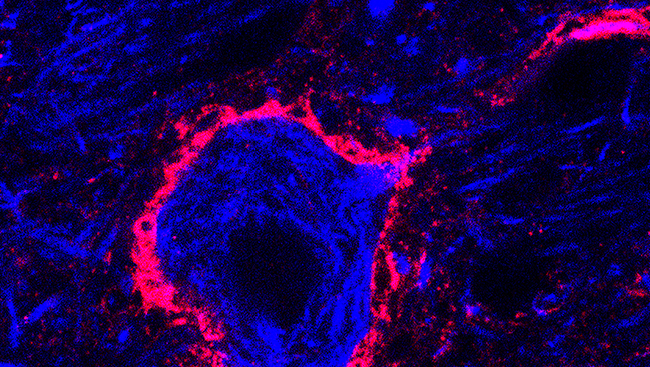 Article Annual Meeting Scientific ResearchMaterial below is adapted from the SfN Short Course, Transcription Dysregulation of the PGC-1α Pathway in Huntington’s Disease Pathogenesis: From Metabolic Derangement to Neurodegeneration, by Albert R. La Spada, MD, PhD.Nov 30, 2017
 -
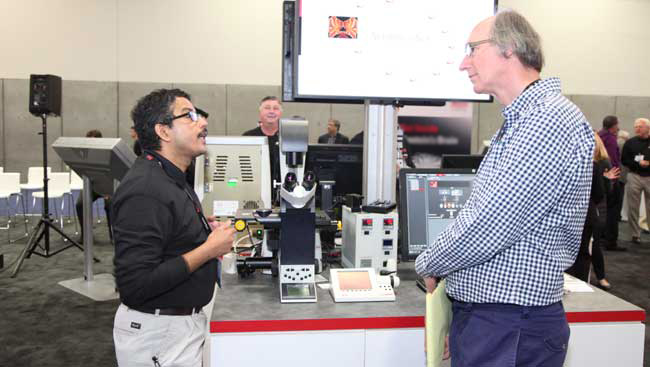 Article Career PathsAs Khan Ozol, the global head of talent scouting at Novartis, was completing his postdoc about cell transplantation and gene therapy for delivering trophic factors to the brain, he realized that he wanted to pursue a different path: an entrepreneurial career, but still focused on science.Nov 29, 2017
 -
 Video DiversityThis is Lesson Three in the Implicit Bias Video Series from BruinX, the research and development unit within the University of California, Los Angeles's Office of Equity, Diversity and Inclusion. This video explores findings that implicit biases can influence our real world behavior.Nov 28, 2017
 -
 Journal ArticleThe perception of scenes is associated with processing in a network of scene-selective regions in the human brain. Prior research has identified a posterior–anterior bias within this network. Posterior scene regions exhibit preferential connectivity with early visual and posterior parietal regions, indicating a role in representing egocentric visual features. In contrast, anterior scene regions demonstrate stronger connectivity with frontoparietal control and default mode networks, suggesting a role in mnemonic processing of locations. Despite these findings, evidence linking connectivity in these regions to cognitive scene processing remains limited. In this preregistered study, we obtained cognitive behavioral measures alongside resting-state fMRI data from a large-scale public dataset to investigate interindividual variation in scene processing abilities relative to the functional connectivity of the scene network. Our results revealed substantial individual differences in scene recognition, spatial mem...Feb 1, 2025




