



Filter
-
(133)
-
(733)
-
(4)
-
(1)
-
(47833)
-
(91)
-
(25)
-
(14)
-
(433)
-
(7)
-
(182)
-
(8)
-
(33)
-
(17)
-
(7)
-
(9)
-
(9)
-
(5)
-
(21)
-
(8)
-
(12)
-
(9)
-
(3)
-
(10)
-
(10)
-
(56)
-
(45)
-
(12)
-
(3)
-
(7)
-
(6)
-
(5)
-
(8)
-
(7)
-
(11)
-
(58)
-
(13)
-
(30)
-
(8)
-
(5)
-
(10)
-
(5)
-
(15)
-
(4)
1241 - 1250
of 52756 results
-
 Journal ArticleAuditory masking—the interference of the encoding and processing of an acoustic stimulus imposed by one or more competing stimuli—is nearly omnipresent in daily life, and presents a critical barrier to many listeners, including people with hearing loss, users of hearing aids and cochlear implants, and people with auditory processing disorders. The perceptual aspects of masking have been actively studied for several decades, and particular emphasis has been placed on masking of speech by other speech sounds. The neural effects of such masking, especially at the subcortical level, have been much less studied, in large part due to the technical limitations of making such measurements. Recent work has allowed estimation of the auditory brainstem response (ABR), whose characteristic waves are linked to specific subcortical areas, to naturalistic speech. In this study, we used those techniques to measure the encoding of speech stimuli that were masked by one or more simultaneous other speech stimuli. We presente...Mar 24, 2025
 -
 Article Scientific ResearchMaterial below summarizes the article, Basolateral Amygdala Neurons Maintain Aversive Emotional Salience, published on March 21, 2018, in JNeurosci and authored by Auntora Sengupta, Joanna O.Y. Yau, Philip Jean-Richard Dit Bressel, Yu Liu, Zayra E. Millan, John M. Power, and Gavan P. McNally. The ability to learn about and respond to sources of danger is essential to survival. A variety of lines of evidence, ranging from single-unit recording studies in rodents to functional neuroimaging or neuropsychological studies in humans, show the amygdala is critical for this learning. Fear learning can be studied in laboratory animals using Pavlovian fear conditioning. The experimenter arranges a conditioned stimulus (CS) (e.g., an auditory stimulus) to signal delivery of an aversive event (e.g., shock to the paws). The consequence of these pairings is the animal will show fear responses to the CS when it’s subsequently encountered. This fear learning is readily acquired, often within a few trials, and it persists for a long time. Despite this procedural simplicity, fear learning is not a simple process. It involves complex psychological processes of attention, stimulus selection, error-detection, and stimulus processing.Sep 20, 2018
 -
 Article Professional DevelopmentIn 1842, Charles Dickens visited the Eastern Penitentiary in Philadelphia to examine what was being called a revolutionary form of rehabilitation. After his visit, he summarized his observations into an essay in which he stated, “I am only the more convinced that there is a depth of terrible endurance in it which none but the sufferers themselves can fathom, and which no man has a right to inflict upon his fellow-creature. I hold this slow and daily tampering with the mysteries of the brain, to be immeasurably worse than any torture of the body.” Dickens’ words describe solitary confinement. While there is no one standard for solitary confinement conditions, it usually involves an individual being placed in complete sensory and social isolation for 23 hours a day. What Dickens observed in 1842 is not unlike current solitary confinement conditions. At its start, the justice system was meant to be rehabilitative, a place for individuals to learn from their mistakes and return to the community as productive members of society. This was an ideal model but was not executed as well as described. In the 1970s it appeared that the current techniques were not working (rising crime rate and disenchantment with current state) and the system took a turn toward more punitive goals. Still, some scholars argue that the ideas behind rehabilitative treatment are embedded and possibly still growing within our current justice system.Sep 18, 2018
 -
 Article Scientific ResearchMaterial below is adapted from the SfN Short Course, TREM2 Variants: New Keys to Decipher Alzheimer’s Disease Pathogenesis by Marco Colonna, MD, and Yaming Wang, PhD. Short Courses are day-long scientific trainings on emerging neuroscience topics and research techniques held just prior to SfN’s annual meeting. Mutations in the gene that encodes triggering receptor expressed on myeloid cells 2 (TREM2) were originally discovered in patients with a very rare form of inheritable dementia. TREM2 is a transmembrane protein expressed on the surface of microglia, the cells that function as macrophages in the central nervous system (CNS). The receptor senses lipids and has multiple downstream effects, including increased calcium signaling and remodeling of the cytoskeletal protein actin. Now, researchers are investigating a role for this receptor in Alzheimer’s disease (AD).Sep 18, 2018
 -
 Article Annual Meeting Professional DevelopmentAre you planning on attending Neuroscience 2023?Sep 14, 2018
 -
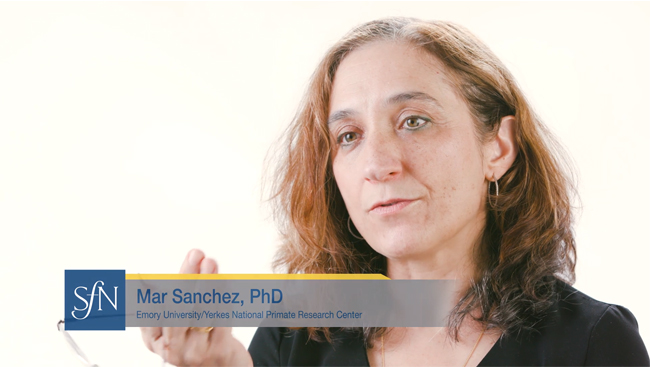 Video AdvocacyThere are a few ways institutions can discuss animal research, according to Mar Sanchez, associate professor of psychiatry and behavioral sciences at Emory University, core scientist at the Yerkes National Primate Research Center, and past committee chair of SfN’s Committee on Animal Research. She notes that institutions “have to be open to disclosing that they are doing animal research and the value of the animal research.” In addition, institutions “have to be planning. They have to be ready in case that their researchers get under attack by animal rights extremists.” Watch this short video to learn: - Why it’s important to engage your institution. - What strategies institutions can take. - What may result without institutional preparedness.Sep 12, 2018
 -
 Article Professional DevelopmentWith so many posters, talks, symposiums, exhibits, socials, and more, it can seem like there are as many ways to approach the meeting as there are attendees.Sep 11, 2018
 -
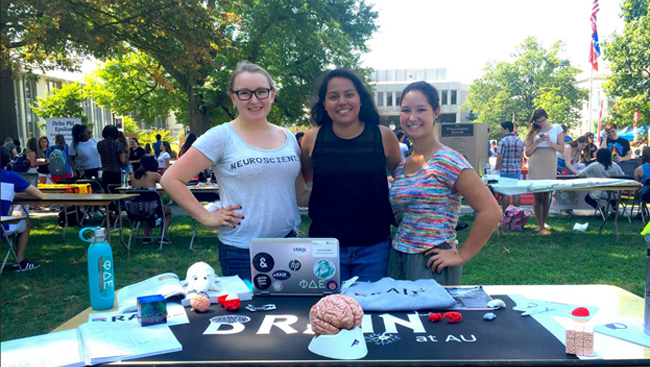 Article OutreachSamantha White serves as a judge and tutor for Washington DC’s local Brain Bee each year. About her time as an undergraduate student at American University (she graduated in 2018), she says, “Balancing classes, work, lab time, and a social life got complicated, but I always found time to engage with the community.” Here, read how making time for outreach has influenced her career aspirations and her advice for getting involved. What initially sparked your interest in outreach? Community service has always been a part of my life. My role models growing up always emphasized how import it is to give back. As a college student, the best way I knew how to do that was donating time and enthusiasm for causes I care about: education and STEM outreach. During my junior year, I started a neuroscience club on campus with some friends. We were looking for ways to get members involved in the DC community. That led us to the DC Brain Bee. It’s a fun event where, even as a judge, we had the chance to quiz ourselves on brain basics and encourage high school students throughout the competition. It was really exciting to see the students get fired up about neuroscience. Their energy was infectious. We all left the event inspired to study even more.Sep 6, 2018
 -
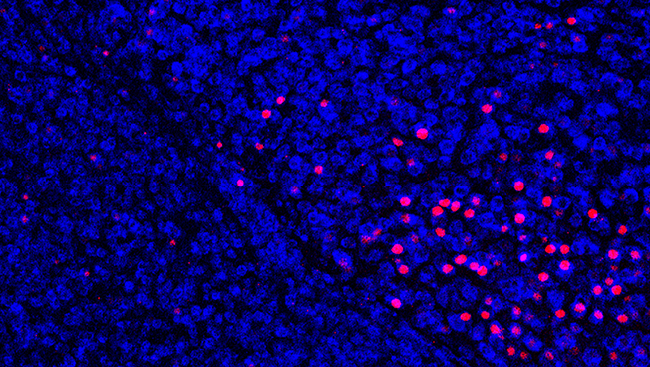 Article Professional DevelopmentElizabeth Glover, a postdoctoral fellow at the Medical University of South Carolina and member of SfN’s Trainee Advisory Committee, is in her last year of being a postdoc and looking to make the transition to independent faculty.Sep 5, 2018
 -
 Article Professional DevelopmentLinda Porrino, a department chair at Wake Forest School of Medicine, reflects on what she looks for when hiring new faculty. If you’re considering an academic career now or in the future, read her advice on how to gain experience as a student, make a good impression in the interview, negotiate for what you need, and more.Aug 29, 2018




