



Filter
-
(133)
-
(733)
-
(4)
-
(1)
-
(47833)
-
(91)
-
(25)
-
(14)
-
(433)
-
(7)
-
(181)
-
(8)
-
(33)
-
(17)
-
(7)
-
(9)
-
(9)
-
(5)
-
(21)
-
(8)
-
(12)
-
(9)
-
(3)
-
(10)
-
(10)
-
(56)
-
(45)
-
(12)
-
(3)
-
(7)
-
(6)
-
(5)
-
(8)
-
(7)
-
(11)
-
(58)
-
(13)
-
(30)
-
(8)
-
(5)
-
(10)
-
(5)
-
(14)
-
(4)
1191 - 1200
of 52754 results
-
 Webinar TrainingAs the skills and needs of the 21st century biomedical workforce evolve, so too must the graduate programs that train neuroscience students. In this webinar, faculty from three top U.S. universities will discuss how their graduate programs are: - Broadening the pool of candidates recruited to graduate school. - Re-examining the scientific topics and skills that students learn. - Ensuring trainees are exposed to and prepared for the broad range of career options available for neuroscientists. After attending this webinar, participants will be able to: - Understand strategies for recruiting trainees from diverse backgrounds into graduate neuroscience programs and supporting them when they are in the programs. - Understand successful initiatives to broaden graduate training to cover topics such as computational skills, science policy, education, or entrepreneurship. - Know how to incorporate professional development programming that provides training for a diversity of career paths. - Learn how to work within the overall university or institutional structure to meet evolving needs for recruiting, training, and helping students seek intended careers.Dec 1, 2018
 -
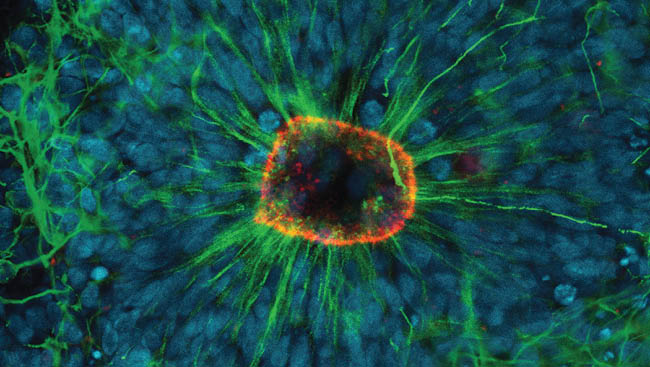 Article Scientific ResearchMaterial below summarizes the article, An Atoh1-S193A Phospho-Mutant Allele Causes Hearing Deficits and Motor Impairment, published on July 20, 2017, in JNeurosci and authored by Wei Rose Xie, Hsin-I Jen, Michelle L. Seymour, Szu-Ying Yeh, Fred A. Pereira, Andrew K. Groves, Tiemo J. Klisch, and Huda Y. Zoghbi.Nov 29, 2018
 -
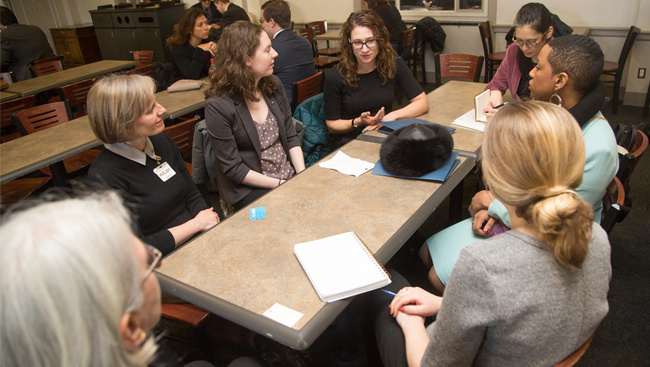 Article AdvocacyEach stage of a scientist's career is filled with unique challenges that seem like roadblocks to becoming an advocate. Graduate school is no exception, but early career scientists should be advocating for science, as what this year’s budget provides can alter our career trajectories. As a graduate student, I first thought there wasn’t much I could do, and that advocacy could only be effective if it was intense and all consuming. Even if I figured out what to do, it seemed like it would be too much. I soon found this assumption to be false.Nov 28, 2018
 -
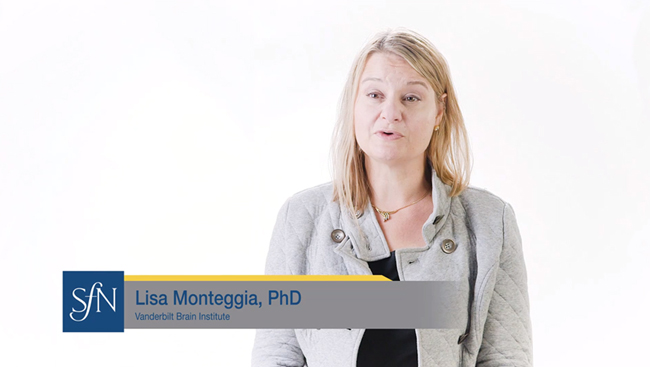 Video Professional DevelopmentLisa Monteggia, incoming Barlow Family Director of the Vanderbilt Brain Institute, believes advocacy means “putting yourself out there” and “pushing someone forward,” ultimately “providing a base of support to really encourage someone to reach the goals they want to reach.” For Monteggia, advocacy is also about helping to train the next generation of neuroscientists. In this video, find out from her how to: - Leverage opportunities to advocate for yourself, such as awards, grants, and meetings. - Encourage and endorse others in simple yet meaningful ways. - Build your connections with mentors and peers to strengthen your network of support.Nov 21, 2018
 -
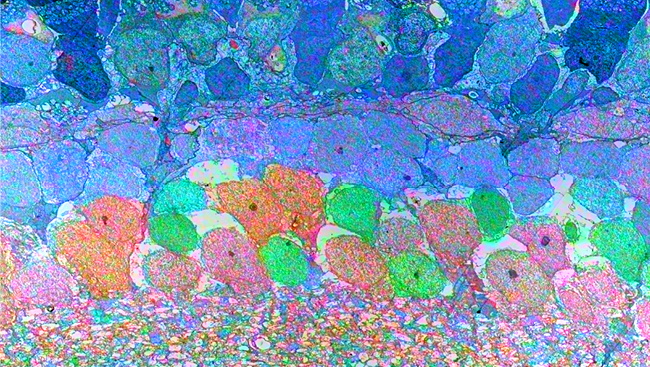 Article Scientific ResearchMaterial below is adapted from the SfN Short Course, Synapse Elimination and Learning Rules Coregulated by Major Histocompatibility Class I Protein H2-Db by Hanmi Lee, PhD, Lowry A. Kirkby, PhD, Barbara K. Brott, PhD, Jaimie D. Adelson, PhD, Sarah Cheng, BS, Marla B. Feller, PhD, Akash Datwani, PhD, and Carla J. Shatz, PhD. Short Courses are day-long scientific trainings on emerging neuroscience topics and research techniques held just prior to SfN’s annual meeting. Major histocompatibility complex class I (MHCI) proteins occur on nearly all vertebrate cells and function as a marquee for the immune system, displaying bits of non-self proteins from the cell’s cytosol on its surface. Now, researchers have shown in mice that a common MCHI protein, H2-Db, is required for shaping the synapses during the development of the retinogeniculate system.Nov 20, 2018
 -
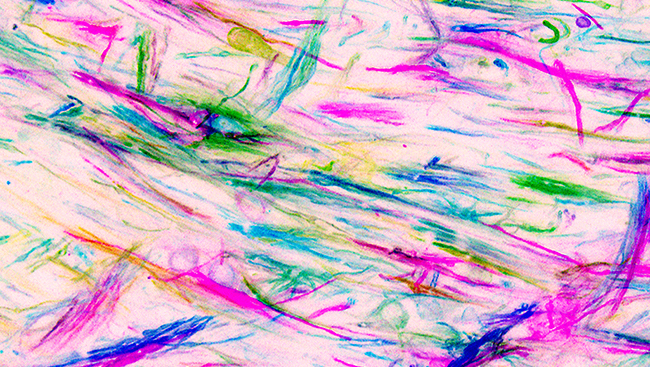 Article Professional DevelopmentI believe the key to an effective discussion about animal research is authenticity. I learned this firsthand during a lecture I gave at the University of California at Irvine’s Distinctive Voices Series organized by the National Academy of Sciences.Nov 19, 2018
 -
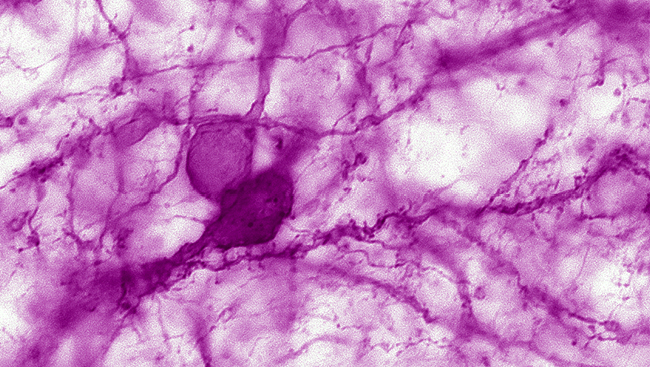 Article Scientific ResearchMaterial below summarizes the article, Dominant Neuropeptide Cotransmission in Kisspeptin-GABA Regulation of GnRH Neuron Firing Driving Ovulation, published on July 11, 2018, in JNeurosci and authored by Richard Piet, Bruna Kalil, Tim McLennan, Robert Porteous, Katja Czieselsky, and Allan E. Herbison. Fertility in all mammals is governed by a small population of neurons scattered in the basal forebrain that secrete gonadotropin-releasing hormone (GnRH). GnRH neurons project to the median eminence and release GnRH into the pituitary portal blood system. In the anterior pituitary, GnRH stimulates secretion into the blood of the gonadotropins follicle-stimulating hormone and luteinizing hormone (LH), which in turn act in the gonads to promote gametogenesis and sex steroid hormone production.Nov 15, 2018
 -
 Journal ArticleSynchronous activity of neuronal networks is found in many brain areas and correlates with cognition and behavior. Gamma synchrony is particularly strong in the dentate gyrus, which is thought to process contextual information in the hippocampus. Several network mechanisms for synchrony generation have been proposed and studied computationally. One such mechanism relies solely on recurrent inhibitory interneuron connectivity, but it requires a large enough number of synapses. Here, we incorporate previously published connectivity data of the dentate gyrus from mice of either sex into a biophysical computational model to test its ability to generate synchronous activity. We find that recurrent interneuron connectivity is insufficient to induce synchronous activity. This applies to an interneuron ring network and the broader dentate gyrus circuitry. Despite asynchronous input, recurrent interneuron connectivity can have small synchronizing effects but can also desynchronize the network for some types of syna...Apr 2, 2025
 -
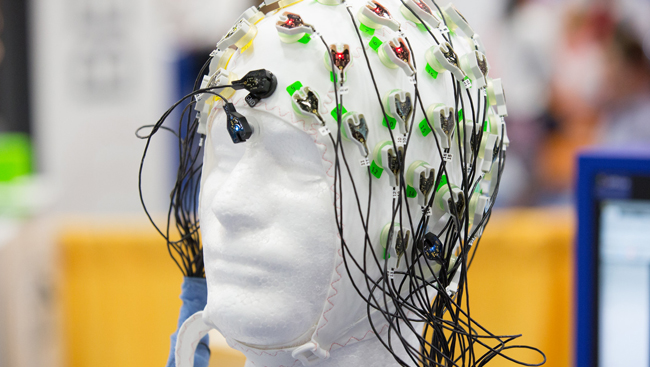 Article Professional DevelopmentDiagnosing schizophrenia can be complex, time-consuming, and expensive. The April seminar on The Future Now: (NEEDs) Neuroscience and Emerging Ethical Dilemmas at Emory focused on one innovative effort to improve this process in the flourishing field of digital phenotyping. Presenter and NeuroLex founder and CEO Jim Schwoebel had witnessed his brother struggle for several years with frequent headaches and anxiety, and saw him accrue nearly $15,000 in medical expenses before his first psychotic break. From there it took many more years and additional psychotic episodes before Jim’s brother began responding to medication and his condition stabilized.Nov 14, 2018
 -
 Journal ArticleThe re-emergence of task-related activation patterns during awake rest has been reported to play a role in memory consolidation and perceptual learning. This study aimed to test whether such reactivation occurs in the primary sensorimotor cortex following a visuomotor task. During functional magnetic resonance imaging (fMRI) scanning, 42 healthy participants (13 women and 29 men) learned visuomotor tracking, while a rotational perturbation was introduced between the cursor position and joystick angle. This visuomotor task block was interleaved with a control block, during which participants passively viewed a replay of their previously performed cursor movements. Half of the participants used their right hand, whereas the other half used their left hand to control the joystick. Resting-state scans were acquired before and after the visuomotor task sessions. A multivariate pattern classifier was trained to classify task and control blocks and was then tested on resting-state scans collected before and after...Apr 1, 2025




