



Filter
-
(133)
-
(733)
-
(4)
-
(1)
-
(47832)
-
(91)
-
(25)
-
(14)
-
(433)
-
(7)
-
(181)
-
(8)
-
(33)
-
(17)
-
(7)
-
(9)
-
(9)
-
(5)
-
(21)
-
(8)
-
(12)
-
(9)
-
(3)
-
(10)
-
(10)
-
(56)
-
(45)
-
(12)
-
(3)
-
(7)
-
(6)
-
(5)
-
(8)
-
(7)
-
(11)
-
(58)
-
(13)
-
(30)
-
(8)
-
(5)
-
(10)
-
(5)
-
(14)
-
(4)
1011 - 1020
of 52753 results
-
 Journal ArticleNeurons in the paraventricular nucleus of the thalamus (PVT) integrate visceral and limbic inputs and project to multiple brain regions to bias behavior towards aversive or defensive states. This study examines MOR signaling in anterior PVT neurons in brain slices from untreated and morphine treated animals. Imaging in a MOR-Cre reporter rat revealed extensive expression in in aPVT cells, and the application of [Met]5-enkephalin (ME) induced outward currents which were abolished by the MOR-selective antagonist CTAP. A saturating concentration of ME resulted in desensitization that was blocked by compound101, indicating a phosphorylation-dependent process. The opioid sensitivity of amygdala-, nucleus accumbens-, and prefrontal cortex-projecting neurons was then examined. Neurons that projected to the amygdala were more sensitive to ME than cortical- and accumbal-projecting cells. Following chronic treatment, tolerance to morphine was found in neurons projecting to the amygdala and nucleus accumbens with a t...Jun 2, 2025
 -
Journal ArticleGlymphatic transport in rodents has primarily been studied using cisterna magna cannulation (CMC), a minimally invasive method for cerebrospinal fluid (CSF) tracers’ infusion. However, CMC is suboptimal due to the lack of bony structures to stabilize the cannula, leading to potential movement artifacts. Here, we present an alternative approach involving chronic cannulation of the lateral ventricles of mice for CSF tracer delivery. A direct comparison demonstrated that intraventricular cannulation (IVC) reproduces CMC results in vivo, including perivascular labeling of the middle cerebral artery, which was further confirmed by ex vivo analysis. IVC enables tracer infusion in awake mice, facilitating glymphatic transport studies in conjunction with behavioral assessments that were previously unattainable. Additionally, IVC supports repeated infusions in awake animals, offering the potential to reduce the number of experimental animals required. This study establishes IVC as a robust alternative for studying ...Jun 2, 2025
-
Journal ArticlePaying attention to a target talker in multi-talker scenarios is associated with its more accurate neural-tracking relative to competing non-target speech. This “neural-bias” to target speech has largely been demonstrated in experimental setups where target and non-target speech are acoustically controlled and interchangeable. However, in real-life situations this is rarely the case. For example, listeners often look at the talker they are paying attention to while non-target speech is heard (but not seen) from peripheral locations. To enhance the ecological-relevance of attention research, here we studied whether neural-bias towards target speech is observed in a spatially realistic audiovisual context, and how this is affected by switching the identity of the target talker. Group-level results show robust neural-bias towards target speech, an effect that persisted and generalized after switching the identity of the target talker. In line with previous studies, this supports the utility of the speech-trac...Jun 2, 2025
-
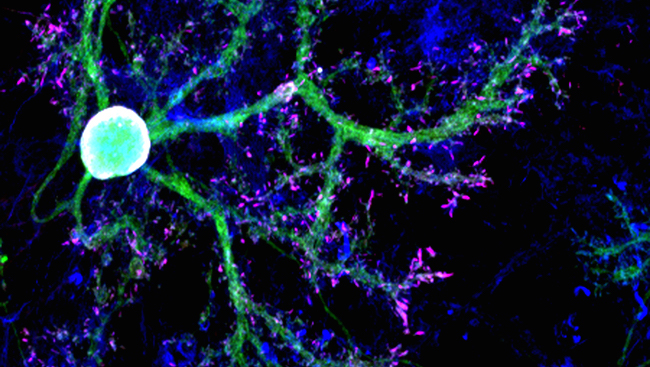 Article Scientific ResearchTrainingSpace (TS) is an online hub that aims to make neuroscience educational materials more accessible to the global neuroscience community. As a hub, TS provides users with access to: Multimedia educational content from courses, conference lectures, and laboratory exercises from some of the world’s leading neuroscience institutes and societies. Study tracks to facilitate self-guided study. Tutorials on tools and open science resources for neuroscience research. A Q&A forum. A neuroscience encyclopedia that provides users with access to over 1,000,000 publicly available datasets as well as links to literature references and scientific abstracts. Topics currently included in TS include: general neuroscience, clinical neuroscience, computational neuroscience, neuroinformatics, computer science, data science, and open science. All courses and conference lectures in TS include a general description, topics covered, links to prerequisite courses if applicable, and links to software described in or required for the course, as well as links to the next lecture in the course or more advanced related courses. To learn more about TrainingSpace, visit: https://training.incf.orgOct 15, 2019
 -
 Webinar Scientific ResearchEffects of early life stress are found to be dependent on many factors, including sex and genetic background, the age of early exposure, and the age and context within which the long-term impact is examined. This webinar will discuss the resultant high individual variability of early life stress and its impact on coping abilities and cognitive functions later in life.Oct 14, 2019
 -
 Journal ArticleLifelong premature ejaculation (LPE) is associated with abnormal brain function, as evidenced by functional MRI (fMRI) studies. This study investigates the stability of brain network architectures in resting-state conditions following perturbation by erotic tasks in individuals with LPE. We assessed the resting-state fMRI in the task-free and task-modulated dataset in the 28 right-hand LPE and 17 age-matched normal controls (NCs). The dynamic functional connectome based on the phase-locking algorithm and ROI-wise gradient mapping was compared. The stability of dynamic functional gradient mapping was measure by linear mixed effects across the two datasets in the LPE and NCs. In both groups, the brain functional gradient exhibited a clear transition from unimodal to transmodal in the principal gradient. Additionally, there was a segregation of primary networks observed in the secondary gradient, either before or after the task. In LPE patients, we observed increased stability in the bilateral dorsal prefront...Jun 1, 2025
 -
 Journal ArticlePerceptual localization of brief, high-contrast perisaccadic visual probes is grossly erroneous. While this phenomenon has been extensively studied in humans, more needs to be learned about its underlying neural mechanisms. This ideally requires running similar behavioral paradigms in animals. However, during neurophysiology, neurons encountered in the relevant sensory and sensory–motor brain areas for visual mislocalization can have arbitrary, noncardinal response field locations. This necessitates using mislocalization paradigms that can work with any saccade direction. Here, we first established such a paradigm in three male rhesus macaque monkeys. In every trial, the monkeys generated a saccade toward an eccentric target. Once a saccade onset was detected, we presented a brief flash at one of three possible locations ahead of the saccade target location. After an experimentally imposed delay, we removed the saccade target, and the monkeys were then required to generate a memory-guided saccade toward th...Jun 1, 2025
 -
 Journal ArticleMarker-based motion capture (MBMC) is a powerful tool for precise, high-speed, three-dimensional tracking of animal movements, enabling detailed study of behaviors ranging from subtle limb trajectories to broad spatial exploration. Despite its proven utility in larger animals, MBMC has remained underutilized in mice due to the difficulty of robust marker attachment during unrestricted behavior. In response to this challenge, markerless tracking methods, facilitated by machine learning, have become the standard in small animal studies due to their simpler experimental setup. However, trajectories obtained with markerless approaches at best approximate ground-truth kinematics, with accuracy strongly dependent on video resolution, training dataset quality, and computational resources for data processing. Here, we overcome the primary limitation of MBMC in mice by implanting minimally invasive markers that remain securely attached over weeks of recordings. This technique produces high-resolution, artifact-free...Jun 1, 2025
 -
 Journal ArticleOligodendrocyte progenitor cells (OPCs) receive synaptic input from a diverse range of neurons in the developing and adult brain. Understanding whether the neuronal populations that synapse with OPCs in the healthy brain is altered by demyelination and/or remyelination may support the advancement of neuroprotective or myelin repair strategies being developed for demyelinating diseases such as multiple sclerosis. To explore this possibility, we employed cre-lox transgenic technology to facilitate the infection of OPCs by a modified rabies virus, enabling the retrograde monosynaptic tracing of neuron→OPC connectivity. In the healthy adult mouse, OPCs in the corpus callosum primarily received synaptic input from ipsilateral cortical neurons. Of the cortical neurons, ∼50% were layer V pyramidal cells. Cuprizone demyelination reduced the total number of labeled neurons. However, the frequency/kinetics of mini-excitatory postsynaptic currents recorded from OPCs appeared preserved. Of particular interest, demyeli...Jun 1, 2025
 -
 Journal ArticleSpinal cord injury (SCI) results in the loss of sensory and motor functions due to the inability of mature central nervous system (CNS) neurons to regenerate. Developing robust neural regrowth strategies will be critical for re-establishing corticospinal motor neuron circuits and restoring control over voluntary movement. However, the complex nature of SCI necessitates a multifaceted approach to address several key barriers to regeneration: enhancing the limited intrinsic growth ability of injured adult neurons, mitigating the growth inhibitory signals of the injured spinal cord, and providing a growth-permissive substrate. The intrinsic capacity for axons to regenerate declines precipitously in early postnatal development. There are numerous changes in transcriptional control, epigenetic regulation, cell signaling, and metabolism with CNS maturation (Zheng and Tuszynski, 2023). One well defined change is a decline in growth-promoting phosphatidylinositol 3-kinase (PI3K) signaling as phosphatase and tensi...Jun 1, 2025




