



Filter
-
(133)
-
(733)
-
(4)
-
(1)
-
(47833)
-
(91)
-
(25)
-
(14)
-
(433)
-
(7)
-
(182)
-
(8)
-
(33)
-
(17)
-
(7)
-
(9)
-
(9)
-
(5)
-
(21)
-
(8)
-
(12)
-
(9)
-
(3)
-
(10)
-
(10)
-
(56)
-
(45)
-
(12)
-
(3)
-
(7)
-
(6)
-
(5)
-
(8)
-
(7)
-
(11)
-
(58)
-
(13)
-
(30)
-
(8)
-
(5)
-
(10)
-
(5)
-
(15)
-
(4)
961 - 970
of 52756 results
-
 Journal ArticleExperimental behavioral neuroscience relies on the ability to deliver precise amounts of liquid volumes to animal subjects. Among others, it allows the progressive shaping of behavior through successive, automated, reinforcement, thus allowing training in more demanding behavioral tasks and the manipulation of variables that underlie the decision-making process. Here we introduce a stepper motor-based, fully integrated, open-source solution, that allows the reproducible delivery of small (<1μl) liquid volumes. The system can be controlled via software using the Harp protocol (e.g., from Bonsai or Python interfaces), or directly through a low-level I/O interface. Both the control software and electronics are compatible with a wide variety of motor models and mechanical designs. However, we also provide schematics, and step-by-step assembly instructions, for the mechanical design used and characterized in this manuscript. We provide benchmarks of the full integrated system using a computer vision method capa...Jul 1, 2025
 -
 Journal ArticleAdvances in in vivo Ca2+ imaging using miniature microscopes have enabled researchers to study single-neuron activity in freely moving animals. Tools such as Minian and CalmAn have been developed to convert Ca2+ visual signals to numerical data, collectively referred to as CalV2N. However, substantial challenges remain in analyzing the large datasets generated by CalV2N, particularly in integrating data streams, evaluating CalV2N output quality, and reliably and efficiently identifying Ca2+ transients. In this study, we introduce CalTrig, an open-source graphical user interface (GUI) tool designed to address these challenges at the post-CalV2N stage of data processing collected from C57BL/6J mice. CalTrig integrates multiple data streams, including Ca2+ imaging, neuronal footprints, Ca2+ traces, and behavioral tracking, and offers capabilities for evaluating the quality of CalV2N outputs. It enables synchronized visualization and efficient Ca2+ transient identification. We evaluated four machine learning m...Jul 1, 2025
 -
 Journal ArticleRecognition of conspecific individuals in mammals is an important skill, thought to be mediated by a distributed array of neural networks, including those processing olfactory cues. Recent data from our groups have shown that social memory can be supported by olfactory cues alone and that interactions with an individual lead to increased neural representations of that individual in the anterior olfactory nucleus, an olfactory network strongly modulated by the neuropeptide oxytocin. We here show, using a computational model, how enhanced representations in the AON can easily arise during the encoding phase, how they can be modulated by OXT, and how a dynamic memory signature in the form of enhanced oscillations in the beta range arises from the architecture of the neural networks involved. These findings have implications for our understanding how social memories are formed and retrieved and generate further hypotheses that can be tested experimentally.Jul 1, 2025
 -
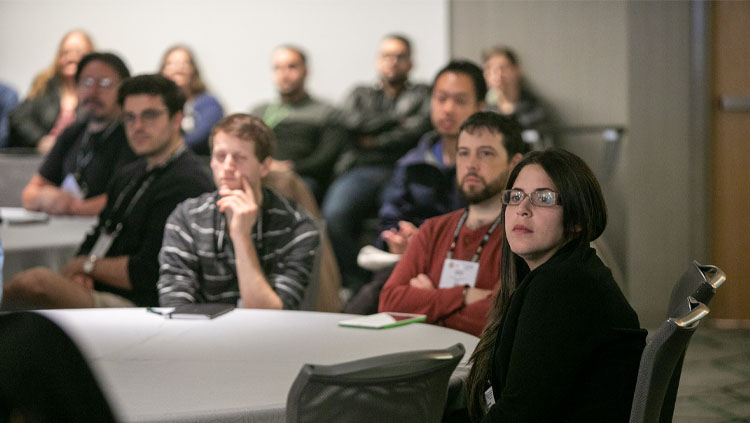 Article Professional DevelopmentYoko Yazaki-Sugiyama’s personal growth in science interweaves perfectly with lessons on how scientists use songbirds to study language development. As she shared at the 2019 Meet-the-Experts session “Lessons for Songbirds and Scientists: Learning to Communicate More Effectively by Listening to Others,” her story began at Sophia University, in Tokyo, where she studied quail with Kiyoshi Acki. Acki encouraged his students to pursue independent ideas and projects, advising his students “to work on what you can be interested in.” Taking this advice to heart, Yazaki-Sugiyama read studies of white-crowned sparrows in different locations that “spoke” different dialects. She became fascinated by the fact that when baby birds of the same species were collected from each location and raised together, they sang in the same way.Mar 11, 2020
 -
 Journal ArticleOur ability to shift from one emotion to the next allows us to adapt our behaviors to a constantly changing and often uncertain environment. Although previous studies have identified cortical and subcortical regions involved in affective responding, none have shown how these regions track and represent transitions between different emotional states nor how such responses are modulated based on the recent emotional context. To study this, we commissioned new musical pieces designed to systematically move participants (N = 39, 20 males and 19 females) through different emotional states during fMRI and to manipulate the emotional context in which different participants heard a musical motif. Using a combination of data-driven (Hidden Markov modeling) and hypothesis-driven methods, we confirmed that spatiotemporal patterns of activation along the temporal-parietal axis reflect transitions between music-evoked emotions. We found that the spatial and temporal signatures of these neural response patterns, as well...Jun 30, 2025
 -
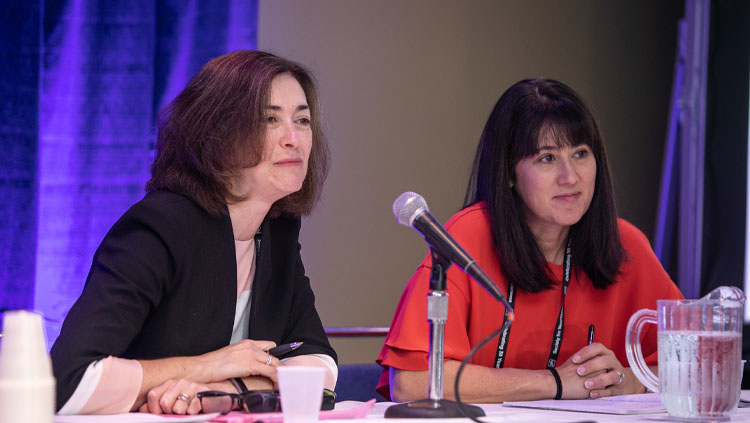 Video Professional DevelopmentThis resource was featured in the NeuroJobs Career Center. Visit today to search the world’s largest source of neuroscience opportunities. Every scientist can write about their science in a way that brings attention to and educates nonscientists about their work. Watch this video for examples of successful science writing, questions to help you think about the story you want to tell, and components of the science writing process. You’ll also hear advice for writing clear and effective research summaries.Mar 5, 2020
 -
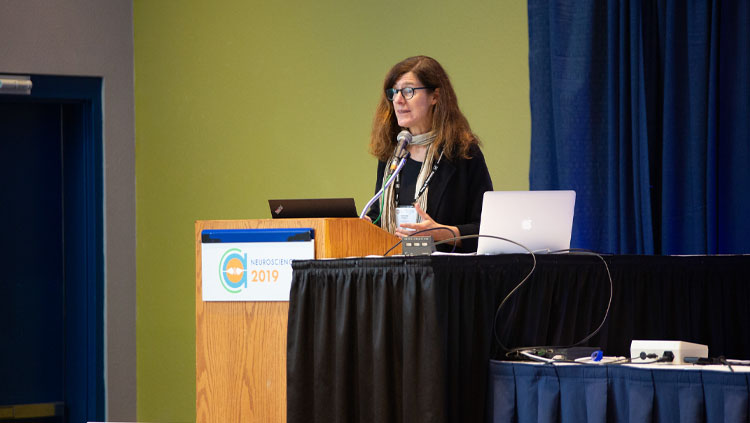 Video Annual Meeting Career PathsDiscover best practices for teaching computation for neuroscience. In this video, you’ll learn: The statistical background students need. Programming languages that are the most useful for computational neuroscience. Computational methods for physiological data. Practical aspects of teaching computational neuroscience. You’ll also come away with resources for teaching and learning computational modeling in neuroscience.Mar 5, 2020
 -
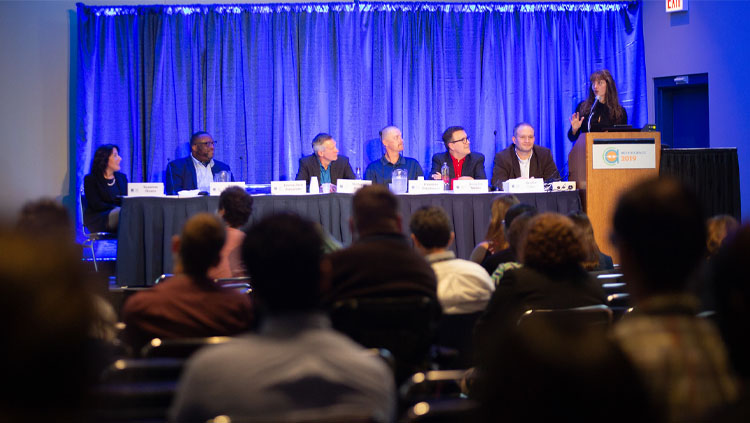 Video Scientific ResearchHow will scientists keep humanity at the center of rapidly expanding human-technology symbiotic unions? This Social Issues Roundtable addresses questions about technology's impact on society and the conditions for its governance. Panelists discuss connecting humans and machines in the context of social issues — such as equality, identify, security, privacy, and access — rather than medical application.Mar 5, 2020
 -
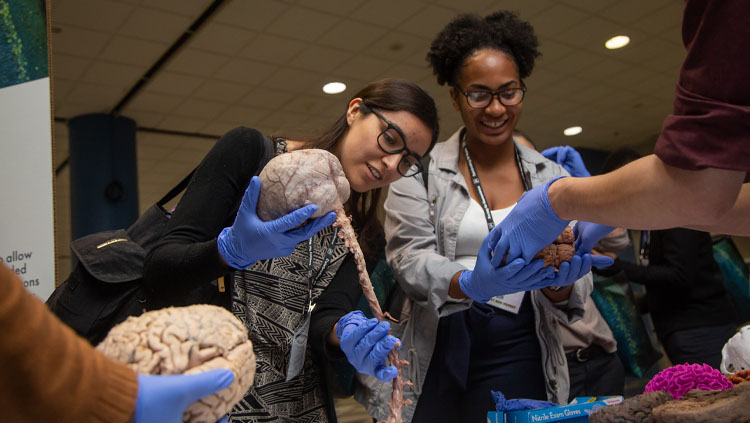 Video Annual Meeting OutreachAs a first-generation immigrant and a woman, Teodora Stoica followed her passion to a PhD program in neuroscience, adapting in part through her involvement in science outreach. In this recording from the Brain Awareness Campaign Event at Neuroscience 2019, she shares her story to show how outreach can guide the next generation of scientists along their path. Brain Awareness Week is a global campaign bringing brain science to life to increase public awareness of the impact of brain research and to celebrate its progress.Mar 5, 2020
 -
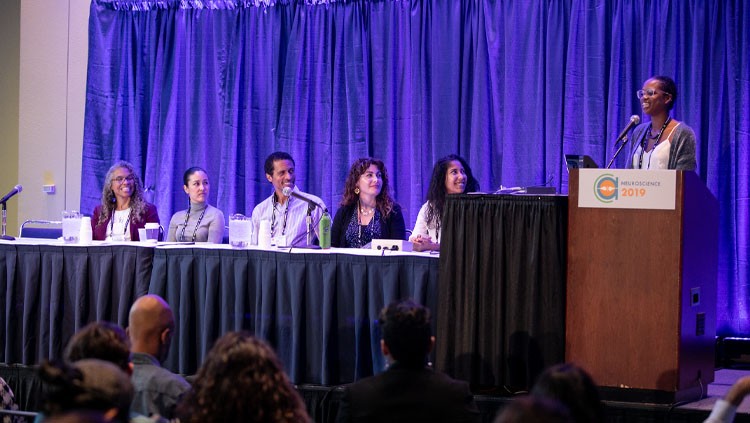 Video Annual Meeting Professional DevelopmentImpostor syndrome, often described as the fear of being exposed as a fraud, may slow or stall optimal career advancement. In this video, you’ll hear other neuroscientists’ experiences and come away with strategies for leaning into and reframing self-doubt to confront the “impostor” in yourself or your trainees.Mar 5, 2020




