



Filter
-
(133)
-
(733)
-
(4)
-
(1)
-
(47833)
-
(91)
-
(25)
-
(14)
-
(433)
-
(7)
-
(182)
-
(8)
-
(33)
-
(17)
-
(7)
-
(9)
-
(9)
-
(5)
-
(21)
-
(8)
-
(12)
-
(9)
-
(3)
-
(10)
-
(10)
-
(56)
-
(45)
-
(12)
-
(3)
-
(7)
-
(6)
-
(5)
-
(8)
-
(7)
-
(11)
-
(58)
-
(13)
-
(30)
-
(8)
-
(5)
-
(10)
-
(5)
-
(15)
-
(4)
921 - 930
of 52756 results
-
 Article Professional DevelopmentAs a postdoc, you’ve likely had several mentors you can point to who have shaped your career path. You may be at a point where you’re also starting to become a mentor.Apr 14, 2020
 -
 Journal ArticleIn everyday life, ambient sounds can disrupt our concentration, interfere with task performance, and contribute to mental fatigue. Even when not actively attended to, salient or changing sounds in the environment can involuntarily divert attention. Understanding how the brain responds to these real-world auditory distractions is essential for evaluating the cognitive consequences of environmental noise. In this study, we recorded electroencephalography (EEG) while participants performed different tasks during prolonged exposure to a complex urban soundscape. We identified naturally occurring, acoustically salient events and analyzed the corresponding event-related potentials (ERPs). Auditory spectral novelty reliably elicited a P3a response (250–350 ms), reflecting robust attentional capture by novel environmental sounds. In contrast, the Reorienting Negativity (RON) window (450–600 ms) showed no consistent modulation, possibly due to the continuous and largely behaviorally irrelevant nature of the soundsc...Jul 7, 2025
 -
Journal ArticleNeural circuits that consolidate sensory cues are essential for neurological functioning. Neural circuits that perform sensory integration can vary greatly because the sensory processing regions of the brain employ various neural motifs. Here, we investigate a neural circuit that mediates the response to conflicting stimuli in C. elegans . We concurrently expose animals to an aversive dispersal pheromone, osas#9, and an attractive bacterial extract. While worms usually avoid osas#9 alone, they suppress this avoidance behavior in the presence of a bacterial extract. Loss-of-function mutants and cell-specific rescues reveal that signaling from the ADF and NSM neurons is essential for bacterial extract-induced osas#9 avoidance attenuation. The inhibitory serotonin receptor, MOD-1, which is widely expressed on interneurons and motor neurons, is required for this sensory integration, suggesting that serotonin acts in an inhibitory manner. By performing calcium imaging on the ADF neurons in synaptic signaling ( ...Jul 7, 2025
-
Journal ArticleHippocampal sharp-wave ripples (SWRs) are critical events implicated in memory consolidation, planning, and the reactivation of recent experiences. Under freely moving conditions, a well-established dichotomy exists: hippocampal networks predominantly generate theta oscillations during periods of reward pursuit (preparatory behaviors) and exhibit pronounced SWR activity once the reward is achieved (consummatory behaviors). Here, it was examined how SWRs are modulated by reward delivery and small movements in head-fixed rats. Contrary to the canonical view established in freely moving settings, the results revealed that the dominant and more enduring effect was a sustained suppression of SWR activity immediately following water delivery. Moreover, even minor, localized movements (such as whisking or body adjustments) decreased SWR occurrence, demonstrating that hippocampal ripple generation is highly sensitive to motor engagement, irrespective of reward timing. Such movement-induced suppression of ripples p...Jul 7, 2025
-
Journal ArticleAccurate perception of the direction of gravity relies on the integration of multisensory information, particularly from the visual and vestibular systems, within the brain. Although a recent study of patients with cerebellar degeneration suggested a cerebellar role in visuo-vestibular interaction in the perception of gravitational direction, direct evidence remains limited. To address this gap, we conducted two experiments with 42 healthy participants to evaluate the impact of repetitive 1-Hz transcranial magnetic stimulation (rTMS) over the posterior cerebellar vermis on visual dependency, quantified by the subjective visual vertical bias induced by rotating optokinetic stimulation (OKS). Electric field simulations in high-resolution generic head models were used to ensure focal stimulation of the cerebellum at the group level. The results demonstrated that the rTMS applied to the vermis significantly attenuated the OKS-induced shift in visual vertical (SVV) bias. This effect was not observed when stimul...Jul 7, 2025
-
Journal ArticleNeuroimaging data reveal that a functional locus coeruleus-noradrenaline (LC-NA) system is critical in maintaining cognitive performance during aging. However, older adults show reduced LC integrity and altered functional connectivity, demonstrating both structural declines and dysfunction. The LC-NA system mediates mechanisms of attention processing and eye tracking studies have shown that older adults are slower and more distractible compared with young adults in visual search tasks. Prior studies have shown that mindfulness meditation modulates LC noradrenergic activity, increases gray matter volume in the brainstem, and improves attentional control. Thus, in a preregistered longitudinal study, we investigated whether thirty days of guided mindfulness meditation using a mobile application improved attentional control measured with eye movements. We hypothesized that older adults would show greater benefits from the mindfulness intervention compared with young adults. In two oculomotor search tasks, we i...Jul 7, 2025
-
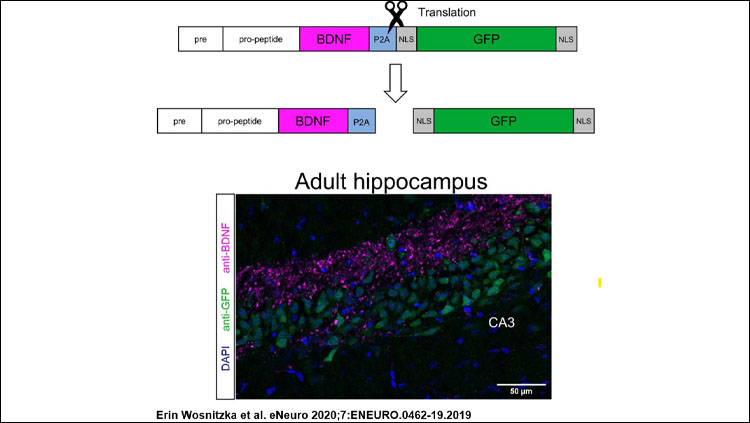 Article Scientific ResearchMaterial below summarizes the article A New Mouse Line Reporting the Translation of Brain-Derived Neurotrophic Factor Using Green Fluorescent Protein, published on December 27, 2019, in eNeuro and authored by Erin Wosnitzka, Xinsheng Nan, Jeff Nan, Pedro Chacón-Fernández, Lothar Kussmaul, Michael Schuler, Bastian Hengerer, and Yves-Alain Barde. Highlights: - The direct coupling of the secretory protein brain-derived neurotrophic factor (BDNF) with green fluorescent protein (GFP) interferes with its biosynthesis and secretion. - Translation can nonetheless be monitored using constructs translating BDNF and GFP as separate proteins. - To avoid the artefacts resulting from cDNA overexpression, the strategy also involves a substitution of the genomic protein coding sequence, as previously reported with the cytoplasmic protein BRAF.Apr 9, 2020
 -
 Article Career PathsOf all of the four-year colleges and universities in the U.S., relatively few are classified by the Carnegie Foundation as R1 (“very high research activity”) or R2 (“high research activity”) schools. While research universities tend to be larger and have more faculty, the small number of them means that most faculty job opportunities are actually at teaching-focused institutions. While each institution and department is unique, faculty who build their careers at primarily undergraduate institutions (PUIs), experience some common rewards and challenges, many of which I’ve observed first-hand. Here’s what a faculty career at an undergraduate institution can look like.Apr 8, 2020
 -
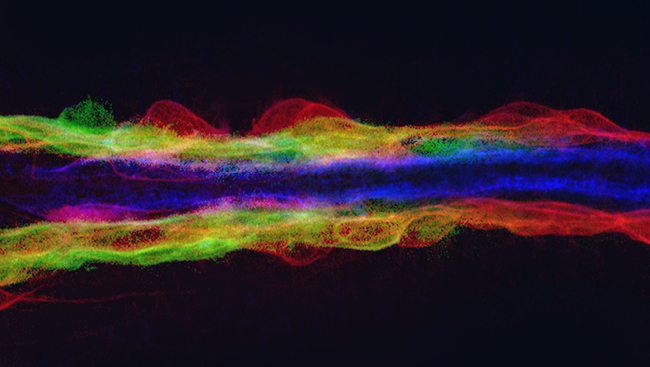 Webinar TrainingMalfunctioning of neuronal circuits and peripheral systems (e.g metabolism, immune or microbiota) underlie aspects of psychiatric disorders. One of the major challenges in neuroscience is understanding the mechanisms and temporal dynamics of such changes within discrete neuronal connections, or within precise peripheral players. Such understanding can reveal new therapeutic strategies and refine existing ones.Apr 6, 2020
 -
 Article TrainingOnline courses are increasingly popular, especially for students who need a more flexible schedule due to work or family commitments.Apr 1, 2020




