



Filter
-
(133)
-
(733)
-
(4)
-
(1)
-
(47833)
-
(91)
-
(25)
-
(14)
-
(433)
-
(7)
-
(182)
-
(8)
-
(33)
-
(17)
-
(7)
-
(9)
-
(9)
-
(5)
-
(21)
-
(8)
-
(12)
-
(9)
-
(3)
-
(10)
-
(10)
-
(56)
-
(45)
-
(12)
-
(3)
-
(7)
-
(6)
-
(5)
-
(8)
-
(7)
-
(11)
-
(58)
-
(13)
-
(30)
-
(8)
-
(5)
-
(10)
-
(5)
-
(15)
-
(4)
891 - 900
of 52756 results
-
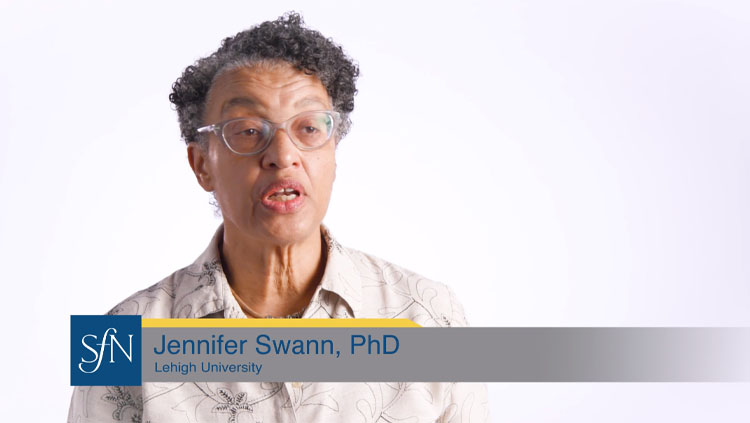 Video Professional DevelopmentAs you’ve faced career growth — such as defending your thesis or starting a new position — have you grappled with feeling like a fraud, despite your accomplishments? What did you do to move forward? You’re not alone. Professionals from all backgrounds and across career stages and disciplines, both inside and outside of science, experience this phenomenon, called impostor syndrome. But by talking about it and sharing actionable strategies for accepting and working through it, people can help each other recognize their own value and trust in their abilities. “The important thing to remember is that most all of us, including the most famous neuroscientist you can think of, have experienced impostor syndrome sometime during our career,” says Wendy Suzuki, a professor of neural science and psychology at New York University.Jun 10, 2020
 -
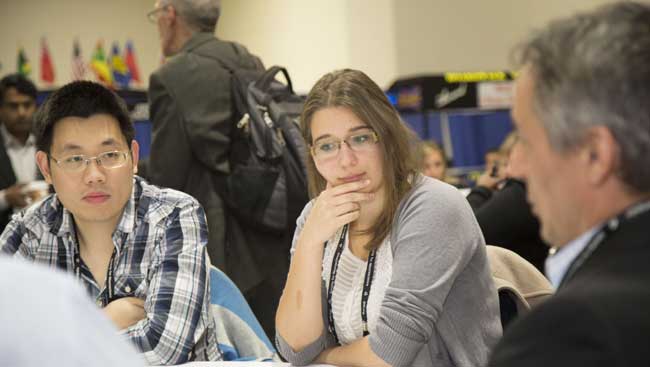 Article Professional DevelopmentIn a recent interview, Kenneth Maynard discussed a variety of topics, including tips for transitioning into the pharmaceutical industry and how to get the most out of your mentoring relationships.Jun 10, 2020
 -
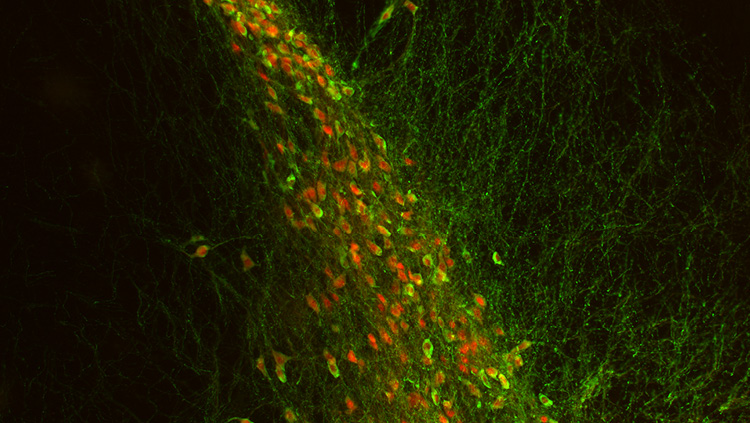 Poster Scientific ResearchExplore resources and articles on the use of voltage-sensitive dye imaging and chemogenetic methods for neural circuit interrogation.Jun 10, 2020
 -
 Podcast Professional DevelopmentIn this episode of History of SfN: 50th Anniversary, Jones Marlin, a postdoctoral researcher at Columbia University’s Zuckerman Institute and the chair of SfN’s Trainee Advisory Committee, talks about how she’s found community within the Society and her involvement with the Trainee Advisory Committee.Jun 10, 2020
 -
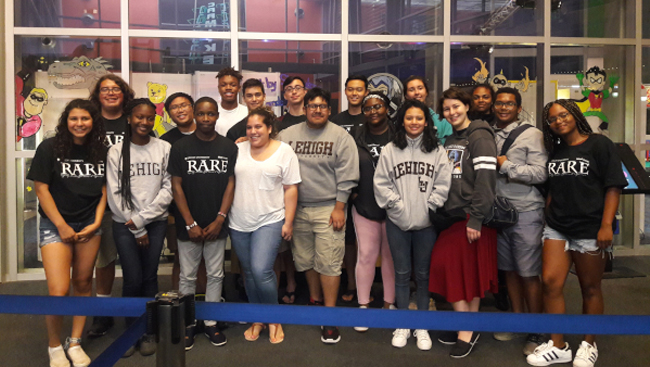 Article CommunityThere’s a national need to improve retention and graduation rates among underrepresented and first-generation students in STEM. At Lehigh University, we’re implementing institutional changes to meet this goal with the aid of grants from the Howard Hughes Medical Institute (HHMI). We want to contribute to a technologically advanced, diverse workforce by implementing multiple evidence-based practices that enhance STEM retention and graduation rates. In the longer term, we plan to scale the most successful practices to the full STEM community at Lehigh. Through the HHMI award we received in 2014, we’ve been able to set up two programs to help meet this aim: the Rapidly Accelerated Research Experience (RARE) and BioConnect. RARE is a pre-admission-to-graduation, four-year STEM immersion program designed to build outstanding scientific and leadership skills in underrepresented students. BioConnect is a collaboration with community college partners to increase STEM graduation and transfer rates to four-year institutions.Jun 10, 2020
 -
 Article CommunityEvery academic institution has its own unique climate — a term that refers to its structures, policies, values, and work conditions as perceived by its members, as well as the quality of the interactions among its leaders and members.Jun 9, 2020
 -
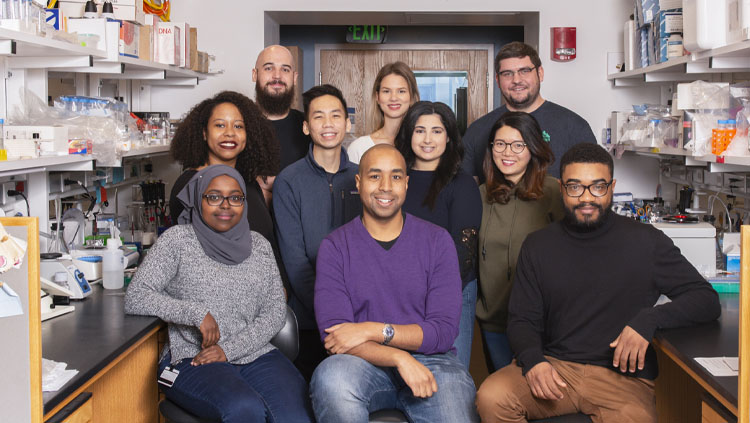 Article DiversityCorey Harwell, an assistant professor at Harvard Medical School, aims to create a diverse, collegial, and collaborative lab environment. Part of that stems from the influence of his own ambitious and caring mentors who supported his career step-by-step, often by sharing new research opportunities he wouldn’t have known existed. Here, he reflects on those relationships, his path into science, and his hopes for increasing diversity in the field, through exposing underrepresented minorities to science as a career path. His message to them, "We need you." This interview is a complement to SfN's podcast series, History of SfN: 50th Anniversary. Guests on the podcast were asked to nominate individuals whose careers are making positive cultural or scientific impacts that will shape the next 50 years of neuroscience. Corey Harwell was nominated by Bill Martin, president and chief operating officer of Blackthorn Therapeutics.Jun 9, 2020
 -
 Article Professional DevelopmentPeer review is a critical process for upholding the scientific integrity in publishing. Each year, Peer Review Week spotlights key issues and engages scientists, communicators, and the public worldwide. This year’s theme is diversity and inclusion. SfN is joining the global conversation and welcomes you to participate.Jun 9, 2020
 -
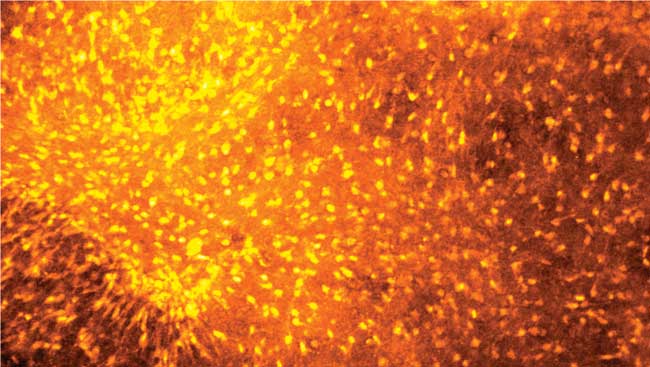 Webinar Scientific ResearchTo understand the function of the brain and how its dysfunction leads to brain diseases, it is essential to have a deep understanding of the cell type composition of the brain, how the cell types are connected with each other, and what their roles are in circuit function.Jun 4, 2020
 -
 Journal ArticleInteroception and associated subjective states shape adaptive behaviours. In humans, interoceptive information is hierarchically processed in the insular cortex (IC), being integrated first in the posterior IC (PIC) and then processed in the anterior IC (AIC) to generate subjective states. However, it has not been established whether this is the case in other species nor whether utilization of interoceptive states to guide behaviour is also specifically associated with functional engagement of the AIC, as suggested by this hierarchical model. We investigated in male Sprague Dawley rats whether the use of pharmacologically-induced internal states to guide instrumental behaviour in a discrimination task functionally engages the AIC as opposed to the mere experience of such states. Rats trained to use the interoceptive state produced by the centrally-acting GABAA receptor antagonist pentylenetetrazol (PTZ) or the peripherally-acting β-adrenoreceptor agonist isoproterenol to guide their behaviour, performed as...Jul 17, 2025




