



Filter
-
(133)
-
(733)
-
(4)
-
(1)
-
(47833)
-
(91)
-
(25)
-
(14)
-
(433)
-
(7)
-
(182)
-
(8)
-
(33)
-
(17)
-
(7)
-
(9)
-
(9)
-
(5)
-
(21)
-
(8)
-
(12)
-
(9)
-
(3)
-
(10)
-
(10)
-
(56)
-
(45)
-
(12)
-
(3)
-
(7)
-
(6)
-
(5)
-
(8)
-
(7)
-
(11)
-
(58)
-
(13)
-
(30)
-
(8)
-
(5)
-
(10)
-
(5)
-
(15)
-
(4)
881 - 890
of 52756 results
-
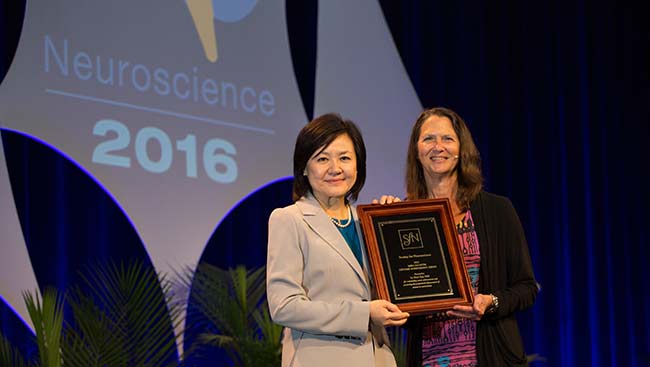 Article Professional DevelopmentLi-Huei Tsai’s journey to understand the pathogenic mechanisms behind neurological disorders has led her lab to develop a novel yet simple light-based therapy for Alzheimer’s disease that is on its way to human trials.Jun 22, 2020
 -
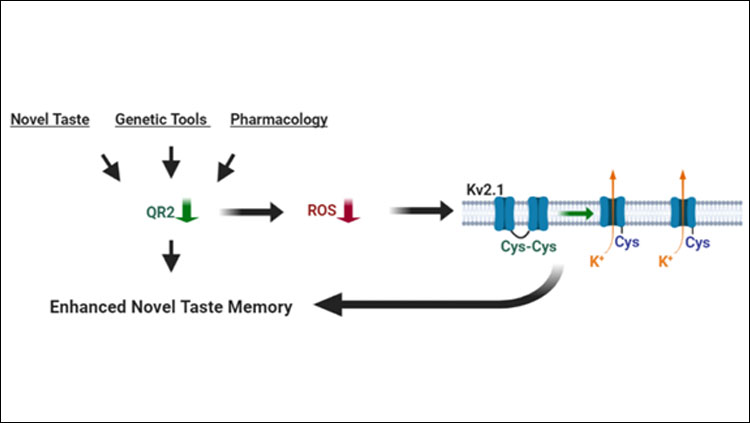 Article Scientific ResearchQR2 is involved across species in the important process of forming new memories of unfamiliar tastes, enabling animals to learn about safe or harmful foodstuffs. It does so by being removed from the anterior insular cortex (aIC), via the destabilization of its mRNA by miR182, which is itself dependent on local disinhibition of acetylcholine (ACh) release. Removal of QR2 in the aIC reduces reactive oxygen species (ROS) there, affecting the potassium channel Kv2.1, which results in a stable long-term memory of a newly experienced taste, a process that deteriorates with age and disease.Jun 18, 2020
 -
 Article OutreachIn a continuously digitizing world, how can your chapter evolve its purpose to meet these needs? As you develop a strategy to increase opportunities for networking and outreach online, here are three high-level principles to keep in mind.Jun 17, 2020
 -
 Video Professional DevelopmentLearn about obstacles that can especially undermine the success of women in the field, including implicit and explicit bias, marginalization within organizations, impostor syndrome, balancing work and family, and more.Jun 16, 2020
 -
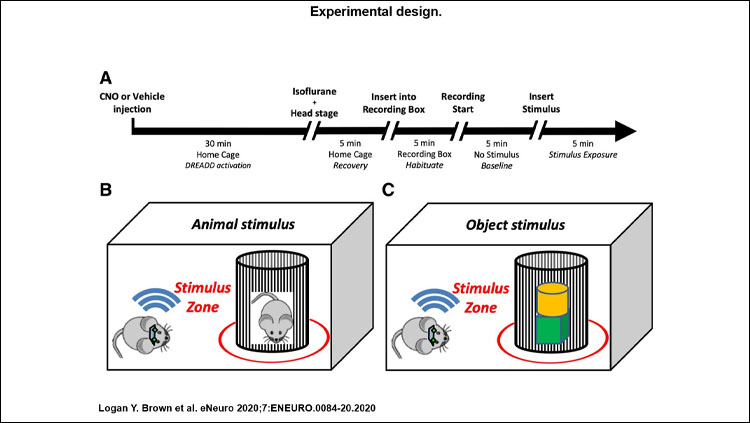 Article Scientific ResearchDoes CA2 contribute to gamma oscillations in CA1 during investigation of a social stimulus relative to a non-social one? Does CA2 organize gamma oscillations in CA1 in a manner reflective of CA2’s anatomical projections to CA1?Jun 11, 2020
 -
 Article Professional DevelopmentIt's true job seekers look at position titles, but they're also interested in who your company, organization, or university is. They want to know what your culture and values are, the impact they'll have on both the workplace and society, and what to expect from the role they're applying for.Jun 11, 2020
 -
 Article Professional DevelopmentEvery neuroscientist makes transitions for different reasons.Jun 10, 2020
 -
 Article Professional DevelopmentOver the course of my career, I’ve probably said “yes” to service opportunities more often than I’ve said “no.” In fact, service has been a key element of my professional development and is likely one of the reasons I moved from the bench into academic administration. I am now president of Trinity College. I enjoyed the opportunities collegewide and external service afforded me. I met interesting people and was constantly stimulated to learn something new and broaden my horizon. For example, during my second year as an assistant professor at Wellesley College, I was invited to serve on the presidential search committee because of my previous volunteer work. This wasn’t a burden but rather a unique opportunity to see academic leadership in action.Jun 10, 2020
 -
 Article Career PathsNo two careers are identical. Yet, all neuroscientists will likely share certain commonalities: the first sparks of scientific curiosity, difficult challenges, resilience to press on, accomplishments large and small, hard-earned wisdom, and support from professional and personal communities. Here, James Townsel, professor emeritus at Meharry Medical College, focuses on how his time in the military influenced his decision to become a neuroscientist, how he has actively supported and created opportunities for underrepresented minorities, what he’s most proud of, and more. “I believe in diversity because it enhances the overall effectiveness of the research,” says James Townsel, a professor emeritus at Meharry Medical College. A dream of both Townsel and Joe Martinez was to create a perpetual fund to facilitate training diverse scientists. The Scholarships to Enhance and Empower Diversity (SEED) fund, part of the American Psychological Foundation (APF) Fund for Racial and Ethnic Diversity, helps achieve their goal of supporting the training and mentoring of the brightest trainees in neuroscience from diverse backgrounds. Read this interview to learn how and why Townsel has devoted his career to making educational opportunities available to underrepresented minorities in the biomedical sciences, and how you can help do the same.Jun 10, 2020
 -
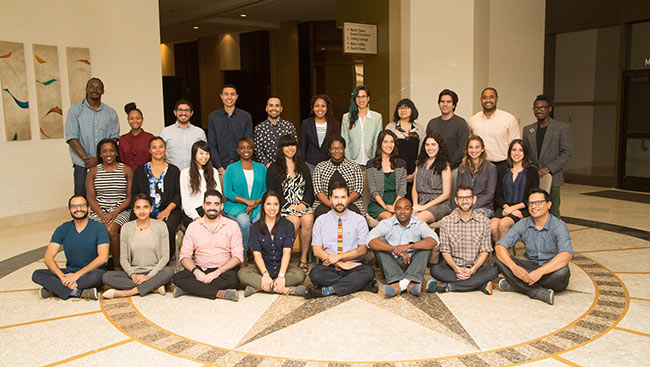 Article Professional DevelopmentSometimes, we forget that science is not just an individual quest. It is much more.Jun 10, 2020




