



Filter
-
(133)
-
(733)
-
(4)
-
(1)
-
(47833)
-
(91)
-
(25)
-
(14)
-
(433)
-
(7)
-
(182)
-
(8)
-
(33)
-
(17)
-
(7)
-
(9)
-
(9)
-
(5)
-
(21)
-
(8)
-
(12)
-
(9)
-
(3)
-
(10)
-
(10)
-
(56)
-
(45)
-
(12)
-
(3)
-
(7)
-
(6)
-
(5)
-
(8)
-
(7)
-
(11)
-
(58)
-
(13)
-
(30)
-
(8)
-
(5)
-
(10)
-
(5)
-
(15)
-
(4)
871 - 880
of 52756 results
-
 Video OutreachPaula Clifford, executive director for Americans for Medical Progress (AMP), shares step-by-step advice to craft an elevator pitch. This will enable you to proactively and effectively communicate about your work with animals to various audiences.Jul 8, 2020
 -
 Article TrainingAlois Saria is a professor and head of the department of the experimental psychiatry unit at the Medical University of Innsbruck in Austria.Jul 7, 2020
 -
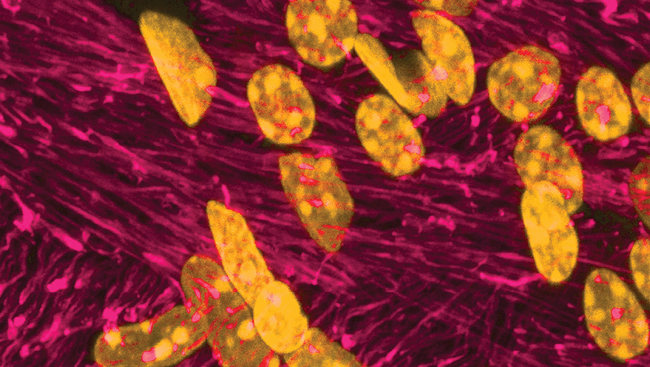 Webinar Scientific ResearchWhile COVID-19 is often thought of as primarily a respiratory disease, many neurological symptoms are present in those affected. Societal changes in response to the pandemic, such as social isolation and economic disruption, influence mental health. In this webinar, we will discuss recent findings on the direct and indirect implications of COVID-19 on the health and function of the nervous system.Jul 6, 2020
 -
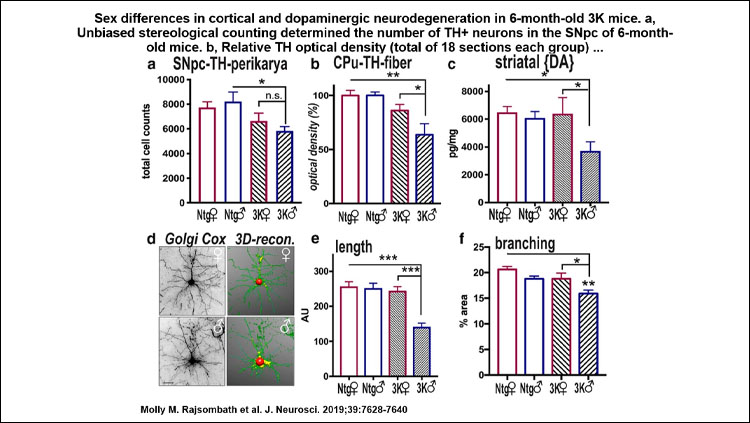 Article Scientific ResearchFemale sex preserves physiological a-synuclein (αS) tetramer formation vs. monomer clustering into vesicle and lipid-rich aggregates. Increasing brain estrogen improves αS tetramer-to-monomer ratio, neurite fiber abundance and mitigates the Parkinson’s disease-like motor deficits. Female sex, and estrogen in particular, link to healthy αS tetramers and associated vesicle lipid changes suggest viable drug targets in Parkinson’s disease.Jul 2, 2020
 -
 Article Professional DevelopmentYou will only get busier as you advance in your career, but that doesn’t mean your life has to feel unmanageable. Use these tips to manage your time, self, and overall goals.Jun 30, 2020
 -
 Journal ArticleLipopolysaccharide (LPS) is a bacterial endotoxin that induces innate immune responses. The present study aimed to elucidate alterations in cerebral cortical surface morphology induced by neonatal exposure to LPS using gyrencephalic ferrets. Male ferret pups received a subcutaneous injection of LPS (0.5 μg/kg of body weight) on postnatal days (PDs) 6 and 7. Furthermore, EdU and BrdU were administered on PDs 5 and 7, respectively, to label post-proliferative and proliferating cells that were exposed to LPS in the late stage of cortical neurogenesis. On PD 20 when the primary sulci and gyri had formed, MRI-based morphometry revealed an anterior shift in sulcal infolding in the medial and dorsolateral cortices of LPS-exposed ferrets. Immunofluorescence analysis showed that LPS increased the density of BrdU-labeled cells and reduced their apoptosis, as indicated by cleaved caspase-3 immunostaining, in the outer stratum of the lateral sulcus located on the parietal association cortex. Furthermore, cleaved caspa...Jul 22, 2025
 -
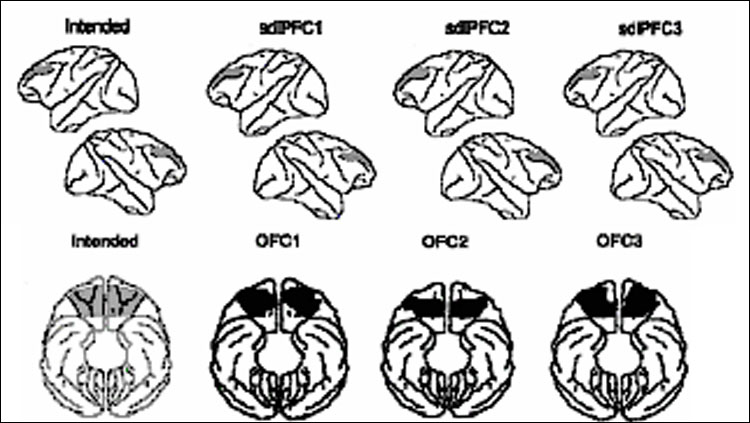 Article Scientific ResearchMacaque monkeys can evaluate their own memory success. Introspection of their own memory success depends on the superior dorsolateral prefrontal cortex but not the orbitofrontal cortex. PFC contains distinct elements of metacognition.Jun 25, 2020
 -
 Article Scientific ResearchMarta Pratelli researches the downstream effects of environment and experience on brain health and the risk of developing psychiatric illness. In addition to insights from her own research, in this interview she offers her perspective on the role of collaboration and chance in scientific breakthroughs as well as areas of mental health research, such as epigenetics, that have potential for future outcomes.Jun 23, 2020
 -
 Webinar CommunityNeuroscience is stronger with diverse perspectives. Although there have been gains in the percentage of underrepresented neuroscience researchers in recent years, there is still more work to be done to increase representation of diverse researchers and to create inclusive and equitable research environments.Jun 23, 2020
 -
Journal ArticleThere is a growing imperative to understand the neurophysiological impact of our rapidly changing and diverse technological, social, chemical, and physical environments. To untangle the multidimensional and interacting effects requires data at scale across diverse populations, taking measurement out of a controlled lab environment and into the field. Electroencephalography (EEG), which has correlates with various environmental factors as well as cognitive and mental health outcomes, has the advantage of both portability and cost-effectiveness for this purpose. However, with numerous field researchers spread across diverse locations, data quality issues and researcher idle time due to insufficient participants can quickly become unmanageable and expensive problems. In programs we have established in India and Tanzania, we demonstrate that with appropriate training, structured teams, and daily automated analysis and feedback on data quality, non-specialists can reliably collect EEG data alongside various sur...Jul 21, 2025




