



Filter
-
(133)
-
(733)
-
(4)
-
(1)
-
(47833)
-
(91)
-
(25)
-
(14)
-
(433)
-
(7)
-
(182)
-
(8)
-
(33)
-
(17)
-
(7)
-
(9)
-
(9)
-
(5)
-
(21)
-
(8)
-
(12)
-
(9)
-
(3)
-
(10)
-
(10)
-
(56)
-
(45)
-
(12)
-
(3)
-
(7)
-
(6)
-
(5)
-
(8)
-
(7)
-
(11)
-
(58)
-
(13)
-
(30)
-
(8)
-
(5)
-
(10)
-
(5)
-
(15)
-
(4)
861 - 870
of 52756 results
-
 Journal ArticleFiber photometry is a neuroscience technique that can continuously monitor in vivo fluorescence to assess population neural activity or neuropeptide/transmitter release in freely behaving animals. Despite the widespread adoption of this technique, methods to statistically analyse data in an unbiased, objective, and easily adopted manner are lacking. Various pipelines for data analysis exist, but they are often system-specific, only for pre-processing data, and/or lack usability. Current post hoc statistical approaches involve inadvertently biased user-defined time-binned averages or area under the curve analysis. To date, no post-hoc user-friendly tool with few assumptions for a standardised unbiased analysis exists, yet such a tool would improve reproducibility and statistical reliability for all users. Hence, we have developed a user-friendly post hoc statistical analysis package in Python that is easily downloaded and applied to data from any fiber photometry system. This Fi ber Pho tometry P ost H oc A...Jul 29, 2025
 -
Journal ArticleThe development of motor control over sensory organs is a critical milestone, enabling active exploration and shaping of the sensory environment. Whether the onset of sensory organ motor control directly influences the development of corresponding sensory cortices remains unknown. Here, we confirm and exploit the late onset of whisking behavior in mice to address this question in the somatosensory system. Using ex vivo electrophysiology, we describe a transient increase in the intrinsic excitability of excitatory neurons in layer IV of the barrel cortex, which processes whisker input, immediately following the onset of active whisking on postnatal days 13 and 14. This increase in neuronal gain is specific to layer IV, independent of changes in synaptic strength, and requires prior sensory experience. Further, these effects are not expressed in inhibitory interneurons in barrel cortex. The transient increase in excitability is not evident in layer II/III of barrel cortex or in the visual cortex upon eye ope...Jul 29, 2025
-
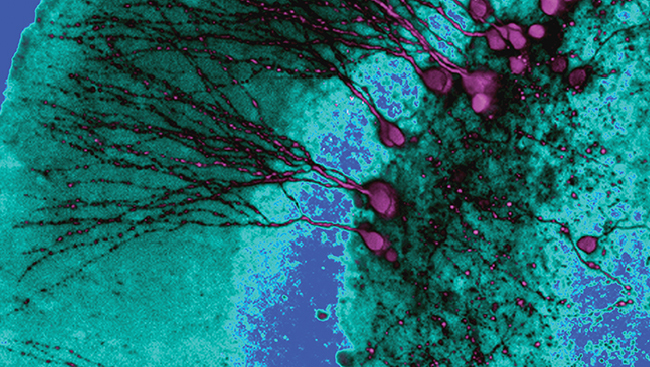 Article Scientific ResearchMaterial below summarizes the article Differential Involvement of Three Brain Regions during Mouse Skill Learning, published on August 1, 2019, in eNeuro and authored by Aldis P. Weible, Michael I. Posner and Christopher M. Niell. Highlights For mice learning a visual discrimination task, improvements in speed and accuracy were qualitatively similar to changes seen with human skill learning. Effects of optogenetic suppression of anterior cingulate cortex, primary visual cortex, and dorsal hippocampus favor parallel, rather than serial, involvement of these structures in our mouse model of skill learning. Suppression in each region lengthened correct-choice reaction times immediately following an error.Jul 30, 2020
 -
Journal ArticleThe degeneration of midbrain dopamine (DA) neurons disrupts the neural control of natural behavior, such as walking, posture, and gait in Parkinson’s disease. While some aspects of motor symptoms can be managed by dopamine replacement therapies, others respond poorly. Recent advancements in machine learning-based technologies offer opportunities to better understand the organizing principles of behavior modules at fine time scales and its dependence on dopaminergic modulation. In the present study, we applied the motion sequencing (MoSeq) platform to study the spontaneous locomotor activities of neurotoxin and genetic mouse models of Parkinsonism as the midbrain DA neurons progressively degenerate. We also evaluated the treatment efficacy of levodopa (L-DOPA) on behavioral modules at fine time scales. We revealed robust changes in the kinematics and usage of the behavioral modules that encode spontaneous locomotor activity. Further analysis demonstrates that fast behavioral modules with higher velocities w...Jul 28, 2025
-
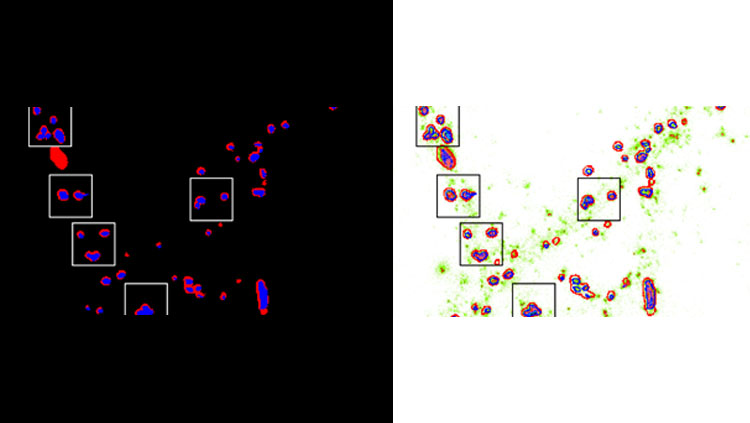 Article Scientific ResearchA new analytical paradigm allows direct estimation of multiplicative increases in synaptic protein levels during homeostatic scaling in neuronal cultures. This method can quantify multiplicative scaling using immunocytochemistry for any pre- or postsynaptic protein within distinct neuronal compartments and could be used in future studies to characterize homeostatic scaling deficits in disease models. Together with super-resolution microscopy this analysis revealed that subsynaptic pools of AMPA receptors are altered differentially within functional zones of an excitatory synapse.Jul 23, 2020
 -
 Article TrainingNow is the time for the global STEM community to leverage speech-to-text (S2T) technologies in new ways that can benefit everyone, including those with hearing loss.Jul 22, 2020
 -
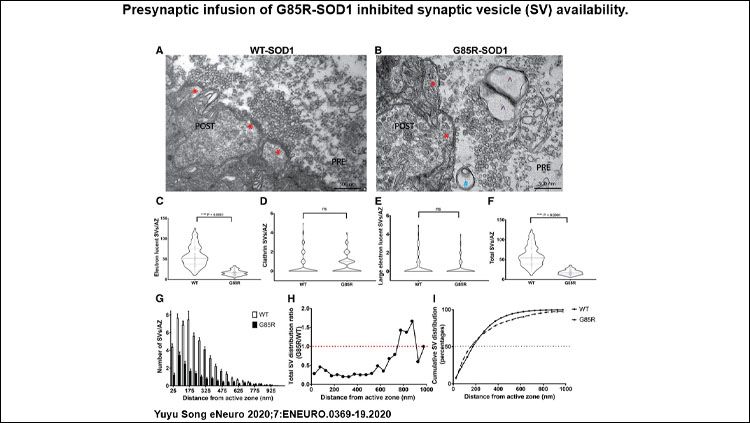 Article Scientific ResearchALS-associated G85R-SOD1 inhibits synaptic transmission in the squid giant synapse. ALS-associated G85R-SOD1 increases Ca2+ concentration at the presynaptic terminal including the “Palm” region, which lacks Ca2+ channels, suggesting potential Ca2+ reservoir in the presynaptic compartment. Surprisingly, intermittent High Frequency Stimulation (iHFS), which normally depletes synaptic vesicles and causes synaptic depression, rescued synaptic function affected by G85R-SOD1 when applied every 30 minutes before and during G85R-SOD1 protein infusion.Jul 16, 2020
 -
 Video Career PathsNicole Garbarini is a media and communications specialist at NIH in the Office of the Director/Office of Extramural Research. Garbarini talks about the importance of her PhD in this role, and why she fit into this communication role.Jul 15, 2020
 -
 Article Professional DevelopmentIt can be a challenge to avoid distractions and accomplish what needs to get done. Eight students and professors share what helps them manage their time and stay on top of daily tasks. Some of their suggestions include finding someone to hold you accountable, color-coding your calendars, and breaking projects into chunks. Read on for more tips.Jul 14, 2020
 -
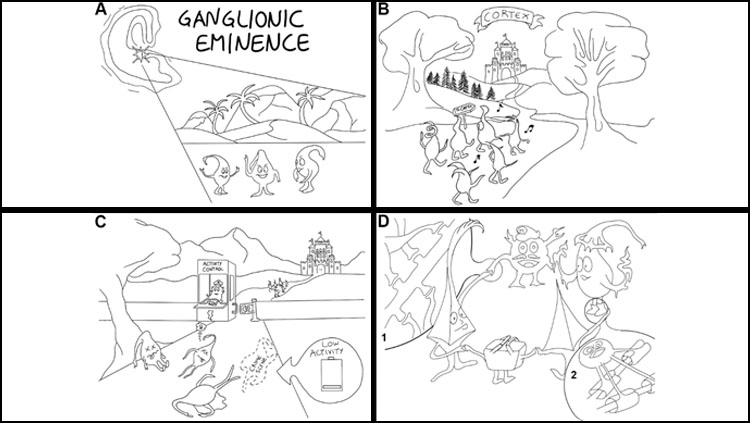 Article Scientific ResearchInhibitory gamma-aminobutyric acid-containing (GABAergic) interneurons may comprise only around 20% of all cortical neurons, but they play important roles in cortical function. Not only do they control and orchestrate the activity of excitatory glutamatergic pyramidal cells of the neocortex, contributing to regulation of the overall activity levels of the brain, but they also mediate the precise processing of information in the different cortical networks.Jul 9, 2020




