



Filter
-
(133)
-
(733)
-
(4)
-
(1)
-
(47833)
-
(91)
-
(25)
-
(14)
-
(433)
-
(7)
-
(182)
-
(8)
-
(33)
-
(17)
-
(7)
-
(9)
-
(9)
-
(5)
-
(21)
-
(8)
-
(12)
-
(9)
-
(3)
-
(10)
-
(10)
-
(56)
-
(45)
-
(12)
-
(3)
-
(7)
-
(6)
-
(5)
-
(8)
-
(7)
-
(11)
-
(58)
-
(13)
-
(30)
-
(8)
-
(5)
-
(10)
-
(5)
-
(15)
-
(4)
831 - 840
of 52756 results
-
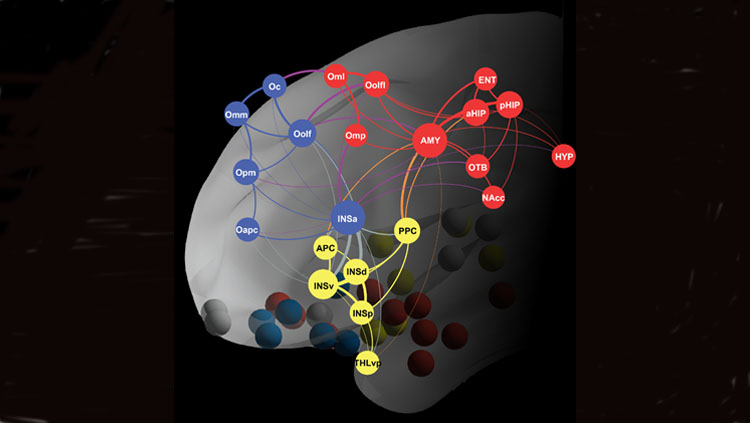 Article Scientific ResearchMaterial below summarizes the article Functional Connectome Analyses Reveal the Human Olfactory Network Organization, published on May 29, 2020, in eNeuro and authored by T. Campbell Arnold, Yuqi You, Mingzhou Ding, Xi-Nian Zuo, Ivan de Araujo and Wen Li. Highlights Smell is borne out of a network of interconnected regions that are distributed across the brain. The larger odor processing network consists of three smaller subnetworks, which serve different functional purposes. Segregation of subnetworks helps to insulate the different functions and facilitates olfactory perception.Sep 3, 2020
 -
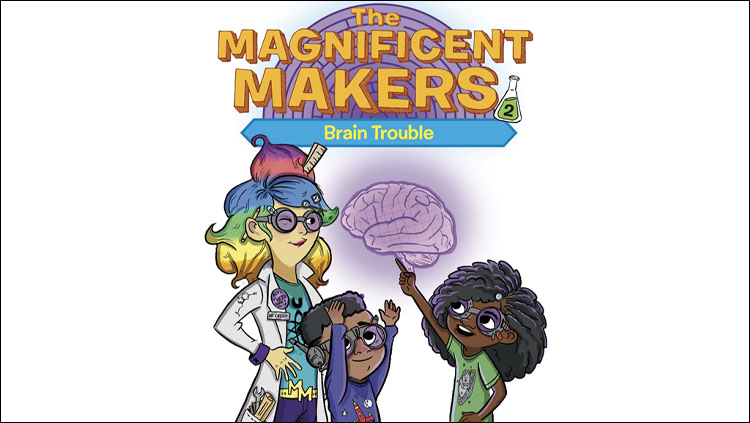 Article Career PathsSince I was a child, I’ve had two passions: science and storytelling. For the vast majority of my career, I’ve pursued the former. I majored in neuroscience at Smith College and went on to earn my doctorate at Northwestern University. I recently completed my postdoctoral training at Columbia and will soon open my independent laboratory in the Department of Physiology and Membrane Biology at the University of California Davis. Sounds like a typical climb up the academic ladder, right? Yet despite this traditional career trajectory, my passion for storytelling was ever-present. After nearly a decade as a scientist, I decided to combine it with my longstanding commitment to science education as a children’s book writer. My debut science adventure series, The Magnificent Makers, was recently published by Random House Children’s Books. As I delved into the world of writing for kids, I discovered four key aspects of my scientific training that were directly applicable to my journey as an author.Sep 1, 2020
 -
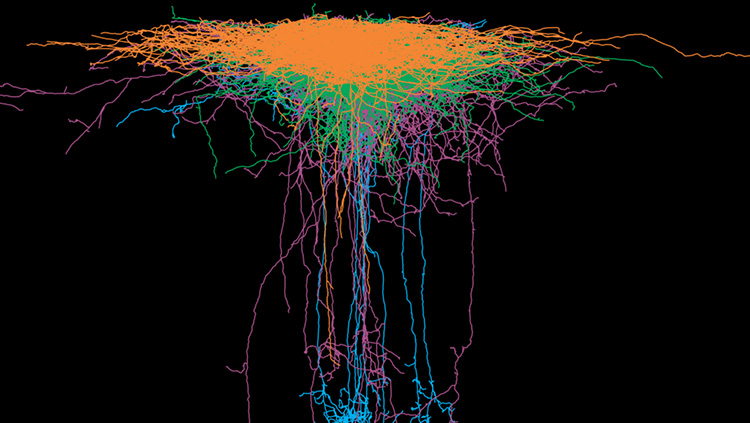 Article Professional DevelopmentThe following is an excerpt from a commentary in the Journal of Neuroscience, Recognizing Team Science Contributions in Academic Hiring, Promotion, and Tenure, that originated from two Neuroscience 2019 Professional Development workshops (watch them here and here). Read the full commentary here. The vision of a scientist as a lone investigator reaching an epiphany is a widely cherished narrative. Consistent with this ideal, single author papers were frequent 50 years ago, when the Society for Neuroscience started. However, the basic and translational questions and the public health challenges being addressed in current neuroscience research are increasingly interdisciplinary and multidimensional, and so the vast majority of significant studies require a team of investigators, working together collaboratively. This trend is evident in the increased number of authors per citation and the rapid expansion of collaborative grants. Unfortunately, academic culture has not yet caught up with the direction of the science. Hiring, promotions, and peer review tend to credit the first and last authors, with little consideration that the work required an entire team. At the 2019 SfN annual meeting, there were two workshops addressing team science. One workshop highlighted the challenges in team science for trainees, while the other focused on ways in which academic leaders could change our procedures to address the disconnect between overly narrow attention to individual first and last authorship in hiring, promotion, and tenure versus the collaborative nature of current research. This Commentary distills the ideas and recommendations brought forth by these workshops, to advocate for changes in academic recognition.Sep 1, 2020
 -
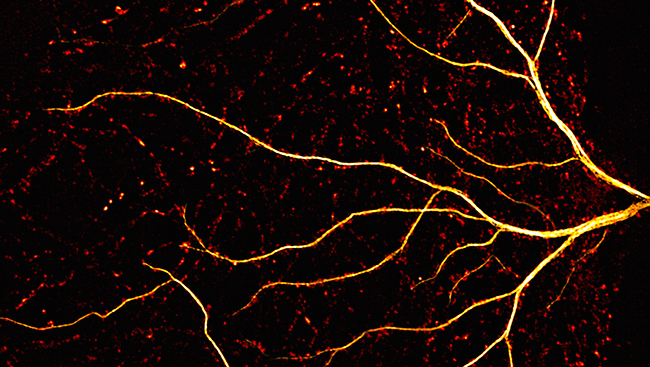 Article Professional DevelopmentThe history of Artificial Intelligence (AI) is inextricably intertwined with the history of neuroscience. Since the early days of AI, scientists turned to the human brain as a source of guidance for the development of intelligent machines. Unsurprisingly, many pioneers of AI such as Warren McCulloch were trained in the sciences of the brain. Modern AI borrowed most of its vocabulary from neurology and psychology. For instance, computational models consisting of networks of interconnected units —one of the most common approaches to AI— are called Artificial Neural Networks (ANN). Each unit is called an “artificial neuron.” Several areas of research in AI are labelled through neuropsychological categories such as computer vision, machine learning, natural language processing etc. It’s not just a matter of terminology. ANNs, for example, are actually inspired by and based on the functioning of biological neural networks that constitute animal nervous systems.Aug 27, 2020
 -
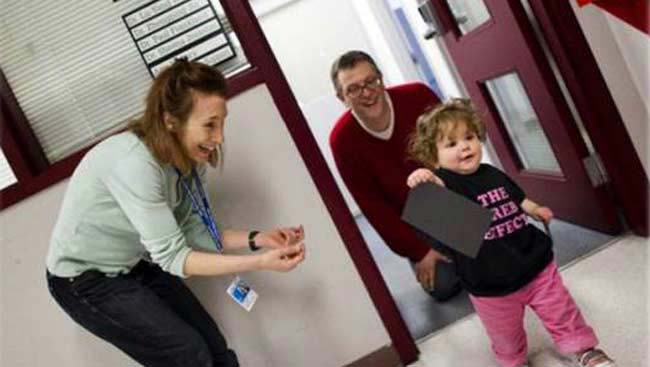 Article CommunityPeople often ask me, “Can you have it all?” I don’t know if you can, but I’m certainly having a good time trying. Here’s how.Aug 26, 2020
 -
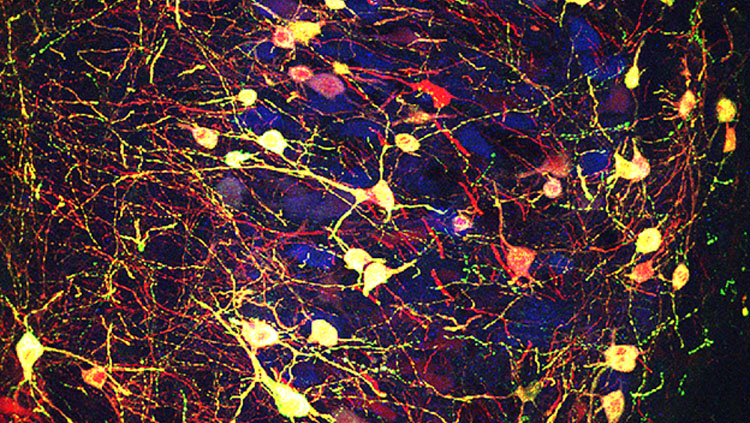 Article OutreachHuiquan Li is an assistant project scientist in the Spitzer Lab at the University of California, San Diego, where she studies neurotransmitter plasticity in the adult mouse brain and has worked since completing her graduate studies in China. Talented in strategizing how to get complex experiments to work and passionate about sharing neuroscience with anyone, in this interview she shares her advice for designing beautiful experiments. She also shares two anecdotes demonstrating that one-on-one interactions can improve individual lives while at the same time increasing understanding of the relevance of neuroscience to everyone. This interview is a complement to SfN's podcast series, History of SfN: 50th Anniversary. Guests on the podcast were asked to nominate individuals whose careers are making positive cultural or scientific impacts that will shape the next 50 years of neuroscience. Huiquan Li was nominated by Nick Spitzer, Atkinson Family Chair Distinguished Professor of Biological Sciences at University of California, San Diego.Aug 19, 2020
 -
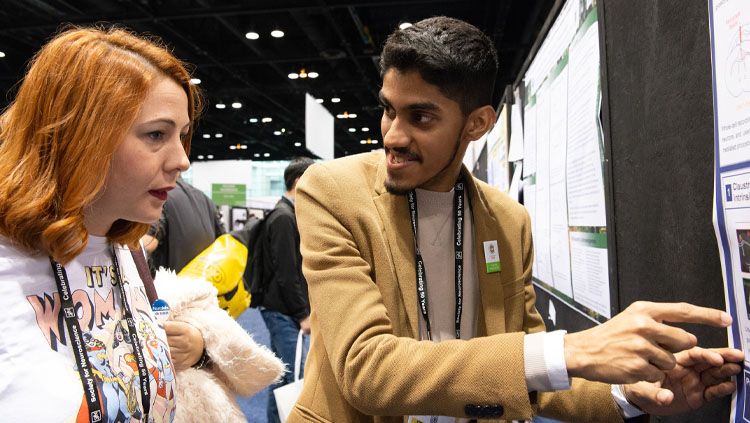 Poster CommunityThe ALBA Network, whose aim is to promote equality and diversity in brain science, interviewed neuroscientists from all over the globe on the current state of diversity in the field. Here, they speak openly about their life as researchers and their work environments.Aug 18, 2020
 -
 Journal ArticleDespite the vivid experience of homogeneous vision, our visual system is inherently endowed with highly inhomogeneous structures. Although the temporal characteristics of visual responses vary with eccentricity, the connection between this variation, the speed of visual processing, and its underlying neurophysiological mechanisms remains a topic of debate. Here, we performed simultaneous recordings of high-precision gaze positions and EEG activity to investigate how foveal and perifoveal stimulations impact reaction times (RTs) and visual evoked potentials (VEPs). Volunteers discriminated the position and orientation of a U-shaped figure with the aperture facing either upward or downward. Stimuli were presented briefly (50 ms) either in the foveola (0.33°) or perifovea (6.5°), to the right or left of the fixation point. Stimulus size in the perifovea condition was adjusted according to the cortical magnification factor (stimulus size: 0.2° and 0.75° for the foveola and perifovea conditions, respectively). ...Aug 1, 2025
 -
 Journal ArticleThe interface barrier between the brain surface and the adjacent meninges is important for regulating exchanges of fluid, protein, and immune cells between the CNS and periphery. However, the cell types that form this important interface are not yet fully defined. To address this limitation, we used single-cell RNA sequencing (scRNA-seq) and single-cell spatial transcriptomics together with morphological lineage tracing and immunostaining to describe the cell types forming the interface barrier of the adult murine cortex. We show that the cortical interface is composed of three major cell types, leptomeningeal cells, border astrocytes, and tissue-resident macrophages. On the nonparenchymal side, the interface is composed of transcriptionally distinct PDGFRα-positive leptomeningeal cells that are intermingled with macrophages. This leptomeningeal layer is lined by a population of transcriptionally distinct border astrocytes. The interface neighborhood is rich in growth factor mRNAs, including many leptomeni...Aug 1, 2025
 -
 Journal ArticleThe degeneration of midbrain dopamine (DA) neurons disrupts the neural control of natural behavior, such as walking, posture, and gait in Parkinson's disease. While some aspects of motor symptoms can be managed by DA replacement therapies, others respond poorly. Recent advancements in machine learning-based technologies offer opportunities to better understand the organizing principles of behavior modules at fine timescales and its dependence on dopaminergic modulation. In the present study, we applied the motion sequencing (MoSeq) platform to study the spontaneous locomotor activities of neurotoxin and genetic mouse models of parkinsonism as the midbrain DA neurons progressively degenerate. We also evaluated the treatment efficacy of levodopa (l-DOPA) on behavioral modules at fine timescales. We revealed robust changes in the kinematics and usage of the behavioral modules that encode spontaneous locomotor activity. Further analysis demonstrates that fast behavioral modules with higher velocities were more...Aug 1, 2025




