



Filter
-
(133)
-
(733)
-
(4)
-
(1)
-
(47833)
-
(91)
-
(25)
-
(14)
-
(433)
-
(7)
-
(182)
-
(8)
-
(33)
-
(17)
-
(7)
-
(9)
-
(9)
-
(5)
-
(21)
-
(8)
-
(12)
-
(9)
-
(3)
-
(10)
-
(10)
-
(56)
-
(45)
-
(12)
-
(3)
-
(7)
-
(6)
-
(5)
-
(8)
-
(7)
-
(11)
-
(58)
-
(13)
-
(30)
-
(8)
-
(5)
-
(10)
-
(5)
-
(15)
-
(4)
811 - 820
of 52756 results
-
 Article AdvocacyIt should be clear to us by now that science is done by actual people whose intersectional identities, and the social challenges and trauma that come with them, don’t disappear when they enter the lab. Regardless of where they are, Black scholars and those belonging to other marginalized groups face overt, implicit, and systemic racism on a daily basis. Particularly in the last few years, US-based international researchers have regularly faced xenophobic and anti-immigrant policies from their host nation. This year, international students and postdocs experienced damaging threats to their presence, security, and peace of mind as a result of new anti-immigrant policies targeting their visa programs. Many scientists promptly took to social media to respond to these actions.Oct 20, 2020
 -
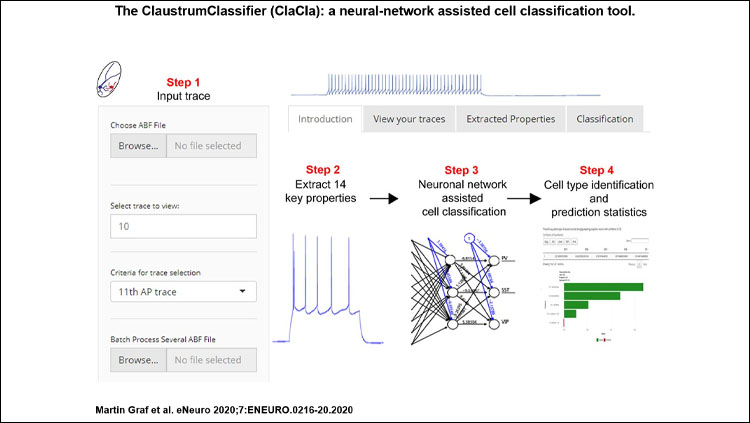 Article Scientific ResearchMaterial below summarizes the article Identification of Mouse Claustral Neuron Types Based on Their Intrinsic Electrical Properties, published on June 11, 2020, in eNeuro and authored by Martin Graf, Aditya Nair, Kelly L.L. Wong, Yanxia Tang and George J. Augustine. Highlights Claustral neurons consist of at least three types of inhibitory interneurons and five types of excitatory projection neurons. Claustral neurons that project to different brain areas differ in their electrical properties. A user-friendly tool allows you to use our classification scheme to identify neurons in your own cell recordings.Oct 15, 2020
 -
 Article Professional DevelopmentThe right postdoc can help you gain key skills for the next step in your career, and it takes an intentional plan to select the right one. To help you identify and secure a postdoc that best fits your goals, SfN has created a toolkit to help you strategically explore career options, develop relevant transferable skills, network with potential mentors, and negotiate the position right for you. Explore the toolkit’s ready-to-use presentation to learn how to: - Explore career options and decide on your next steps. - Build the skills and network you need for career advancement. - Highlight your value on a CV or resume. - Identify and secure a postdoc position. - Plan your postdoc to help you achieve future career advancement. - This toolkit can be shared with an audience or studied independently to learnOct 14, 2020
 -
 Article CommunityBIPOC scientists face unique challenges in their careers, from undervaluing of their work to microaggressions and tokenism at their institutions. In this interview, Pablo Wickham, Marguerite Matthews, and Nii Addy share their advice for Black students and researchers navigating these and other challenges. This interview is a follow-up to SfN’s recent webinar, Black Lives Matter and Neuroscience: Why This Moment Matters. Hear more from Wickham, Matthews, and Addy, by watching the webinar on Neuronline or reading their recent live chat where they answer member questions directly.Oct 13, 2020
 -
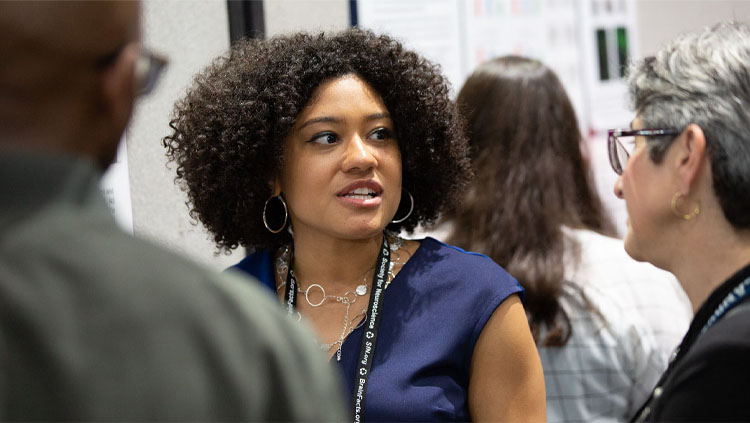 Article CommunityInstitutional leaders play a crucial role in supporting underrepresented scientists. In this interview, Nii Addy and Marguerite Matthews share how departments and labs can build a community for their BIPOC members while addressing the issues of recruitment, retainment, and tokenism. This interview is a follow-up to SfN's recent webinar, Black Lives Matter and Neuroscience: Why This Moment Matters. Hear more from Addy and Matthews by watching the webinar on Neuronline or reading their recent live chat where they answer member questions directly.Oct 13, 2020
 -
 Webinar AdvocacyThe Society for Neuroscience and the American Brain Coalition, in cooperation with the Congressional Neuroscience Caucus, invite you to Exploring Recent Discoveries in Neuroscience Research. This congressional briefing will host esteemed neuroscientists discussing recent discoveries in neuroscience research. Panelists will review the transitional benefits provided by predictable federal funding of basic neuroscience research, to medical treatments and discoveries. Neuroscience topics to be discussed will include pain management and addiction, post-traumatic stress disorder, and dementia.Oct 12, 2020
 -
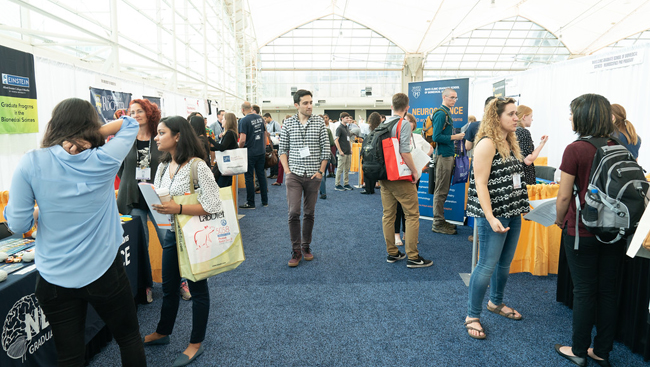 Article Professional DevelopmentTake a moment to congratulate yourself. Being admitted to graduate school is a major accomplishment! If you’re deciding between multiple programs, there are important professional and personal considerations you should evaluate. Professional: 1. Are faculty members taking students in the areas of research of interest to you? Identifying a good research fit is critical. Find out if the program covers the areas of research you might want to pursue. If there are only one or two labs doing the type of work you’re interested in, you may have limited options, especially given that labs often undergo changes in space and funding.Oct 7, 2020
 -
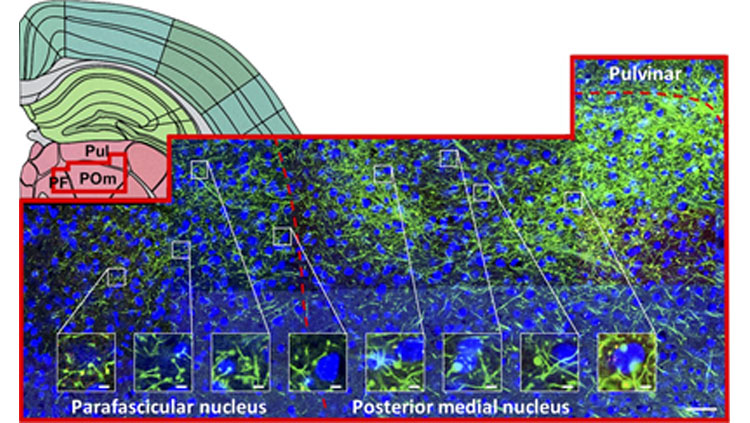 Article Scientific ResearchMaterial below summarizes the article Layer 5 Corticofugal Projections from Diverse Cortical Areas: Variations on a Pattern of Thalamic and Extrathalamic Targets, published on July 22, 2020, in JNeurosci and authored by Judy A. Prasad, Briana J. Carroll and S. Murray Sherman Highlights Across cortical areas, layer 5 neurons exhibit a general pattern of targeting both thalamus and extra-thalamic regions, including brainstem motor centers. Variations on the layer 5 efferent pattern depend on cortical area. Layer 5 terminals also vary in size, depending on cortical area and subcortical target.Oct 1, 2020
 -
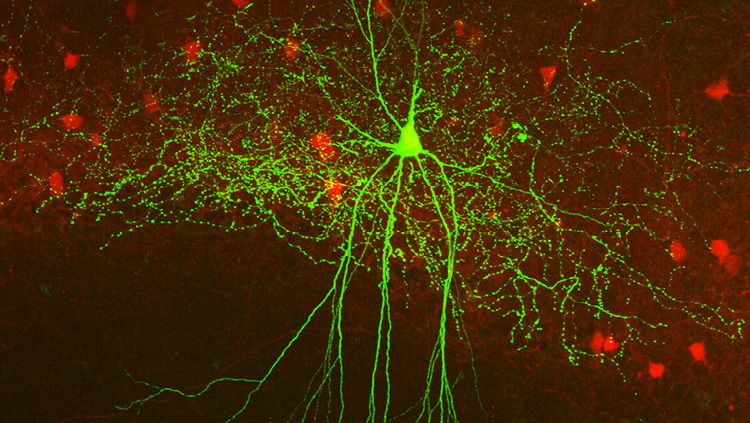 Article Scientific ResearchMaterial below summarizes the article Dynamic Time-Locking Mechanism in the Cortical Representation of Spoken Words, published on June 8, 2020, in eNeuro and authored by Ali Faisal, Anni Nora, Hanna Renvall, Jaeho Seol, Elia Formisano, and Riitta Salmelin. Highlights Computational modeling of cortical responses highlights the importance of accurate temporal tracking of speech in the auditory cortices. This time-locked encoding mechanism is likely pivotal for transforming the acoustic features into linguistic representations. No similar relevance of time-locked encoding was observed for nonspeech sounds, including temporally variable human-made sounds such as laughter.Sep 24, 2020
 -
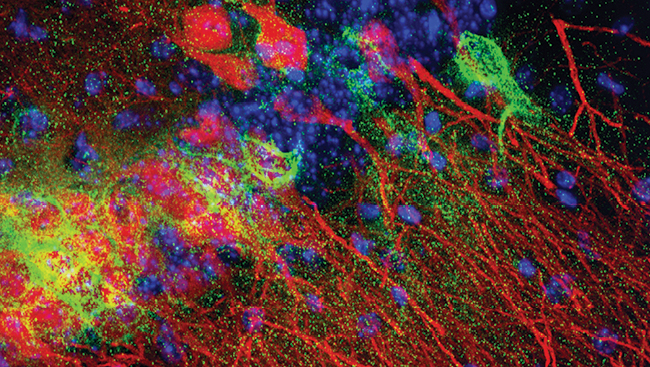 Annual Meeting Video Scientific ResearchVideo games are almost as divisive as they are ubiquitous. While some claim they make people antisocial and inactive, others argue that video games could be the next frontier of education and healthcare. Jonathan Moreno, an ethics and philosophy professor at the University of Pennsylvania, moderates the Social Issues Roundtable, “The Neuroscience of Gaming,” at Neuroscience 2014.Sep 22, 2020




