



Filter
-
(133)
-
(733)
-
(4)
-
(1)
-
(47833)
-
(91)
-
(25)
-
(14)
-
(433)
-
(7)
-
(181)
-
(8)
-
(33)
-
(17)
-
(7)
-
(9)
-
(9)
-
(5)
-
(21)
-
(8)
-
(12)
-
(9)
-
(3)
-
(10)
-
(10)
-
(56)
-
(45)
-
(12)
-
(3)
-
(7)
-
(6)
-
(5)
-
(8)
-
(7)
-
(11)
-
(58)
-
(13)
-
(30)
-
(8)
-
(5)
-
(10)
-
(5)
-
(14)
-
(4)
791 - 800
of 52754 results
-
 Article CommunityDaniel Colón-Ramos was born and raised in Puerto Rico and is now the McConnell Duberg Professor of neuroscience and cell biology at Yale School of Medicine. In this interview Daniel shares insights from his journey in science, including the importance of belonging, and community, in STEM careers. Throughout his reflections he provides advice for underrepresented trainees and thoughts on how to achieve equity in STEM.Dec 1, 2020
 -
Article DiversityDaniel Colón-Ramos was born and raised in Puerto Rico and is now the McConnell Duberg Professor of neuroscience and cell biology at Yale School of Medicine. In this interview Daniel shares insights from his journey in science, including the importance of belonging, and community, in STEM careers. Throughout his reflections he provides advice for underrepresented trainees and thoughts on how to achieve equity in STEM.Dec 1, 2020
-
 Journal ArticleHigh-level spinal cord injury (SCI) often reduces neural regulation of cardiovascular function. During the chronic phase, humoral regulation via the renin-angiotensin system (RAS) is enhanced to compensatorily maintaining blood pressure. It was recently shown that transplanting early-stage neurons into the injured cord mitigates cardiovascular disorders. However, the mechanisms underlying this recovery remain largely unknown. Here, we employed various pharmacological interventions to elucidate whether this strategic transplantation affects the imbalance of neuroendocrine regulation of hemodynamics and the role of specific serotonergic and catecholaminergic components. Female rats received a complete crush at the 4th thoracic spinal cord. Embryonic neural progenitor cells harvested from the raphe nuclei (RN-NPCs) or the spinal cord (SC-NPCs) were transplanted into the lesion. Naïve rats or injury alone served as controls. After 8-9 weeks, radio-telemetric recordings demonstrated that both implants decreased...Aug 21, 2025
 -
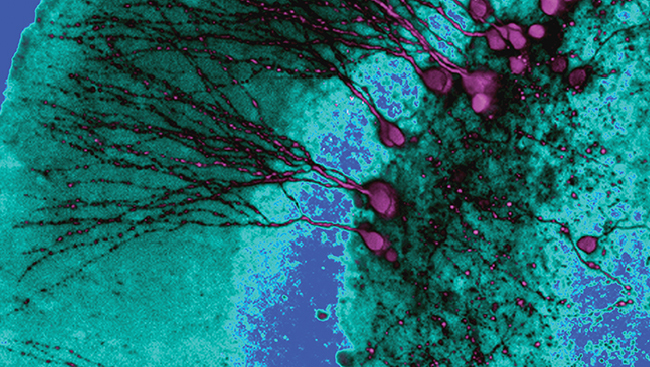 Article Scientific ResearchStress is a key and inescapable component of life. Our physiology is tuned to accommodate stress, by anticipating and responding reflexively to physical or emotional threats and challenges. An appropriate stress response maintains homeostasis, the healthy state, and prevents harm to the individual. But responding to stress mobilizes considerable physiological resources. Thus, it is important the stress response is terminated and emotional recalibration is achieved once the threat has gone so life can proceed. Nonetheless, complementary innate mechanisms allow these stressful experiences to form strong, long-lasting memories, shaping future behaviors and providing an adaptive and situational advantage for survival. So fundamentally, we are made to deal with stress and overcome it.Nov 23, 2020
 -
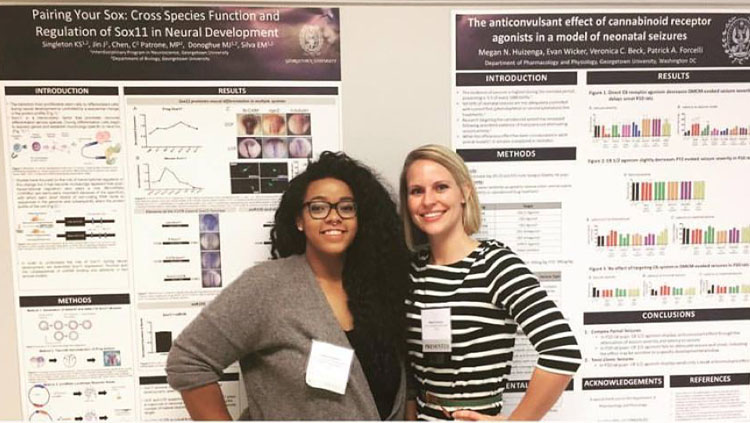 Article DiversityKaela S. Singleton is an NINDS D-SPAN scholar, adjunct professor at Agnes Scott College, and a mentor to her students at Agnes Scott College and Emory University. In this interview, Kaela recounts her experience with imposter syndrome and how to navigate implicit bias in academia. She also discusses successful mentor relationships and her hopes for the future of diversity in academia. Walk us through your career path. I've been interested in neuroscience since seventh grade when I got to dissect a sheep's brain through a science outreach program. That was the only activity in school I thought was really cool and I could imagine doing for the rest of my life. I ended up choosing Agnes Scott College because it had a well-defined neuroscience major. I started research in undergrad and worked in several labs that focused on neurodevelopmental disorders. In graduate school, I researched the molecules that regulate neural development across species and how they differ in function despite being highly conserved across species. My postdoctoral work is focused on neurodevelopmental disorders, using my foundational molecular neuroscience research skills and developmental approaches to investigate how copper and environmental toxins affect fetal development. Despite being a grad student, I didn't think an academic career in neuroscience was a true option for me until I was in my fourth year of graduate school. Up until then I kept going because I enjoyed it and thought it was interesting. I eventually realized there was a reason I was good at it, and that I could be a professor or have my own lab if I wanted.Nov 19, 2020
 -
Article CommunityKaela S. Singleton is an NINDS D-SPAN scholar, adjunct professor at Agnes Scott College, and a mentor to her students at Agnes Scott College and Emory University. In this interview, Kaela recounts her experience with imposter syndrome and how to navigate implicit bias in academia. She also discusses successful mentor relationships and her hopes for the future of diversity in academia. Walk us through your career path. I've been interested in neuroscience since seventh grade when I got to dissect a sheep's brain through a science outreach program. That was the only activity in school I thought was really cool and I could imagine doing for the rest of my life. I ended up choosing Agnes Scott College because it had a well-defined neuroscience major. I started research in undergrad and worked in several labs that focused on neurodevelopmental disorders. In graduate school, I researched the molecules that regulate neural development across species and how they differ in function despite being highly conserved across species. My postdoctoral work is focused on neurodevelopmental disorders, using my foundational molecular neuroscience research skills and developmental approaches to investigate how copper and environmental toxins affect fetal development. Despite being a grad student, I didn't think an academic career in neuroscience was a true option for me until I was in my fourth year of graduate school. Up until then I kept going because I enjoyed it and thought it was interesting. I eventually realized there was a reason I was good at it, and that I could be a professor or have my own lab if I wanted.Nov 19, 2020
-
 Annual Meeting Video OutreachIn this Neuroscience 2017 workshop, learn how to create a short, compelling story for your research and develop a flexible strategy to share your scientific story with any audience. Strategies for being clear, concise, and compelling are discussed.Nov 18, 2020
 -
DiversityAs a kid growing up in Puerto Rico, I didn't hear much about science being done, so I felt it was an endeavor other people did somewhere else. When you come from underrepresented communities, many complex factors affect how you visualize your identity, which impacts career path decisions. There’s often guilt for pursuing science because we feel we should get a more practical job in order to help our communities. But in fact, our communities will be affected — for better or worse — by decisions scientists make. Pursuing science gives us a voice in a space where we have not been represented. Now at this point in my career, I’m driven to empower underrepresented groups to feel they belong, and it’s their right and duty to participate. And yet our full participation depends on more than our own empowerment. It depends on the entire scientific community, regardless of background, working together to expose and change the harmful practices that impede us.Nov 17, 2020
-
 This series features underrepresented scientists pursuing careers in STEM fields. Scientists share examples of challenges caused by being underrepresented in their fields and advice for overcoming them.Nov 17, 2020
 -
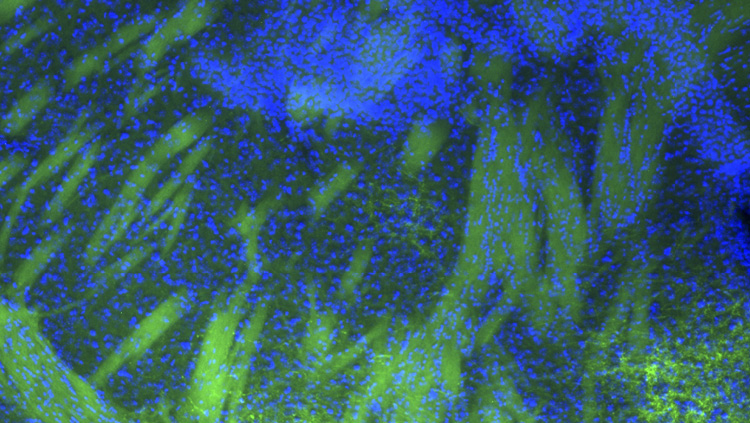 Webinar AdvocacySfN’s Early Career Policy Ambassador (ECPA) program is designed to create an extensive network of neuroscience advocates. Ambassadors gain the skills needed to advocate for science and to encourage those in their personal networks to join the conversation. Join ambassadors from the 2019 and 2020 classes as they share their experiences in the program, discuss changes in their advocacy strategies across the years, and answer questions for those interested in taking their advocacy efforts to the next level. Learn more about the ECPA program.Nov 16, 2020




