



Filter
-
(133)
-
(733)
-
(4)
-
(1)
-
(47833)
-
(91)
-
(25)
-
(14)
-
(433)
-
(7)
-
(181)
-
(8)
-
(33)
-
(17)
-
(7)
-
(9)
-
(9)
-
(5)
-
(21)
-
(8)
-
(12)
-
(9)
-
(3)
-
(10)
-
(10)
-
(56)
-
(45)
-
(12)
-
(3)
-
(7)
-
(6)
-
(5)
-
(8)
-
(7)
-
(11)
-
(58)
-
(13)
-
(30)
-
(8)
-
(5)
-
(10)
-
(5)
-
(14)
-
(4)
771 - 780
of 52754 results
-
 Journal ArticleThe corticospinal tract (CST) is essential for forelimb-specific fine motor skills. In rodents, it undergoes extensive structural remodeling across development, injury, and disease states, with major implications for motor function. A vast body of literature, spanning numerous injury models, frequently assesses these projections. Despite this, a cohesive imaging modality for rapid, quantitative assessment of the bilateral cervical spinal cord projectome is lacking. To address this, we developed SpinalTRAQ (Spinal cord Tomographic Registration and Automated Quantification), a novel mouse cervical spinal cord volumetric reference atlas and machine learning-based analytical pipeline. Using serial two-photon tomography, SpinalTRAQ enables unbiased, region-specific quantification of fluorescently labeled CST presynaptic terminals. In healthy male mice, the CST exhibits a distinct bilateral synaptic projectome, with the densest innervation in laminae 5 and 7 on the contralateral side and lamina 7 on the ipsilate...Sep 1, 2025
 -
 Journal ArticlePathological levels of beta amyloid (Aβ) lead to disruption and elimination of synapses in brain as the result of direct neurotoxicity as well as neuroinflammation. The synaptic impact of beta amyloid includes altered morphology and reduced number of dendritic spines at excitatory synapses, evident in the brains of individuals with Alzheimer’s disease. Here, we assessed the ability of an identified neuroprotective peptide, YEVHHQ, derived from the N-terminal domain of Aβ, known as the AβCore, to protect against Aβ-induced alterations in dendritic spines. Our approach involved both 2D and 3D imaging of spine morphology in hippocampal neuron cultures from mice of either sex, with the 3D imaging focusing on the postsynaptic density (PSD), as its morphology is tightly correlated with synaptic strength, and presynaptic terminal morphology and density to assess the impact on both sides of the synapse. We present evidence for uniform prevention by the AβCore of Aβ-induced reductions in spine cross-sectional size ...Sep 1, 2025
 -
 Journal ArticleAversion modulation is a key component of hedonic processing, and its dysfunction is evident in psychiatric illnesses. The infralimbic cortex (IL) to nucleus accumbens shell (NAcSh) pathway is essential in hedonic processing in rodents but operates differentially across sex, with beta (20 Hz) oscillatory activity involved in learned aversion in male but not female rats. In this study, we used taste reactivity (TR) and electrophysiology to examine the role of high gamma (80 Hz) activity in affect modulation, specifically innate (quinine) and learned (conditioned taste aversion, CTA) aversion, in male and female Sprague Dawley rats. Local field potential (LFP) recordings in males showed no changes in IL or NAcSh activity, or in IL→NAcSh functional connectivity, in the high gamma frequency band during innate or learned aversion. In contrast, in females, quinine elicited an increase in IL and NAcSh 80 Hz LFP activity and IL→NAcSh functional connectivity. Interestingly, LFP directionality analyses in females in...Sep 1, 2025
 -
 Journal ArticleThe causal relationship between gut microbiota (GM) and white matter injury and communication remains unclear. We aimed to scrutinize the plausible causal impact of GM on white matter hyperintensities (WMHs), white matter microstructure, white matter connectivity, and multiple neurological diseases via Mendelian randomization study. We identified four WMH-related bacterial taxa, including class Melainabacteria , order Gastranaerophilales , family Alcaligenaceae , and genus Ruminiclostridium 6 . In addition, three bacterial taxa were discovered that have consistent effect on multiple aspects of white matter microstructure. Furthermore, we found 12 strong associations between genetic liability in GM and white matter connectivity. Among these bacterial taxa, the family Clostridiaceae 1 demonstrated a protective effect against ischemic stroke (IS). The genus Barnesiella showed protective effect on IS and small vessel stroke while posed a risk effect on neuromyelitis optica spectrum disorder (NMOSD), as well as...Sep 1, 2025
 -
 Article AdvocacyLars Kristiansen, the executive director of the Federation of European Neuroscience Societies (FENS), leads neuroscience advocacy conversations and initiatives across 33 European countries. Here, he highlights the advocacy culture around Europe as he shares ways all scientists can become stronger advocates — coordinating knowledge to develop a unified message, preparing for your country-specific context, and gaining public support for science through clear and compelling outreach. Brain disease is a global societal issue. How should that knowledge impact regional advocacy efforts? As scientists involved in advocacy, it’s important to coordinate messaging and align it to the global agenda. We don’t have global decision makers, but there are certainly global drivers that impact science funding. It’s not a coincidence you see large scale brain initiatives arise at approximately the same time in Europe, the United States, and elsewhere. Conversations between these large initiatives drive the agenda of what’s needed on a global scale to understand brain disease. Those drivers lead us to identify the topics that we as a community — within our regional context — will be able to take up and advocate for. To do that effectively, we need to coordinate knowledge.Jan 14, 2021
 -
 Article CommunityBita Moghaddam is the Ruth Matarazzo Professor of behavioral neuroscience at Oregon Health and Science University. At the time of this interview in March 2020, she was also the chair of her department. Bita shares how she stays focused despite the prejudices she has faced as an immigrant woman and person of color. She also shares the importance of good mentors and the impact they had on her career.Jan 12, 2021
 -
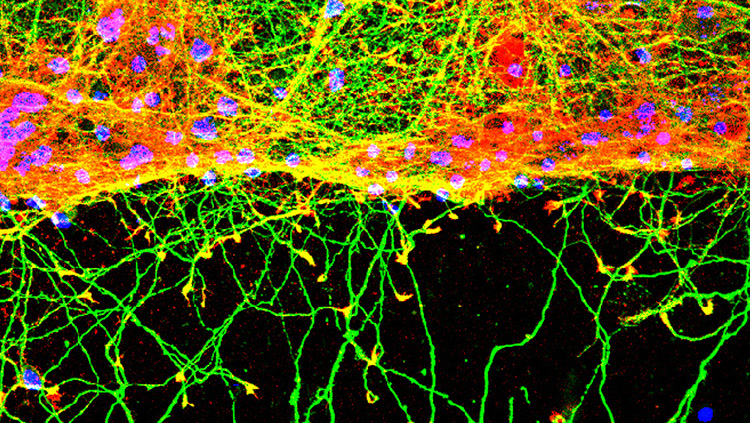 Article Professional DevelopmentNeuroscience has escaped the confines of the laboratory and is now popping up in business settings. More specifically, neuroscience is now playing a visible role in supporting the development of new business leaders. Neuroleadership is the intersection of neuroscience (the study of how the brain works) and leadership development (the rapid professional development of people in management positions). In short, now that we have a better idea of how the brain works, businesses will have an easier job of molding employees to become better managers. The dilemma that neuroleadership, a field of professional education that is based on neuroscience, faces is how to systematically handle the hard job of translating the technical products of a rigorous scientific field into public interest concepts useful to non-scientists.Jan 7, 2021
 -
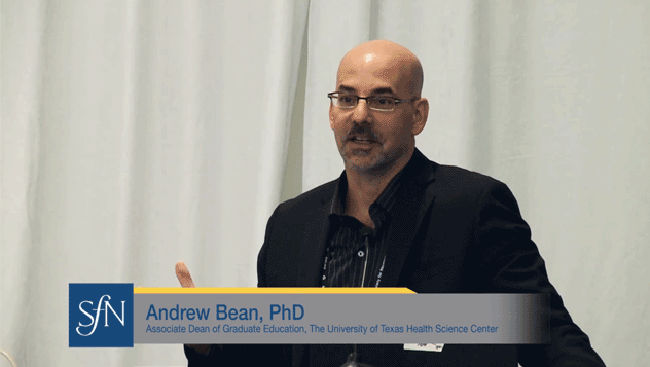 Video Career PathsDo you know what career trajectories are available with an MS versus a PhD in neuroscience? Andrew Bean talks about the differences between degrees, and what’s really needed for a non-academic career.Jan 6, 2021
 -
 Article CommunityGentry Patrick is the director of mentorship and diversity at the University of California at San Diego. Patrick serves as an active mentor for underrepresented student researchers and advocates for the convergence of diversity and academic excellence. Through his own efforts and experiences, he understands the importance of strength in numbers for change to take effect in the scientific community. In the interview below, learn how he continues to educate others to use their platform as science educators to empower young scientists.Jan 5, 2021
 -
Article DiversityGentry Patrick is the director of mentorship and diversity at the University of California at San Diego. Patrick serves as an active mentor for underrepresented student researchers and advocates for the convergence of diversity and academic excellence. Through his own efforts and experiences, he understands the importance of strength in numbers for change to take effect in the scientific community. In the interview below, learn how he continues to educate others to use their platform as science educators to empower young scientists.Jan 5, 2021




