



Filter
-
(133)
-
(733)
-
(4)
-
(1)
-
(47833)
-
(91)
-
(25)
-
(14)
-
(433)
-
(7)
-
(181)
-
(8)
-
(33)
-
(17)
-
(7)
-
(9)
-
(9)
-
(5)
-
(21)
-
(8)
-
(12)
-
(9)
-
(3)
-
(10)
-
(10)
-
(56)
-
(45)
-
(12)
-
(3)
-
(7)
-
(6)
-
(5)
-
(8)
-
(7)
-
(11)
-
(58)
-
(13)
-
(30)
-
(8)
-
(5)
-
(10)
-
(5)
-
(14)
-
(4)
731 - 740
of 52754 results
-
 Video Professional DevelopmentIn this video, Elba Serrano, Regents Professor of biology at New Mexico State University (NMSU), shares her experience as a leader in her lab. Serrano stresses the importance of facilitating inspiration because the lab is a place of innovation, where risks and possible failure can be frequent. Focusing on connecting people’s interests and curiosity to the bigger picture of the scientific research questions the lab is facing is for her a key component of leadership. Serrano takes her leadership one step further and applies those same principles of inspiration and innovation beyond the bench.Feb 25, 2021
 -
 Poster Scientific ResearchNeuromatch Academy aims to introduce traditional and emerging tools of computational neuroscience to trainees. It is appropriate for student population ranging from undergraduates to faculty in academic settings and also includes industry professionals. In addition to teaching the technical details of computational methods, Neuromatch Academy also provide a curriculum centered on modern neuroscience concepts taught by leading professors along with explicit instruction on how and why to apply models. This course provides an overview of generalized linear models (GLM).Feb 24, 2021
 -
 Webinar Video TrainingResilience is the process of adapting well in the face of adversity. Students need information, guidance, encouragement, and support to develop their resilience and wellness practices, especially in the face of messages that such practices are shameful, trivial, or unnecessary. In this webinar we will discuss recent data on graduate student health, wellness, and vulnerable populations and share approaches to building programs to address these concerns.Feb 23, 2021
 -
 Journal ArticleCancer patients experience circadian rhythm disruptions during and after chemotherapy that can contribute to debilitating side effects. It is unknown how chemotherapy mediates circadian disruptions, and specifically the extent to which these disruptions occur at the level of the principal clock, the suprachiasmatic nuclei (SCN) of the hypothalamus. In the present study, we assessed how the commonly used chemotherapeutic, paclitaxel, impacts the SCN molecular clock and SCN-dependent behavioral adaptations to circadian challenges in female mice. Following a repeated chemotherapy regimen, we measured rhythmic SCN expression of molecular clock and circadian-associated transcripts. Paclitaxel chemotherapy disrupted the SCN molecular clock through abolished rhythmicity ( Bmal1 , Nr1d2 ) and damped rhythmic transcription ( Ciart, Dbp, Nr1d1, Per2 ) of key molecular clock genes. We further determined chemotherapy-induced changes to SCN function by measuring circadian wheel running adaptations to a jet lag phase-de...Sep 8, 2025
 -
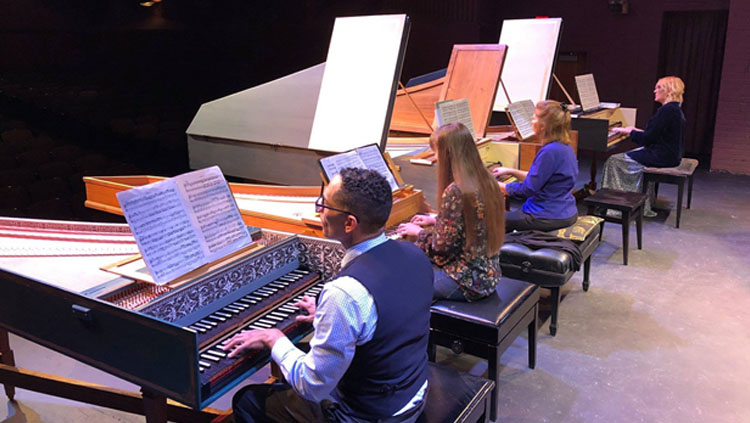 Article Career PathsGraduate school is a time filled with excitement, discovery, and, at times, stress, and anxiety. The complexity of learning what your interests are and planning your career during this time can be especially amplified for students pursuing transdisciplinary careers in the arts and sciences. As an undergraduate, I chose to study both music and the brain, and was encouraged to and discouraged from pursuing a career that combined the two by various faculty and departments — often in equal parts. But, I couldn’t pass up the opportunity to combine my loves of music and the brain.Feb 16, 2021
 -
 Webinar Professional DevelopmentThis webinar is exclusive for SfN members. Please log in or join or renew your membership below for access. The COVID-19 pandemic has created unprecedented challenges worldwide and has affected neuroscientists at all career stages. Neuroscientists who are actively looking for a postdoctoral fellowship or faculty position are facing hiring freezes and uncertainty. During this webinar, panelists based in academia and industry will highlight the challenges the pandemic has created for neuroscience employers and job seekers and provide job seekers with strategies for finding and applying for jobs at this time. Recent graduates, postdoctoral fellows, and early- and mid-career neuroscientists who are looking for a position in academia or industry are encouraged to attend.Feb 10, 2021
 -
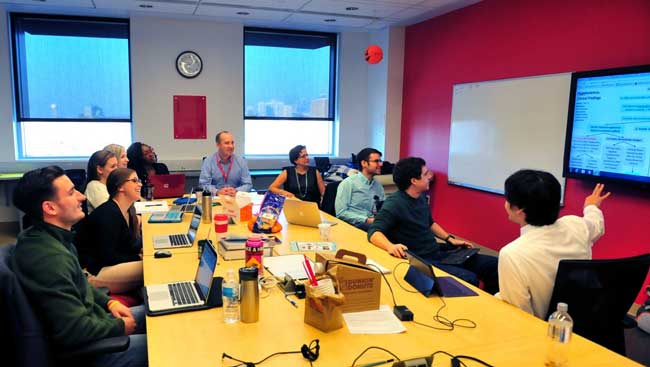 Article TrainingAt Cooper Medical School of Rowan University, we have found that case-based Active Learning Group discussions are an effective way to disseminate core medical concepts related to neuroscience.Feb 4, 2021
 -
 Article Scientific ResearchWhy we need neuro-psychiatric monitoring and registries during the Global Pandemic There is a growing awareness of COVID-19-associated CNS dysfunction likely caused by SARS-CoV-2 direct or indirect CNS invasion. This raises the possibility of a neuro-phenotype of COVID-19 with acute and delayed neuro-psychiatric effects. To this end, a few groups are advocating for prospective trials to monitor the evolution of neurologic symptoms associated with COVID-19 as well as the establishment of International COVID-19 Neurologic Registries. There are multiple potential benefits to neuro-psych registries and clinical trials.Feb 3, 2021
 -
Journal ArticleChemotherapy can cause debilitating behavioral side effects (e.g., fatigue, depression, cognitive decline); however, having an intimate partner can buffer these effects. The California mouse ( Peromyscus californicus ) is a rare monogamous mouse species that offers a novel opportunity to model human intimate partnership to identify the neurobiological mechanisms by which mate bonding reduces chemotherapy-associated behavioral side effects. As a first step towards this goal, this pilot study aimed to develop the first chemotherapy model, to our knowledge, in adult male and female California mice. Following a repeated paclitaxel chemotherapy regimen, well-characterized in laboratory mice ( Mus musculus ), gross sickness physiology was first assessed after various doses. The 20 mg/kg paclitaxel dose, injected six times every other day, was the highest tolerable, clinically-relevant dose and was characterized by moderate body mass loss and increased spleen mass. Thus, further investigation of the effects of th...Sep 4, 2025
-
Journal ArticleWhen compared to nature sounds, exposure to mechanical sounds evokes higher levels of perceptual and physiological arousal, prompting the recruitment of attentional and physiological resources to elicit adaptive responses. However, it is unclear whether these attributes are solely related to the sound intensity of mechanical sounds, since in most real-world scenarios, mechanical sounds are present at high intensities, or if other acoustic or semantic factors are also at play. We measured the Skin Conductance Response (SCR), reflecting sympathetic nervous system (SNS) activity as well as the pleasantness and eventfulness of the soundscape across two passive and active listening tasks in (N = 25; 14 females, 11 males) healthy subjects. The auditory stimuli were divided into two categories, nature, and mechanical sounds, and were manipulated to vary in three perceived loudness levels. As expected, we found that the sound category influenced perceived soundscape pleasantness and eventfulness. SCR was analysed ...Sep 4, 2025




